


In this week’s Rewind, Robert Smith takes a look back at some of the events and people in the sport during the decade of the 1930s in the ongoing monthly feature Years Ago. This time period, which is now drawing near the “100 Years Ago” point, saw a very different type of harness racing scene. Many people were experiencing hard times, but they still loved to attend the races, most of which were usually close to home.
1936 - 1939: Canadian Pacing Derby A Huge Success
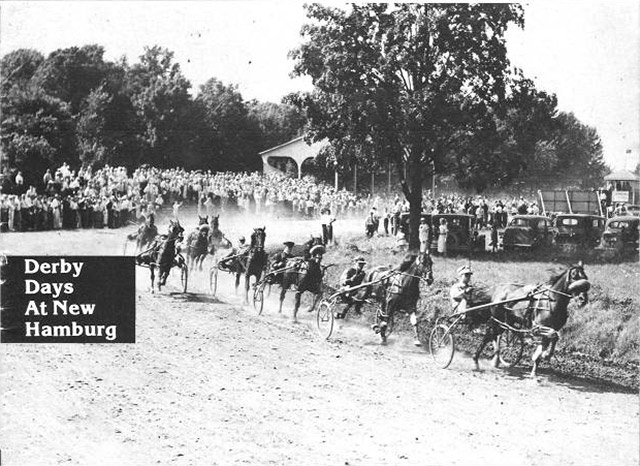
When the first Canadian Pacing Derby was held in 1936, it immediately became a huge success. For 21 straight years, it was held at the small Waterloo County town of New Hamburg, situated between Stratford and Kitchener. For that one day each year, the small, quiet town was transformed into a small city as racing fans gathered at Fountain Park.
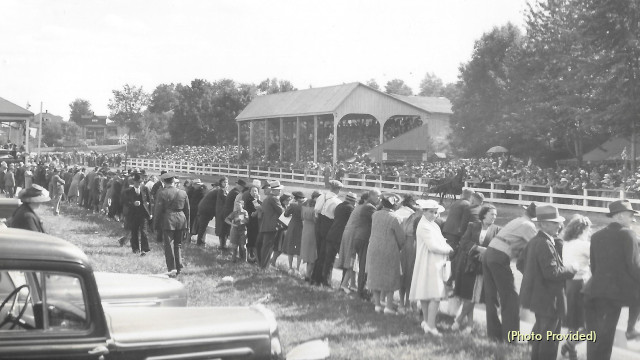
A view of the huge crowds that filled Fountain Park to watch the Derby.
1934: Lord Jim Rules – The Last Guy Axworthy Offspring Wins The Hambletonian
When Lord Jim won the 1934 Hambletonian, this famous race was in its ninth year. This horse was living proof of the long and useful lifespan of harness horses — and indeed, perhaps any type of horse. His sire, Guy Axworthy, was 28 years of age when he sired this amazing fellow. His dam was a much younger 16. Needless to say, it was his last direct offspring to win the annual classic.
This win put the great sire in the lead for siring winners, as Lord Jim became the fourth of his get. This was quite an accomplishment given the relatively short time the race had been in existence. This record would stand for 13 years until 1947, when Scotland sent out his fourth winner.
The winning driver of Lord Jim was a very popular driver of the day, Hugh “Doc” Parshall of Urbana, Ohio. At the time, he was just 34 years of age, making him the youngest driver to ever win the Hambo. In this era, it was commonly felt that a driver had to be at least 50 to be considered capable of handling a trotter. His brother Daryl was the driver of the runner-up that year, so there may have been yet another younger driver establishing a new trend.
The purse for the 1934 Hambo was a reflection of the times, in a way, although it was huge in comparison to what the rest of the racing world was experiencing. The purse was $25,845, which would stand as the lowest in history. The winning owner was E.L. Mefford of Columbus, Ohio.
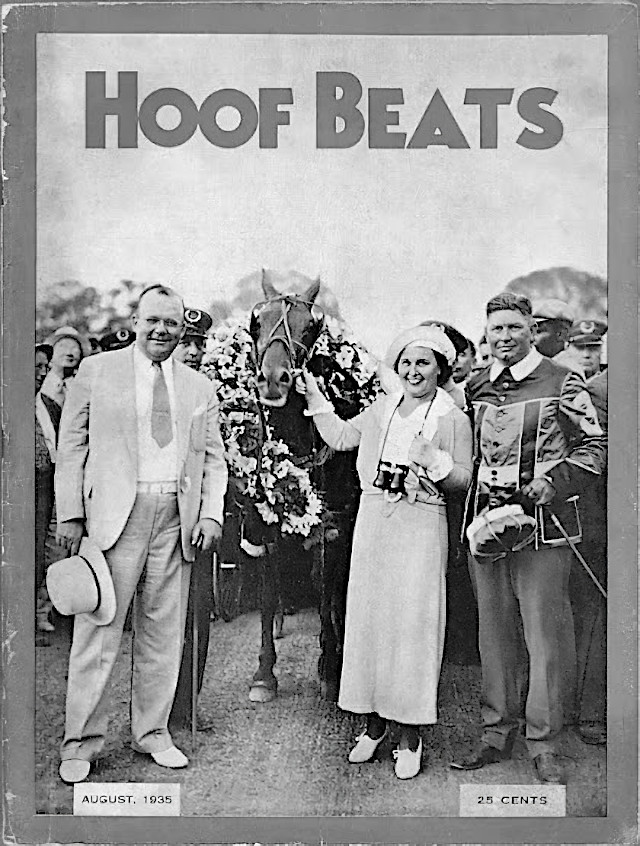
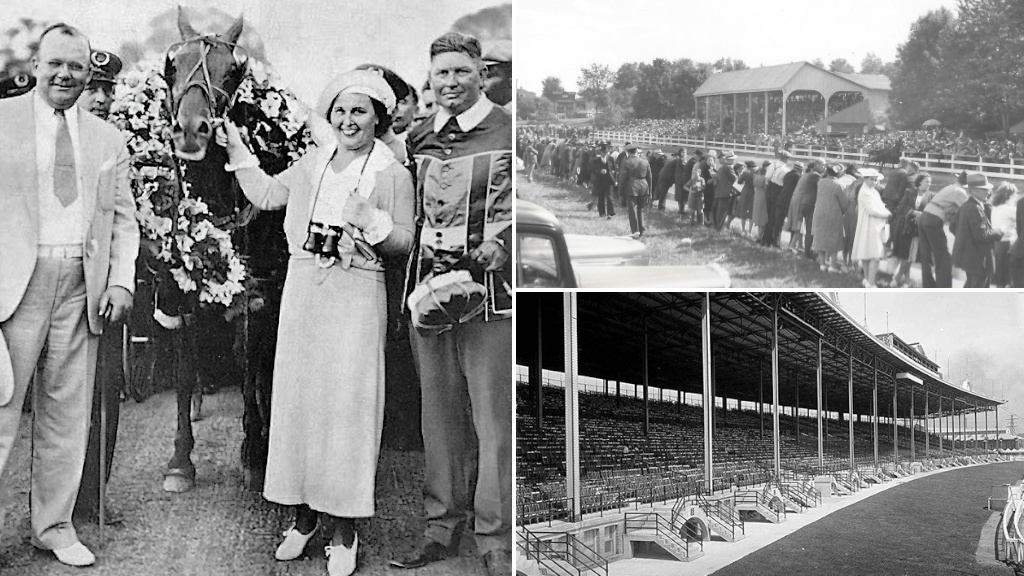
Lord Jim and his connections were featured on the front page of the August 1935 issue of Hoof Beats magazine. The owners and driver Parshall were a happy lot. The price of 25 cents may have deterred many from seeing it. (Photo courtesy of Hambletonian Society)
1936: Toronto Exhibition Week A Huge Success
Sept. 8–13, 1936 – A very successful week of racing was held as part of that year’s CNE, with several new stars emerging as winners in the annual CSHS Futurities.
All parties agreed that the manner in which the races were presented was first class. A large tent in the infield was used to good advantage as a staging paddock to ensure that all participants were ready on time.
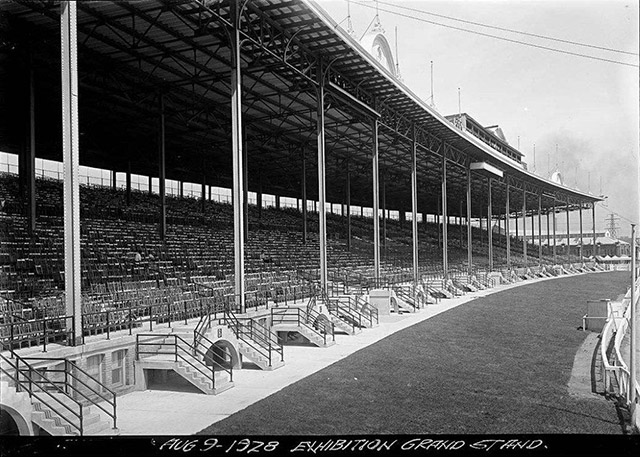
A view of the huge C.N.E. grandstand taken in 1928 (City of Toronto Archives).
In the three-year-old pacing event, the convincing winner in three straight heats was Dillinger Grattan, owned, trained and driven by W.L. “Lindley” Fraser of Forest, Ont. (owner of Dr. Stanton in later years). His fastest winning mile of 2:10 1/4 set a new record for this race. The companion trot for sophomores went to Goldsmith, owned and driven by Jas. Nesbitt of nearby Weston. This youngster, too, showed an amazing burst of speed, stopping the clock in 2:13 flat — also a new record for trotters.
The big purse for both events was $3,500, which certainly made the travel to the big city time well spent. Trophies were presented to each Futurity winner, with the pacing event offered by The Dominion Harness Horse Assoc., while the trotting colt winner received theirs from The Toronto Driving Club. All races during the meeting carried a purse of at least $500, which was certainly tops for the season.
Two big winners in the aged pacing categories came from the stable of Dr. W.N. Meldrum, the well-known medical doctor from Norwich, Ont. His two top-flight horses, Dillon Mc and Sir Esme, both brought home the major portion of their race’s prize money.
Note: At this time, the Futurity races did not yet include divisions for two-year-olds. They were first held in 1939. Another interesting comment is to compare the relative value of a $3,500 purse from 1936 to 2026. Adjusted for inflation over that period of time, today’s value would be $78,040, and the $500 purse would be $11,148. Thankfully, they were not just racing for fun, as that was a “nice piece of change” way back then.
1930 – 1939: Lexington And Two-Minute Miles
During the ten-year period that was the decade of the 1930s, 2:00 miles were not very common — at least up until this point. When they did occur, it was usually at The Red Mile in Lexington, Kentucky. During that ten-year span (1930–1939), a total of 51 “miracle miles” went into the record books. A number of the miles remained as world records for decades.
This was quite amazing because, as far back as records existed, just 25 sub-2:00 miles had been logged from 1903 to 1929 — less than one per year on average. Now, all of a sudden, twice as many in a single year!
Quote For The Week: “If you’re too busy chasing greener pastures, you’re likely to miss the daisies in your own backyard.”
Who Is It?
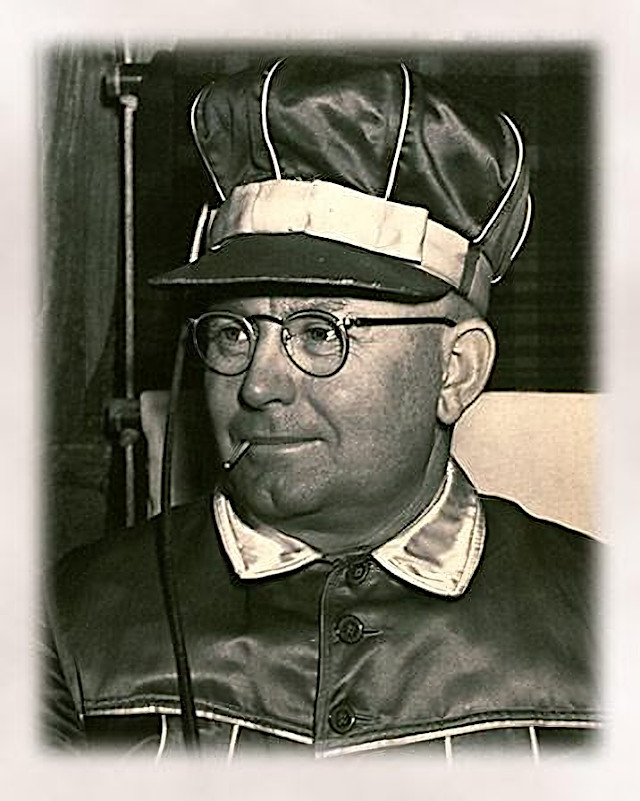
If you don’t recognize this gentleman immediately, maybe you could take a wild guess as to who this “young” fellow is.
Who Else Is It?
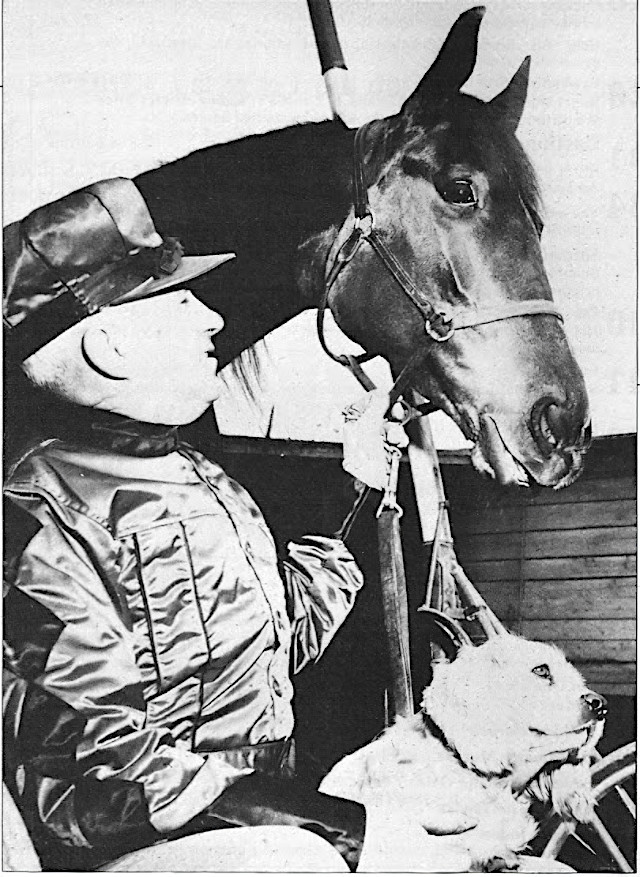
Can you correctly identify this fine gentleman? He won the first-ever Canadian Pacing Derby 90 years ago and went on to a lengthy career as a trainer and driver. He eventually went into judging and other capacities in the sport. He still has family who I hope see this picture.
Two-Minute Mile Trivia
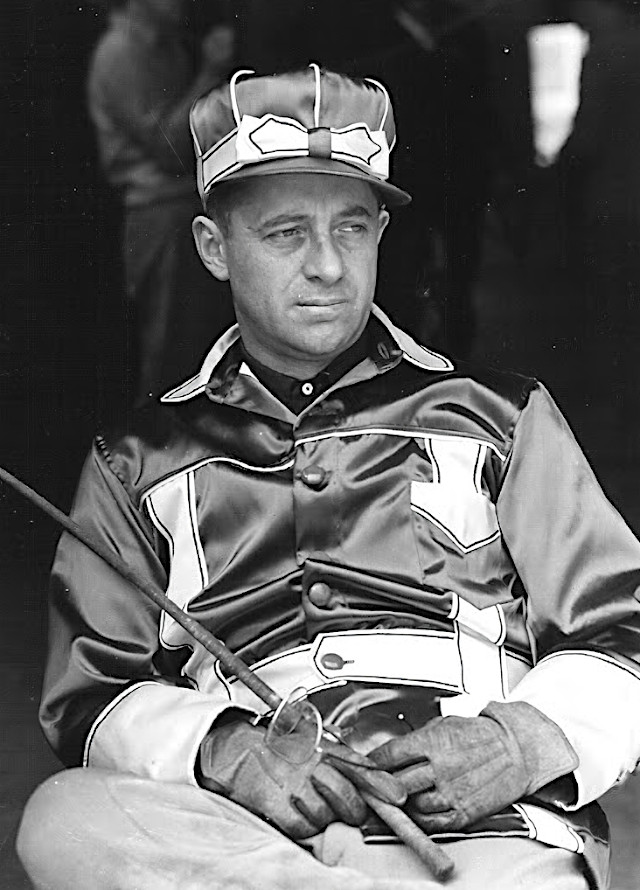
This Canadian fellow recorded the 25th and final two-minute mile during the decade of the 1930s. In 1939, he won a race in 1:59 3/4 at The Red Mile — not a time trial. Who is he? He had a very long career and was still going strong 40 years after this time. Who is he?
(The correct answers will be posted here by Robert as a comment in a few days.)
Blast From The Past
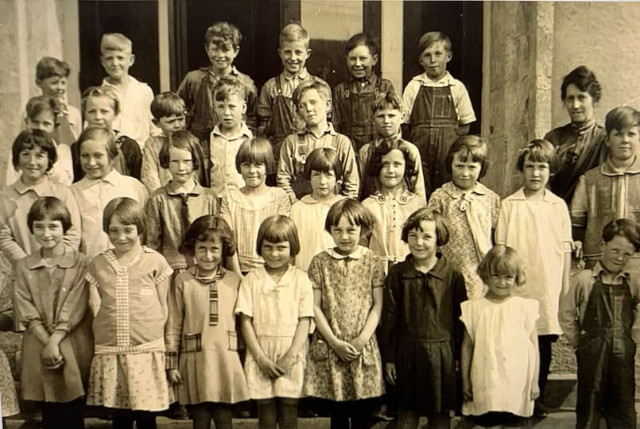
Remember when life seemed a lot simpler? This old undated photo shows a school class picture, typical of the 1930s. I have no idea where it was taken, but I find some solace in looking at it.
HAPPY EASTER to all in the reading audience as we celebrate a rather early Easter this year. It is a wonderful time of year as we see the magic of nature with the return of green grass and the warmth of the sun. It can't come too soon.
This week's picture answers
Both of our experts were accurate again this week which is no surprise. The correct answers were as follows:
Who Is It? was Hugh "Doc" Parshall, winning driver in the 1934 Hambletonian
Who else is it? was Floyd Milton, the winning driver of Better Times, winner of the first ever Can. Pacing Derby in 1936 . That picture was given to me by Mrs. Floyd Milton many years ago when I visited her while doing a story on Mr. Milton. The photo is from the 1950's with a nice trotter named Dixie Tass and his doggie was Skip.
Two Minute Trivia - That great old photo was Morris MacDonald who drove Dazzle Direct to a sub 2:00 mile at Lexington in 1939. Thanks for your answers.
Who else is it is W.L. …
Who else is it is W.L. “Lindley” Fraser with his dog and Dr. Stanton. Dr Stanton was a top F.F.A. Pacer in the late forties early fifties winning invitation paces on both sides of the border.
Who is it? Hugh “Doc”…
Who is it? Hugh “Doc” Parshall
Who else is it? Floyd Milton
Two-Minute Mile Trivia l believe is Morris MacDonald
Blast from the past the young fellow in the first row, far right I think may be Glenn Coadic
Happy Easter to all.
Who else is it Floyd Milton
Who else is it Floyd Milton