


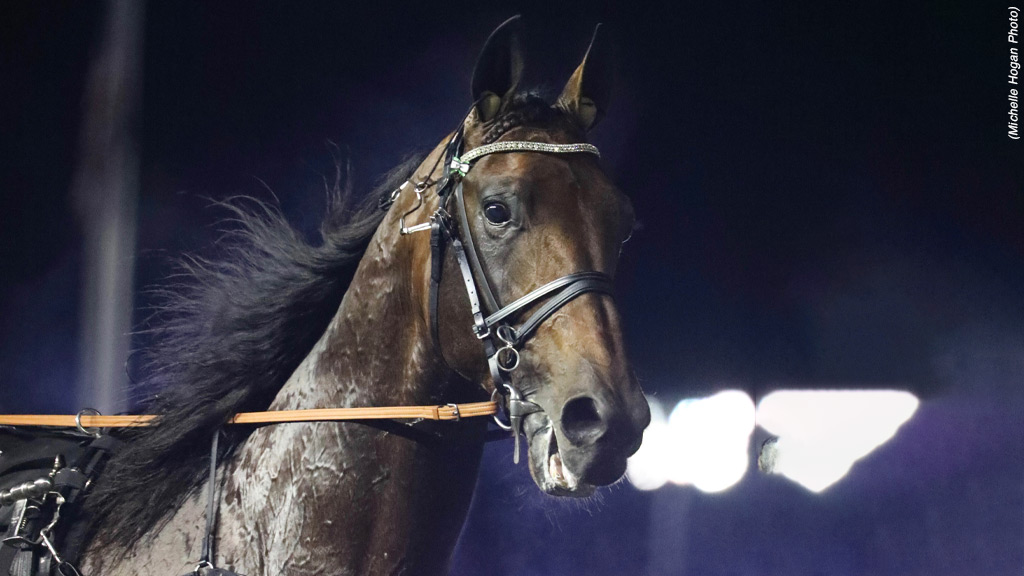
For the seventh year in a row, in what’s become a very popular segment of our Twos In Training Issue, we’ve asked a handful of experienced horsepeople the name(s) of the best two-year-old they’ve ever been involved with - and to share a story, or a memory or two from their time with that horse. Once again this year, the people we interviewed came through with some good stories for us to share, and we thank them all for their participation. Compiled by Dan Fisher & John Rallis.
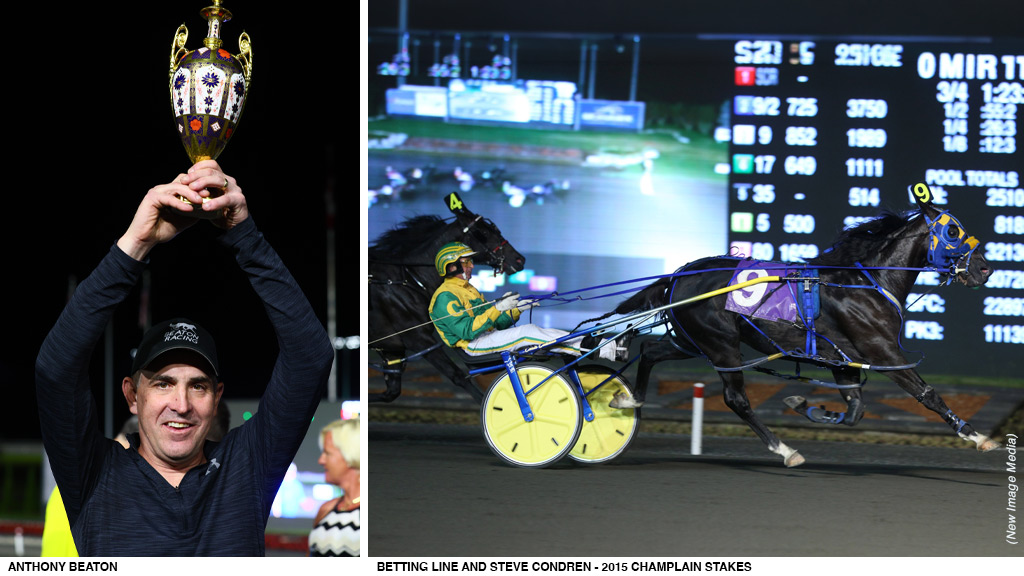
Anthony Beaton | Trainer
By John Rallis
I’ve had the luxury of being around a number of quality two-year-olds, but if I had to give a slight edge, it would be to Betting Line over Betterthancheddar. Right from the time we broke Betting Line he was a complete natural. You could tell early-on that he understood his job. Once we started jogging them in groups, whenever he moved to the outside, he’d accelerate on his own. It just came naturally to him.
That said, he did get a little sulky with us while training down, but we buried him up for a stretch and he quickly got back to showing his ability - that carried right over to his races.
Betterthancheddar never actually had the chance to race at two, but he was an extremely talented colt whose health issues just cost him his rookie season. A lot of people didn’t believe me back then when I said he was a killer. I remember we were schooling him one day at Classy Lane [Training Centre], and Mark MacDonald came a quick back-half in about :53 [seconds] with him. When he came off the track, all he said was, “Wow.” Cheddar was really meant to be a great two-year-old, but circumstances got in the way.
A lot of the time, myself and [Steve] Condren handled Betting Line’s training in Florida, but when we came back to Canada, I did most of the work with him. He didn’t always take things too seriously and he liked to play around - like young boys do. You know how it is, sometimes we don’t pay attention as much as we should (laughing). I’ve trained a lot of good ones on my own, but I don’t think any of them compare to Cheddar or Betting Line at age two.
With Betting Line, Condren and I always said that as long as you were within five lengths at the three-quarter pole, you still had a shot to win. You just had to be in the vicinity. I know he was three then, but if you watch his North America Cup victory, Racing Hill looked like he was gone, but Dave [Miller] got to work on Betting Line and he took off.
I know I’ll always have a soft spot for Cheddar, but I do honestly believe he would have been on par with - if not better than - Betting Line at two, had he raced. In the end, both were exceptional talents, and I was fortunate to be around them - along with so many other great horses.
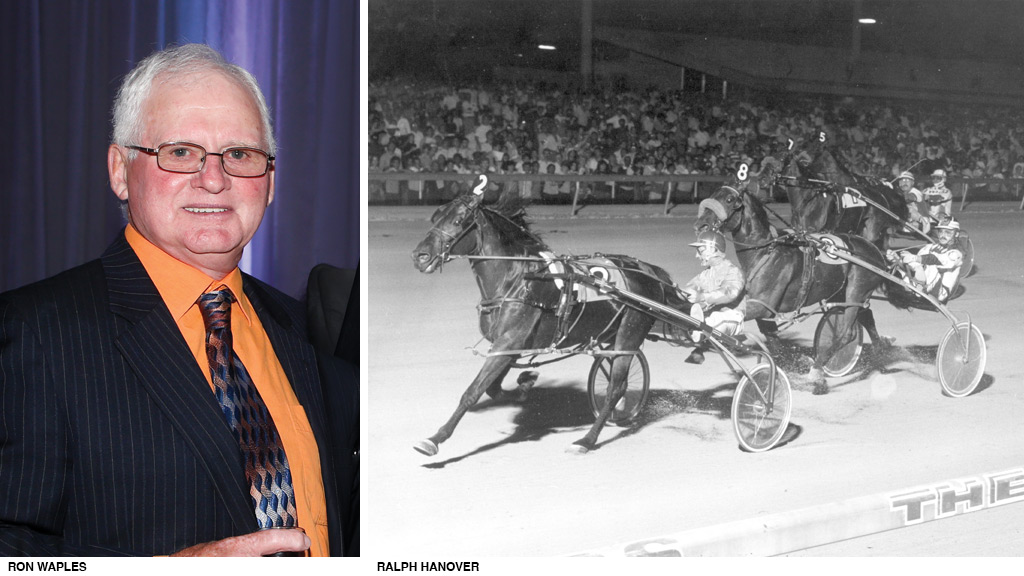
Ron Waples | Driver, Part-Owner
By Dan Fisher
Can I pick a two-year-old that I just dreamed of owning (laughing)?
I did jog Beau Jangles this winter, and I was thinking of racing him - but I’d have to fire that Bobby McClure first (laughing).
Mine would probably be Ralph Hanover though.
The horse was like me - he was very, very lazy training down. I qualified him and he wasn’t overly impressive. He was a good-gaited little guy, good-mannered and everything like that, but kind of lazy. We sent him to Montreal for his first start - I can’t think of the name of the stake they had down there. I couldn’t go. Stew Firlotte trained him of course, so we got Doug Brown to go with him. They called him ‘Downtown Dougie Brown’ back then for a reason. He went downtown with him and he won by 15 [lengths] I think. I always said, in my own mind back then, that Dougie shook that son-of-a-gun loose for us.
Now, the only bad part of that, for Doug at least, was that afterward he asked me, ‘When am I going to drive him next?’ and I said ‘Never!’ (laughing). And I spent the rest of the next two years trying to win by half-a-length with him (laughing).
I was lucky to have Armbro Dallas and Sportsmaster… I was lucky. You know, in those days they didn’t make a million dollars, if they made $100,000, though, you thought you had a pretty good colt. So there were a bunch of them, but he’d be the one that stood out.
How it all came about was that we were at Harrisburg, and I wanted to buy another pacing colt, but I hadn’t seen one more that I liked. I was walking around the back [ring] there and one was walking towards me. I thought, ‘My God, that’s a good looking little guy.’ So I looked him over, and he had a nice big eye, a huge nostril and decent-sized ears - some things that I liked.
So he gets into the ring and I start bidding on him… he gets up to about $50,000 and I just started to walk away. Stew was standing right behind me, which I didn’t realize, and he asked how much I liked him. I said, ‘To tell you the God’s truth, I only saw him in the back here, but there’s some things I definitely like about him.’ He said, ‘Then get back in there and bid on him and I’ll take a piece.’ So I went back in and got him bought for around $58,000 or something like that.
He said he’d take two-thirds if I’d take a third, so I figured if he was taking that much he may as well take him to Florida and train him himself. The only stipulation was that if he was any good, I’d drive him. I didn’t even drive horses for Stew - maybe one or two at some point, but not really.
So the horse went to Florida with Stew, and a month or so later he calls me up and says that he couldn’t take two-thirds afterall. He asked if I could take that extra third. I said, ‘Sure, I don’t care, but is he dead lame or something (laughing)? He promised me that he was a little lazy, but he was sound, and that it just turned out that he couldn’t afford two-thirds of him at the time.
I was talking to Bobby Stewart from the CSHS shortly after that, and I offered him a third, but he said he had just lent a bunch of money to Don Amos, to help him buy a house, so he didn’t have the money.
A while later I was out for lunch with Norm [Keyes] and Richard [Dinner, of Grants Direct Stable]. They were telling me about the yearlings they’d bought, and said that they’d wished they’d bought into one more pacing colt. So I told them about the little Meadow Skipper colt that I’d bought with Stew, and I let them know about the third that was still available. I told them that I was selling it to them on Stew’s say-so, though. I said, ‘I haven’t seen him in some time; he could be broken-bone lame; he could have a bowed-tendon for all I know.’
Norm went home, looked up his pedigree, and called me the next morning to say that if Stew said he was sound, they believed him, and that they were in. That’s how the partnership was formed.
He was a really good two-year-old… he won his last start at two in [1]:54 in Kentucky, and then he won the Triple Crown at three and made almost $2 million.
But in the end, the best thing about Ralph Hanover, is that he always made me look really good! (laughing).
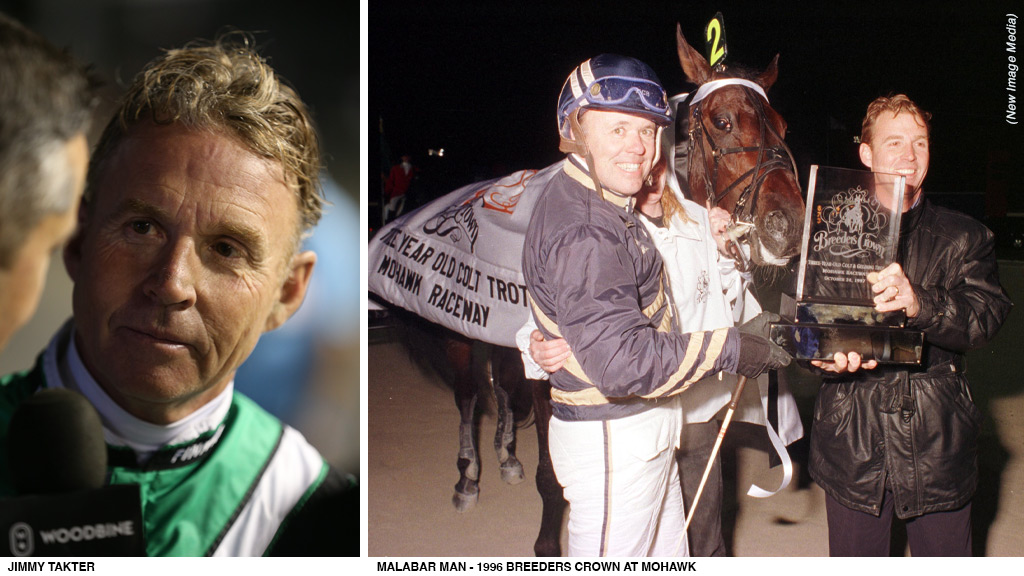
Jimmy Takter | Trainer
By John Rallis
This was a very tough decision for me because I’ve been fortunate to train so many outstanding two-year-olds over the years, but for me, the best was Malabar Man.
When you consider what he accomplished with a 56 and 57-year-old amateur driver behind him, it makes his story even more remarkable. Malvern Burroughs bred, owned and drove him throughout the majority of his career. As a two-year-old, Malvern sat behind him in all 15 starts, and they only lost twice.
I’ll never forget the Breeders Crown that year [1996]. I got a call before I reached Canada because the horse had a pus-pocket. So I went up the night before, but my blacksmith was still waiting on his green card and couldn’t travel. I met a blacksmith in Canada, we worked on him, and just hoped we could get something to come out of it. We managed to drain it a little, but then it rained heavily at Mohawk and the track turned rock hard. In spite of everything, he still went out and won the Breeders Crown.
For him to go on and capture the Hambletonian, and to have the career he ultimately did, was something truly special. Malvern drove him in all but one of his career starts. The only time I got the chance to sit behind him [in a race] was at Lexington, in the second last start of his career, and I was able to win with him.
I also remember back to when he was just a mating idea. Mal owned the mare, who was fairly average, and wanted to breed her to Armbro Goal. I told him, ‘I don’t know, Mal, you should breed her to Supergill and get some Stars Pride blood in there.’ He listened, bred her to Supergill, and that decision changed everything.
When I first saw Malabar Man in Florida, he had all kinds of issues: a lung abscess, a spiked fever and more. But he overcame all of it. He had such a beautiful gait and moved so effortlessly that I always had a feeling he’d be okay. Then he went out and won everything.
Of course, he may not have had the pure raw speed of some other trotters I’ve trained, like Manchego or Father Patrick - horses with Ferrari-type speed. But that’s what made him so unique.
We tend to place the highest value on the most naturally-gifted horses, but I think it’s just as important to appreciate the horses from the past who made a huge impact on the sport. Malabar Man was one of those horses - and his talent more than backed it up.
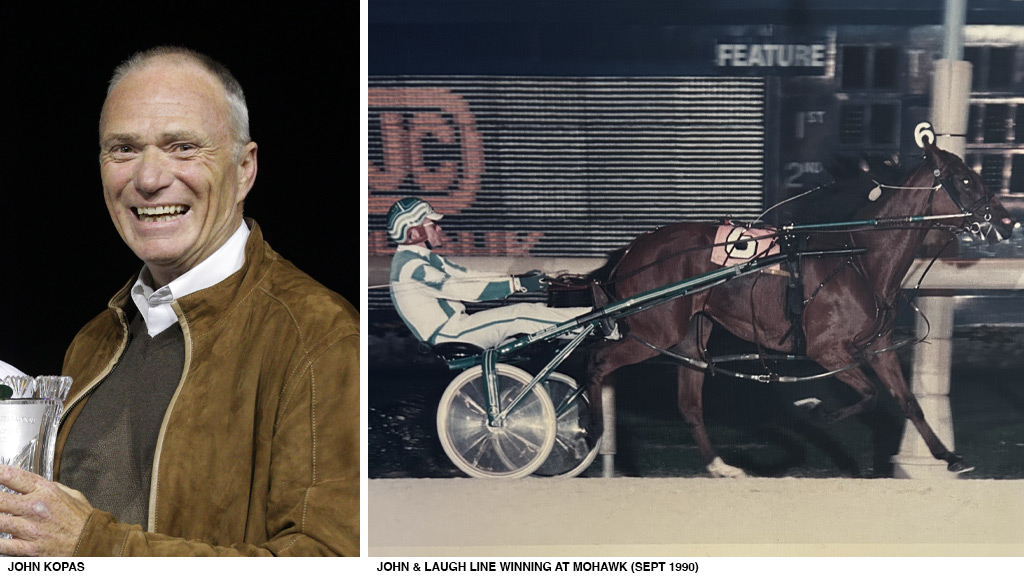
John Kopas | Trainer-Driver
By Dan Fisher
A filly I had back in 1990, by the name of Laugh Line, is the one that comes to mind first. By that time I had been on my own for a couple of years and she was just a great little filly for me at two.
Unfortunately, she coliced really bad for us at three… we had to take a whole bunch of intestine out of here and she was never really the same after that. I think that we retired her after three or four starts as a three-year-old, but I believe she was in the top-three in about 18 of 22 lifetime starts. She won in [1]:56 at two, when that really meant something.
I remember that she won the Robert Stewart and the Champlain up here… she kicked Shady Daisy’s ass in the Champlain. Then she was second to Miss Easy in The Sweetheart at The Meadowlands, she won the Countess Adios down there, and won another big race at Rosecroft - she was a super filly.
The only one we couldn’t beat in that group was Miss Easy, and I believe Miss Easy might have been the first filly to make a million dollars at age two.
I didn’t pick her out… Glen Brown picked her out for the Armstrong Brothers and they gave her to me to train. They had three really nice two-year-old fillies that year… I had one, Doug McIntosh had Jollie Dame, and Larry Walker had Falcons Secret.
Laugh Line was a little tough to break (laughing) - like most of the great fillies I’ve been around… The first day we put the harness on her she threw herself down in the stall (laughing). I said, ‘Just leave her. Walk away. She’ll get up eventually.’ And she did. An hour later she just had her head out over the gate and she was fine. Basically, after that, she never gave us too much extra trouble.
In her second career start, at Greenwood, she broke the track record - and it was a record that I set a year earlier with Delinquent Account. That’s another horse that I considered as my answer for this. But I’ve been pretty fortunate over the years to be around a lot of great two-year-olds. A few years earlier my dad had Keystone Wallis, and then on the trotting side I had The Game Plan… and Raising Rachel was no slouch either. Neither was Keystone Horatio… he just had the misfortune to come along the same year as Somebeachsomewhere and Shadow Play.
Horatio won his elimination of The Battle Of Waterloo at Grand River, and my dad and George Hempt were there that night. But ‘Beach’ toured around there in [1]:54 in his elimination, and my dad looked at George and I and said, ‘I think that’s the best horse I’ve ever seen in my life.’ He wasn’t wrong either.
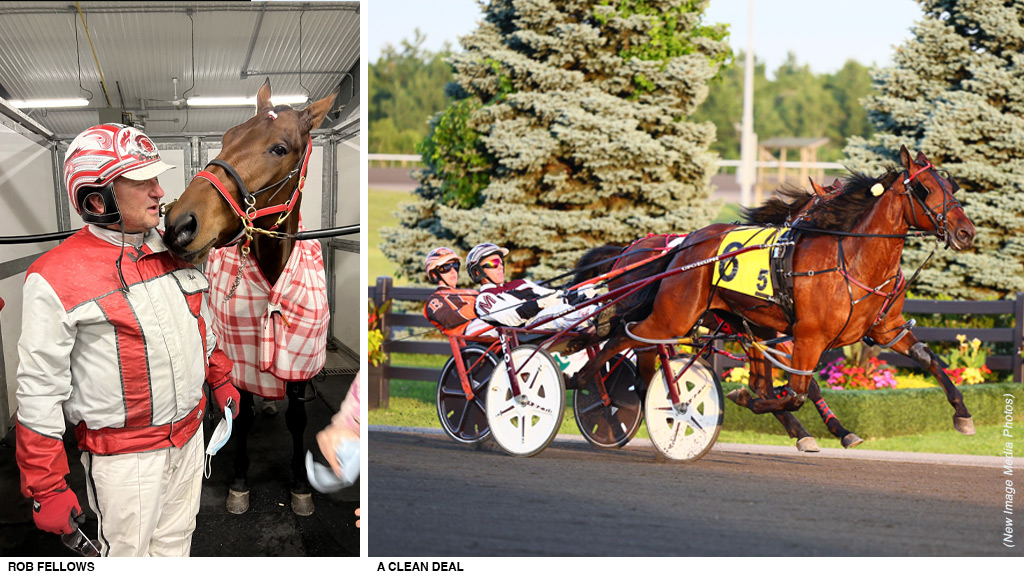
Rob Fellows | Trainer, Part-Owner
By John Rallis
Over the course of my training career I’ve had a couple of two-year-olds that weren’t just good, they were also very special to us. But if I go back to the early ’80s, the one that stands out the most is Lord Snow.
He was an Abercrombie colt I bought privately and trained down myself. He started out at Greenwood, and in his first start, as a two-year-old, he just wouldn’t go. After that, I trained him really hard one day at Mohawk, then shipped him to The Red Mile for the Kentucky Sires Stakes. I put Don Irvine Jr. up, and he won in [1]:55 - it was actually a track record at the time.
Unfortunately, he ended up getting injured, which is a whole different story. But to have your first two-year-old go out and do something like that - it was incredibly special. That was our horse. I’d worked for other people and been around quality two-year-olds growing up, but for [my wife] Yolanda and me to buy one ourselves and have him turn into something good, it just meant a great deal. It also gave us the confidence to know that we could go out there and compete while training young horses, which I think we’ve continued to show over the years.
Of course, more recently, horses like A Clean Deal - the richest two-year-old we’ve ever had ($454,464) - and Willys Home Run, who’s had a lot of success and is a sibling to our free-for-all trotter [Logan Park], are probably the best we’ve had. But Lord Snow, at least to me, had tremendous talent. He just never got the chance to fully show it after being hurt in a stall accident.
We had some very serious offers for him after that win in Lexington, but we didn’t want to sell. At the time, I had just left working for Tony Kerwood, and I remember how meaningful it was to go to Kentucky and race a horse of our own - not one for someone else. That was a very cool moment. You always think those kinds of horses only come along for other people - until you get your own chance.
We’ve kept building from there. We’re a blue-collar stable, and nothing comes overnight, but now, when I walk down the shedrow and look at the horses we have, I still have to pinch myself sometimes. And a big part of that belief started with Lord Snow.
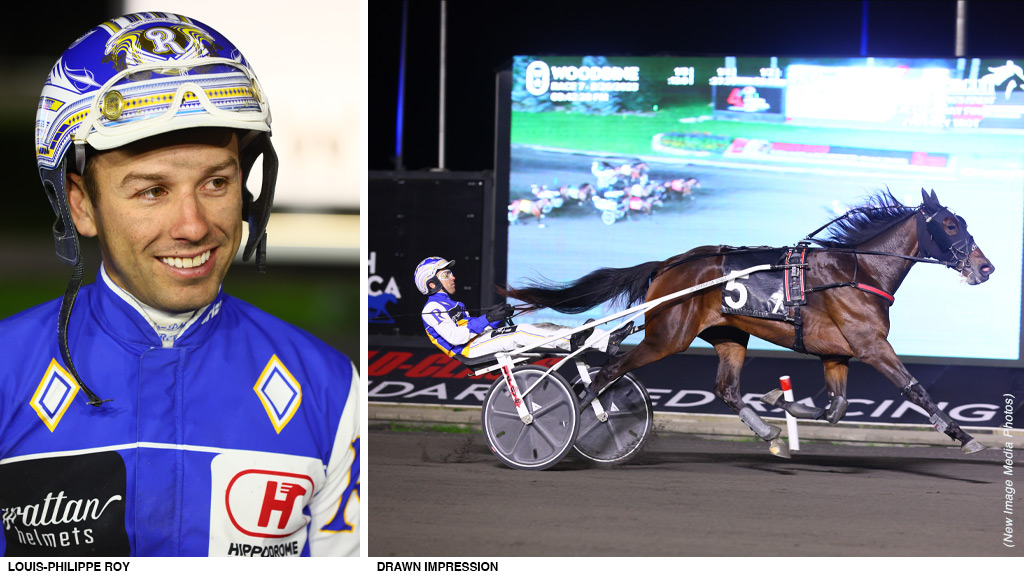
Louis-Philippe Roy | Driver
By Dan Fisher
There have been so many that have been close to one another [in ability], but I’d probably say that Drawn Impression is the one that stands out to me the most - partly because I was involved with her right from the start of her two-year-old season.
She was really impressive in her first few starts… she didn’t race that many times at two [she won four times in six freshman starts], but I would tend to say that she was the most impressive, and the best two-year-old that I’ve ever driven.
I don’t go to Luc’s [trainer, Blais] farm to help train them but when he starts bringing them to Mohawk, sometimes he’ll give me a call and see if I can go with a few. I don’t remember exactly the first time I sat behind her, but I do remember her from when she started going off the gate and stuff... She was on the edge of, maybe she could get a bit hot, so we just took our time and made sure we didn’t leave with her. She was always finishing so strong, and she’d go by everybody else so easily.
She was just so mature and professional - she seemed like she was like a four-year-old trotting by two-year-olds, especially in those first few qualifiers and races.
That’s what made her so special: she was just so professional from the get-go.
Even when she won the final of the Peaceful Way [by 4 ¾ lengths in just her third career start], it wasn’t just winning that race, but it was the excitement as to how easily she was doing it. Everytime I sat behind her I was just thinking about, and wondering, where it was going to end.
She did it so easily - even in the Peaceful Way final - it was one of those starts where I was like, ‘Oh my God, she might be the greatest horse I’ll ever sit behind!’ That’s why, in my mind, she was the best two-year-old I’ve ever driven.
I drove Gaines Hanover as well, and won a Breeders Crown with him at two, but I picked him up a little later in the season, so I wasn’t really connected to him from the first qualifier the way I was to her. Don’t get me wrong, he’s on the list of the best two-year-olds I’ve driven, and maybe if I had driven him from the start my answer would be different. It’s weird like that, but when you start with them early you just feel more involved with the development of the horse, so that’s probably partly why my answer is that Drawn Impression is the most impressive two-year-old that I’ve ever sat behind.
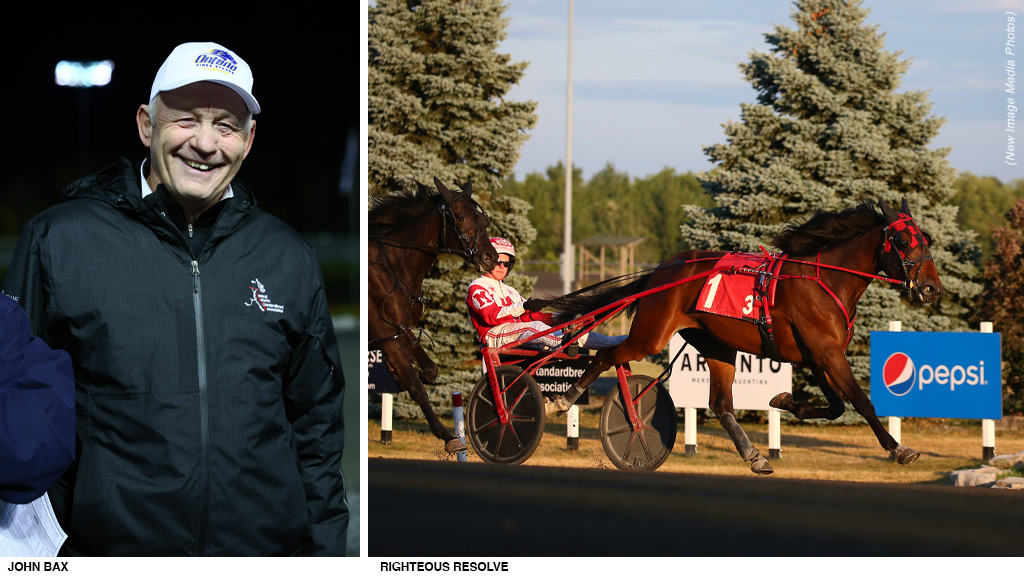
John Bax | Trainer
By John Rallis
There’s a couple of different ways of looking at it, and it’s tough comparing horses from different generations, so I’ve got a couple of different answers.
If I go back a ways, Pepi Lavec was maybe the first top two-year-old that I trained, back in 2001. She was good early, then tailed off a little in the middle of the season, before becoming the best again toward the end of the year. In the middle of the year, she was just going through a growth spurt, and that’s what affected her. Once she got through that stage though, she was great, and we saw that continue at three. Unfortunately, she picked up a serious sickness in London around the time of their sale, and that cost her dearly. Otherwise, she would have easily gone over $1 million during her three-year-old year.
She was by Mr Lavec, out of a Balanced Image mare, and she had that same Balanced Image desire. She was third in the Hambletonian Oaks [to Windylane Hanover and Cameron Hall]. She was just that good.
The vast majority of the time, though, you don’t really know what you have until they get into a race, take on another horse, and show they’re willing to dig in and fight.
Speaking of the Hambletonian Oaks, another filly who may have been every bit as good as Pepi Lavec was Righteous Resolve [who was also third in the Oaks, to Heaven Hanover and Bond]. She came home from Florida as a nice horse, but the first time Paul MacDonell drove her, in her first lifetime start, she came home in :27.1, from well off the pace, to win. All we could say was, ‘Wow, where did that come from?’
With both Righteous Resolve and Pepi Lavec, they kind of knew they were good. When they stepped onto the racetrack, they had that look and presence about them - they just looked the part. They also looked after themselves, and it’s funny how the really good horses tend to do that.
Righteous Resolve actually coliced in Florida between her two-year-old and three-year-old seasons, but she overcame it. We didn’t really talk about it much at the time, but when you think about what she endured and how she came back, it was an even greater testament to how good she was.
I knew I’d get credit for her success because I was the trainer, but truth be told, she was the one who made me look good (laughing).
Truth be told, in the modern day, I’d have to say Righteous Resolve would have to be the most impressive of the two I guess. She didn’t just do it for a start or two, and she sustained that brilliance and carried it throughout her entire two-year-old campaign.
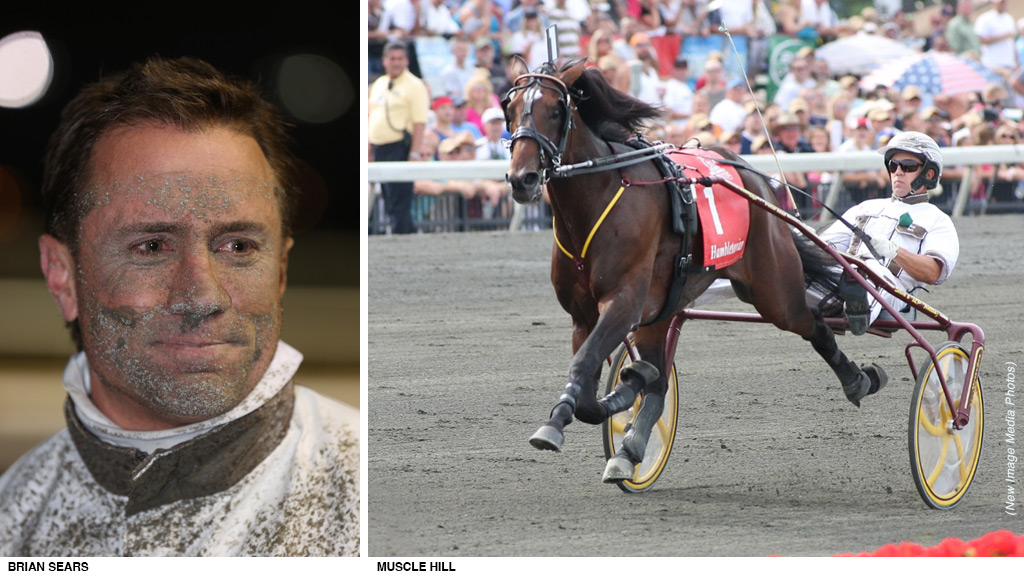
Brian Sears | Driver
By John Rallis
Without a doubt, the answer has to be Muscle Hill. I remember when he was two and was qualifying at Gaitway Farm. I was on Salutation Hanover [for Mickey Burke], and right after the wire I could see just how well he was trotting. I said to Greg Peck [who drove Muscle Hill to a second place finish to Salutation Hanover in that qualifier], ‘You should really put me on him next week.’ I just figured he had the makings of something special.
Lo-and-behold, one week later, I was listed on him to qualify at The Meadowlands, and the rest is history. I remember he won that qualifier in [1]:59, but he did it so effortlessly [by 11 ¼ lengths]. Sometimes people get fixated on speed, thinking they have to go fast early on to prove how good they are, but I’ve never been a big believer in that.
You never want to get too high on a horse too early, but he was one that gave me the confidence to speak about him with certainty. I knew he had the talent to become one of those generational horses, and it came to fruition.
His lone career loss came in his very first start [when he was 11 ½ lengths out at the quarter and got beat by a neck], but he was still so impressive in defeat that night. From that point on he ran the table [and never even had a horse lapped-on to him at the wire while doing so]. He built off his two-year-old campaign and went undefeated at three, including a dominant [six length] victory in The Hambletonian.
I had never won that race in my career to that point, so for him to help me accomplish that feat made it even more special. I’ve had the luxury of sitting behind many talented two-year-olds, but nobody compares to Muscle Hill.
This feature originally appeared in the May issue of TROT Magazine. Subscribe to TROT today by clicking the banner below.