


When Mike Saftic decided to leave his hometown of Sudbury, Ontario - and his hometown track of Sudbury Downs - to seek a full-time career in harness racing, ending up in the Canadian Horse Racing Hall of Fame wasn’t even part of his wildest dreams. Now, some forty years later, he’s about to be inducted into that very Hall, but he still finds it hard to believe that it’s happening. By Chris Lomon.
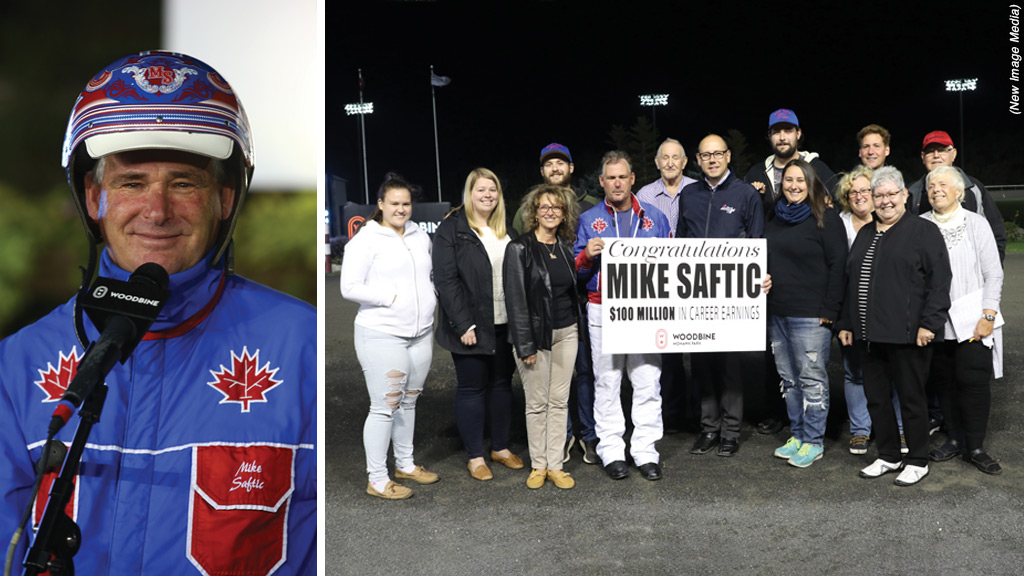
Mike Saftic was not about to let one bad actor deter him from pursuing a leading-man role on the racetrack.
It was a moment he had long dreamt of and played out in his mind; the time he would point a horse towards the starting gate for his milestone first drive.
The night before the race, one that would take place some 45 years ago at Sudbury Downs, his hometown track, Saftic was a near-equal mix of nerves and excitement.
“I remember thinking about how it would feel to drive my first race. You don’t know how it will turn out. I guess you just want it to be memorable in some way.”
It was memorable alright - though not in the Hollywood-style fashion he had envisioned.
“Back then, there were a lot of New Zealand and Australian horses up there,” recalled Saftic. “They were always bad actors back in the day. This horse I was driving was always one-two though, and the guy I was working for told me to just put him on the gate and go. But he also told me not to go around the track more than twice before the race started. So, I went around the track twice, but then someone came off with a flat tire.”
At that point, Saftic’s horse had plans of his own.
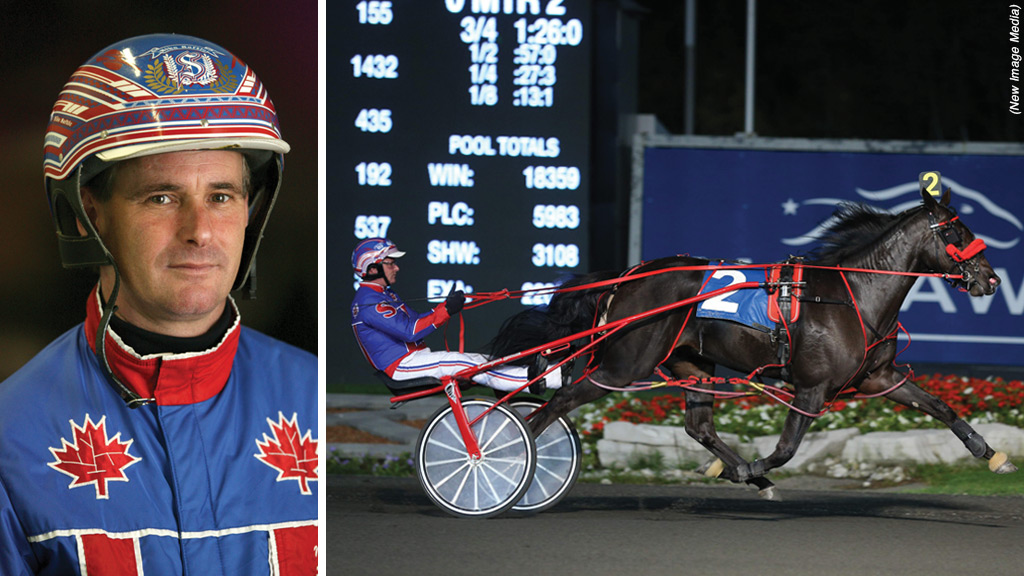
“The horse I was driving ran off the track and wouldn’t come back on. He broke the racebike in half and he was scratched. You felt like a loser. The guy now had to qualify him twice. You also had to think that if this was the beginning, it could only get better from there, but that’s how it all started.
His misfortune did not disappear overnight. In fact, Saftic holds a rather dubious distinction at Sudbury Downs.
“I have the record there for the most starts [in a row] without winning a race,” he said with a laugh. “Not exactly something you want to have your name attached to.”
Despite the tumultuous start to his career, Saftic didn’t bemoan his bad luck or consider throwing in the towel. Through it all, he was steadfast in his belief that he would find his place in the sport he discovered as an early teen growing up in Sudbury.
The city, home to nearly 192,000 people as of 2025, according to Statistics Canada, has produced several other notable names over the years - most famously former Jeopardy host, the late Alex Trebek. Other famous figures from the area include hockey players Tim Horton, Todd Bertuzzi, Mike Foligno, his sons Marcus and Nick Foligno, singer Stompin’ Tom Connors, and Olympic Champion swimmer Alex Baumann.
Alex Trebek was born in Sudbury in 1940, and although harness racing didn’t arrive in the Northern Ontario city until 1974, when Saftic was 13-years-old, Mike quickly found his way to the oval that was built by local mining businessman J.C. MacIsaac.
“I never had access to a Standardbred horse [as a child]. I was kind of a city kid, so I never worked with horses until I got older. I started grooming horses and cleaning stalls when I was 14 or 15, I got my trainer’s license not too long after, and my driver’s license in Grade 12.
“I remember, at the beginning, what a thrill it was to just jog a horse.”
He was hooked.
“That’s how I started, and I loved every minute of it.”
It prompted Saftic to ponder the possibility of a full-time career in racing.
“At that time, you had to be a groom for one year and a trainer for two years before you could apply to drive. I was in Grade 12, I graduated and I took a year off. I got my driver’s license and worked at the barn full-time.”
Off-the-board finishes and near misses made him reconsider that path at one point however.
“I didn’t do well at all when I first started driving, so then I went to college and took a Business Administration course… I had a few horses that I looked after each day when school was over. It was a two-year program and I completed it.”
Whether it was in the classroom, between classes, or taking a few minutes’ break from his studies though, Saftic couldn’t shake the horse racing bug.
On most days, school and racing matched strides in his thoughts.
“Every step of the way through college, I read the Wednesday and Saturday forms, figuring out how I was going to race each horse I was driving those days. Horse racing was always front-and-centre.”
A wide-eyed Saftic more-and-more became a student of the local racing scene, and whenever he went to the racetrack he was inspired to chase the success others had achieved.
“When you’re young, you look at the top guys there and want to be like them. Mike Noble [the first driver to win 1,000 races at Sudbury Downs] and Al Horner had nice barns. I worked for Marsha and Sandy Best, and they had a great barn too.”
Then there were the drivers who made the trek from Toronto to Sudbury for Ontario Sires Stakes events.
“When the guys came in from Toronto, I would just stare at them and watch things, like how they held the lines, just trying to learn anything I could from watching them. When you’re a kid trying to be like them, you just want to absorb as much as you can.”
A willingness to learn and an open-mind soon created opportunities.
After starting his driving life in 1981, the man whose driving colours are blue and red, adorned with maple leaves, would eventually branch out to other racetracks.
“My journey took me from Sudbury Downs to Rideau Carleton. When Rideau closed for the season, they would go to Connaught Park, but I ended up going to Pompano Park. When I was in my early 20s, I brought a racehorse to Pompano, and I got a job with George Sholty, who was a Grand Circuit trainer. It was my first time seeing how they did it on the Grand Circuit. So, I went from Rideau to Pompano, and then in 1985, I said to my fiancée (Cathy), who became my wife, that we should go to Toronto and take a shot there. If we didn’t make it, we would come back.”
With more question marks than solid answers, the couple trekked 422 kilometres from Sudbury Downs to Greenwood Racetrack, 10 minutes east of downtown Toronto.
In racetrack parlance, succeeding on the big stage appeared to be a longshot, but not enough to deter Saftic from giving it a go.
That decision would be a game-changing one for the reinsman who, at the time, was four years into his fledgling career in the sulky.
“Cathy and I both came down. Eventually [trainer] Garth Gordon sent me to Blue Bonnets for a couple of Springs, and you start to get noticed a bit.”
For Saftic, testing his talents on the Ontario Jockey Club circuit was akin to competing on hockey’s biggest stage.
“You felt like you were in the NHL then - it was the big time.”
The kid from Northern Ontario would prove that he belonged.
A son of Storm Damage out of the Meadow Skipper mare Lantern, Soft Light played a major role in elevating Saftic’s career. The bay pacer bred by Castleton Farm won 55 races from 230 starts and recorded purse earnings of $691,220.
“Soft Light was the horse who really kick-started my career. He was in this North American Series, and it took place at six different tracks in the U.S. before the final. I went to Brandywine and we won a race there. I won my first race at The Meadowlands with him, and we also went to Rosecroft. I got to travel around America with this very good horse, an Open pacer, so he was the one who really got me recognized.
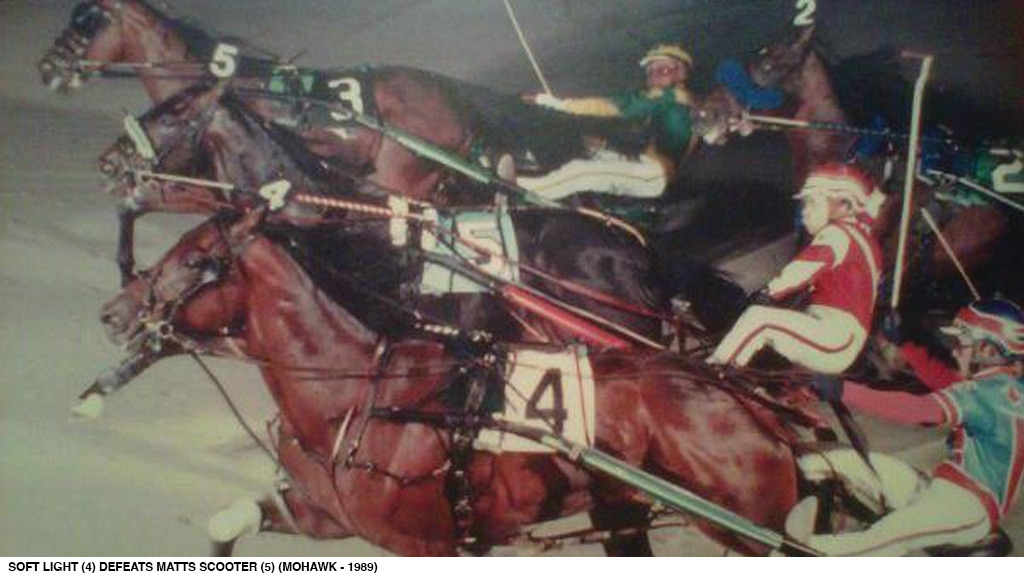
“If you drove a horse like him, others would take note and let you drive their $10,000 claimer. You got more drives because of him.”
After driving 132 starters in 1981, to earnings of a whopping $10,775, his 1989 campaign was the first time that Saftic reached the $1 million mark in seasonal purse earnings.
It would only get better from there.
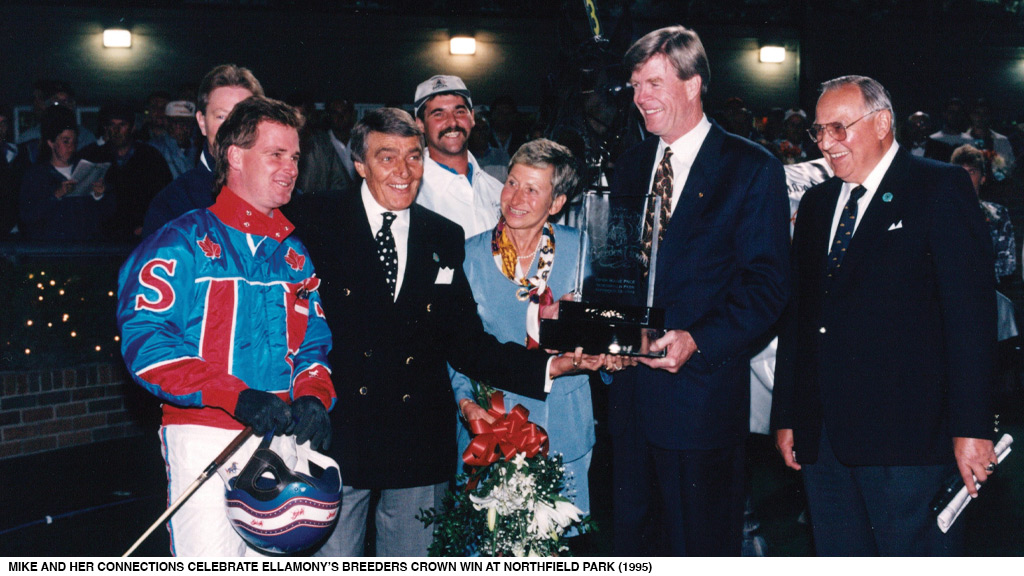
In 1993 - her sophomore year - Saftic would become the driver of future Canadian Horse Racing Hall of Fame inductee and 1995 Canadian Horse of the Year, Ellamony, for owner/breeder Charlie Juravinski and trainer Steve Doyle. The daughter of Cam Fella-Ceremony and Mike would team to win the 1995 Breeders Crown, for Older Pacing Mares, at Northfield Park in Ohio.
“At the end of the day, Ellamony [$1.4 million] was the best horse I ever drove,” he lauded.
“Oohs N Aahs [$1.1 million] was another great horse,” he recalled with a smile, when talking about the mare he drove to a second-place finish in the 1997 Breeders Crown for Older Pacing Mares, at The Meadowlands. “When you look back, she was the best in the world - what a talent she was.”
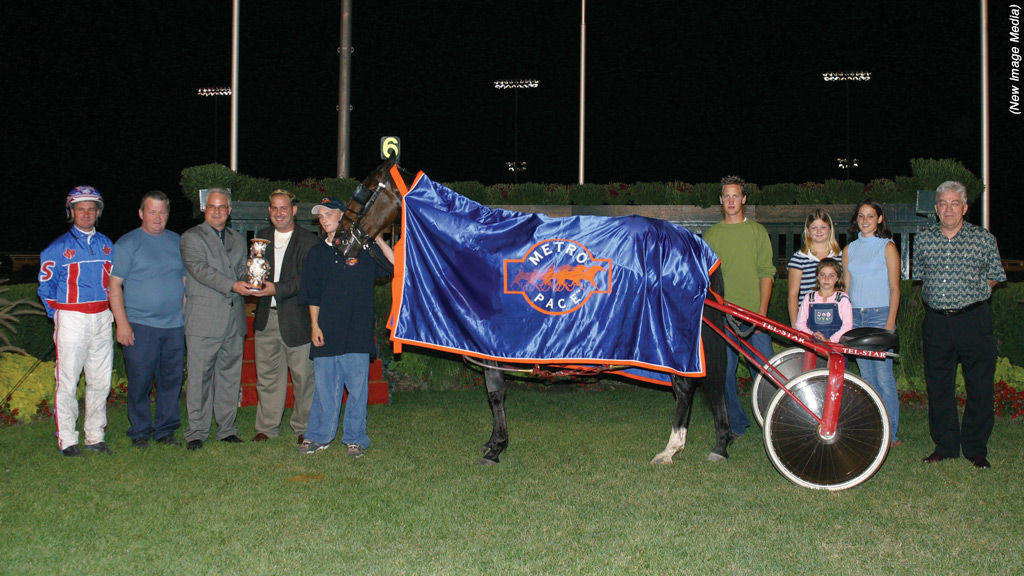
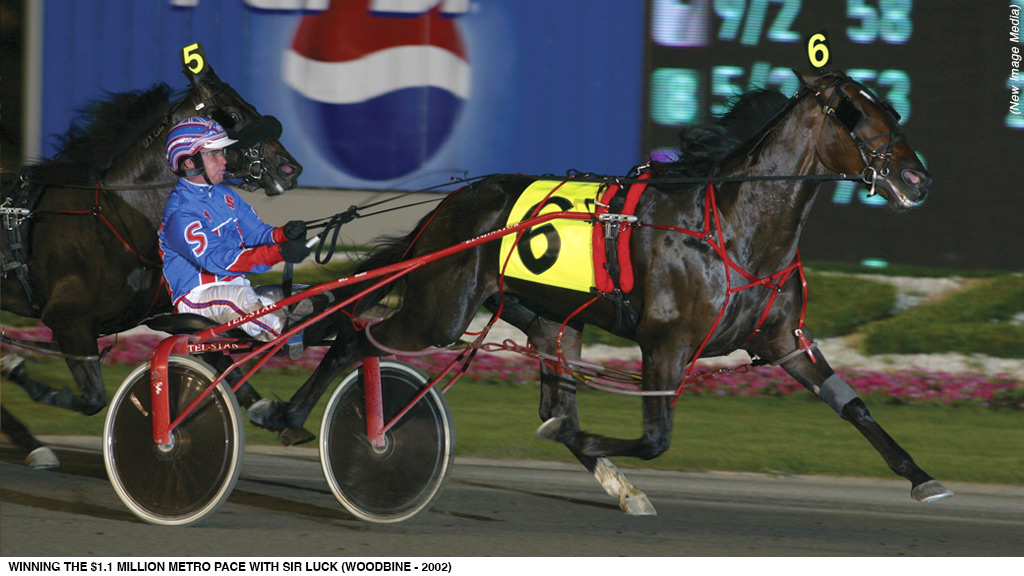
Other notable victories for Saftic came in the $1.1 million Metro Pace with Sir Luck (2002), the Jugette, with Pleasure Chest (2001) and the Gold Cup & Saucer with Nuclear Flash (1994).
In 1995, Saftic represented Canada in the International Driving Championships in Russia.
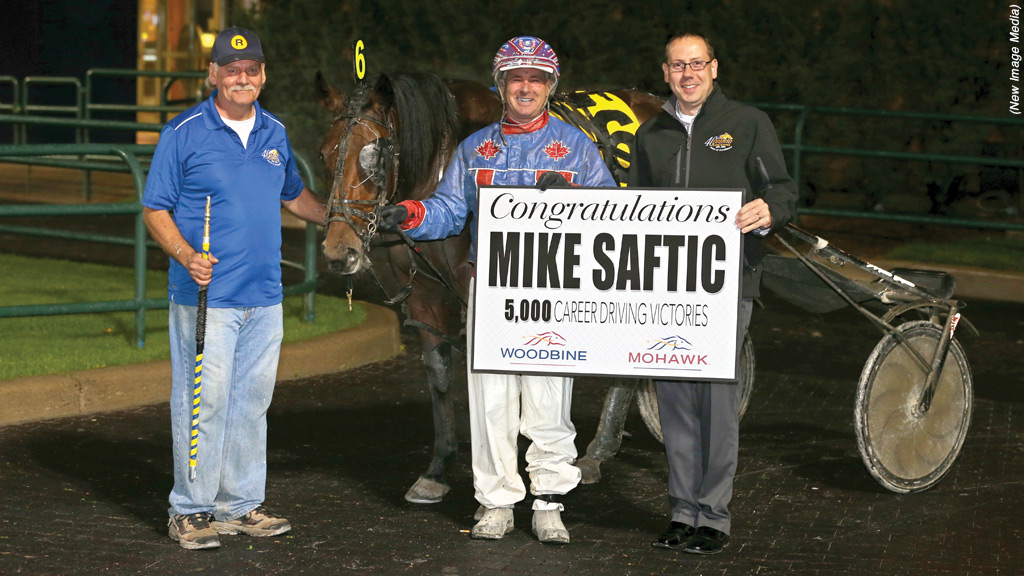
By the end of his racing career - his final drive came on November 7, 2024, in an Ontario Harvest Series race at Woodbine Mohawk Park - the popular horseman had won 5,388 races in the bike for purses earnings of $102,337,611.
“Longevity and being consistent was a big part of my portfolio. My goal was to be a regular driver on the Ontario Jockey Club circuit. If you could be a regular driver there, then you could make a living. When it became a reality - I was in the top 10 for about 30-35 years - that consistency really paid off,” opined the man who exceeded $1 million in annual purses for 29 years in a row (1989-2017), including a career high of $6,721,531 in 2002.
“Doing this never felt like work. I would have done it for free. Well, maybe not the last few years of it (laughing), but I always wanted to do it, and I got to live it.”
For most of his career though, Saftic struggled to believe that he had actually ‘made it.’
“Even when I was listed to drive on most of a card, I never thought that I had made it. I remember [trainer] Des Tackoor telling me one night, ‘You made it.’ But it didn’t quite feel that way to me. It took me a while before I could ever say that.”
A race one night at Rideau Carleton finally changed his perspective on that.
“I recall driving in a big race there, and when you come out on the track, you are in the spotlight - literally. As they call your name and your horse’s name, you can hear it. The track announcer, Ronnie Barr, was from Sudbury - my dad coached him in hockey. I come out in post parade and Ronnie says, ‘Mike Saftic, born and raised in Sudbury, Ontario, who has made his home the Ontario Jockey Club.’ I thought, ‘Wow… I did make it.’ And this is 26 years after I had actually kind of made it. That’s when it finally sank in.”
His call to the Canadian Horse Racing Hall of Fame has not.
“To tell you the truth, it hasn’t really sunk in. It’s getting there, but I never thought of myself as a Hall of Famer. And my dreams were never going to be the Hall of Fame. My family and friends and the kids are excited, but it still feels uncomfortable when someone says you are a Hall of Famer. I think that takes time.”
Just as it has with a scrapbook his father kept.
“Whenever I was in the newspaper in Sudbury or Toronto, he would cut the articles out. But I still feel a little uncomfortable reading about myself.”
The humble Saftic feels the same way about joining the Hall of Fame company he once idolized.
“It’s starting to feel a little more acceptable now. Joe O’Brien and Keith Waples are in there though. I look up to them. I idolized guys like Ron Waples and Billy O’Donnell - you don’t think of yourself in that class, but it’s nice and rewarding, for sure.”
In hindsight, so too, was the journey, the one that was at times winding and uncertain.
“Work ethic, especially when you work in a barn, is at the foundation of everything in this sport. You worked all day, and then you stayed around to race at night - you’re always working, but at the same time, it wasn’t a job. You loved being there and you loved hanging around the barns and the racetrack. There was never a time when I thought, ‘I don’t want to be here.’
“And then you look back and realize how many people helped you along the way. You may not have recognized it at the moment, but you appreciate it deeply now. And the horses, too. I respected and appreciated them then, but it’s a whole new level now.”
The same goes for his family.
“I had great support throughout my career. I am fortunate to have a wife who understood I didn’t have a 9-5 job, and that I was going to miss out on certain things. My boys [Justin and Cody] were good, too, and I think I was a good father.
“Now that I have grandkids - five of them - I can lay on the floor and play with them. You look them in the eye and wonder, ‘What part of me is in you?’ And they can also have anything they want. It’s been great to have time for them and my family.”
Racing also still occupies Saftic’s time, albeit at a slower pace, and through a far different lens than he’s ever known.
His love for the sport and championing it, however, is very much the same.
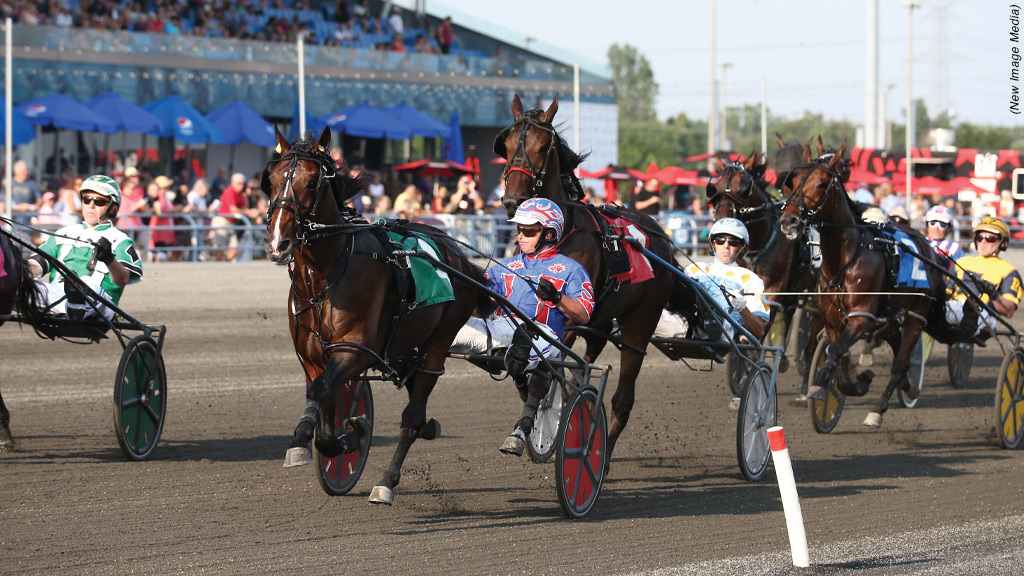
“I’m still on the COSA board as a director for the horsemen’s group, so you keep in touch that way. I watch the races, too. I’m a big fan of Beau Jangles. Through my era, we had Niatross when we were younger - a household name - Cam Fella and Somebeachsomewhere. It seems like every decade you might get one of these superstars, and he could be the next one.”
In every sense, Saftic, who still visits friends and family in Sudbury, finds himself in a good place, literally and figuratively.
“We have the dream house. We had a place in Campbellville and we had a cottage, or a ‘camp’ as I called it, up in Lake Belwood. Just before COVID, we built a new place up there. We sold the Campbellville property last year and we are full-time in Lake Belwood now. As I’m talking to you, I’m looking out at the lake.”
At some point, there will be an addition to the house, a treasured reminder of the journey that laid the foundation for a successful career, preserving a piece of the place where his dream became real.
“When they tore down Greenwood [in 1993], I climbed over two snow fences and grabbed a brick from the rubble of the grandstand. I haven’t done it yet, but I’m going to put the years I drove there on it and put it on my mantle.”
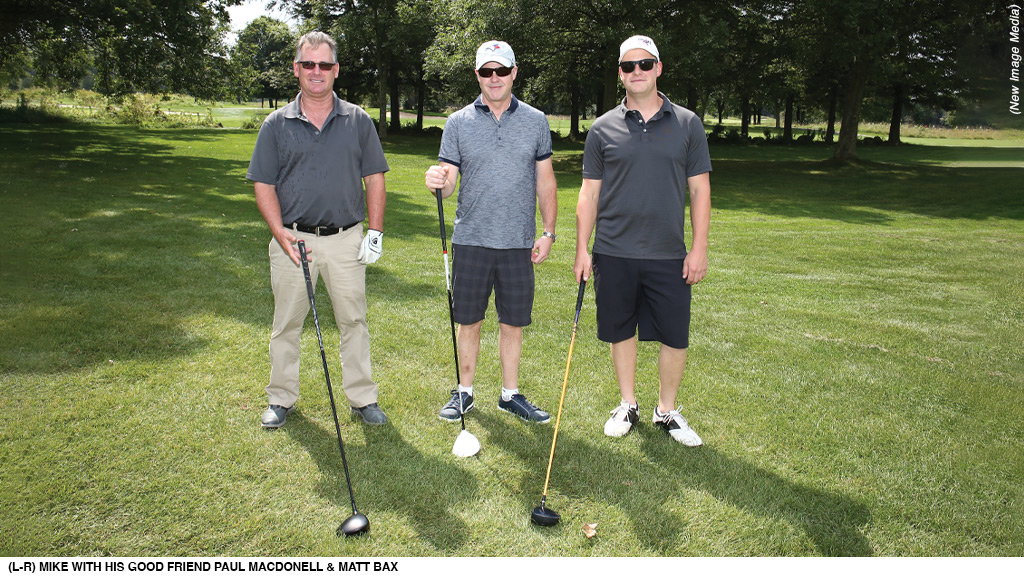
Perhaps it will sit beside the award from the Sudbury Sports Hall of Fame, which inducted him in 2016, and the hardware from his Canadian Hall of Fame induction slated for August 12th of this year.
“When I got the call about being elected into the Hall of Fame earlier this year, it sparks you to look back, and so many great memories come to mind - things you might not have even thought about five years ago. To be honest, I never imagined that one day I’d be in this place.”
A place where, whether he realizes it or not, his name unquestionably belongs.
This feature originally appeared in the June issue of TROT Magazine. Subscribe to TROT today by clicking the banner below.