


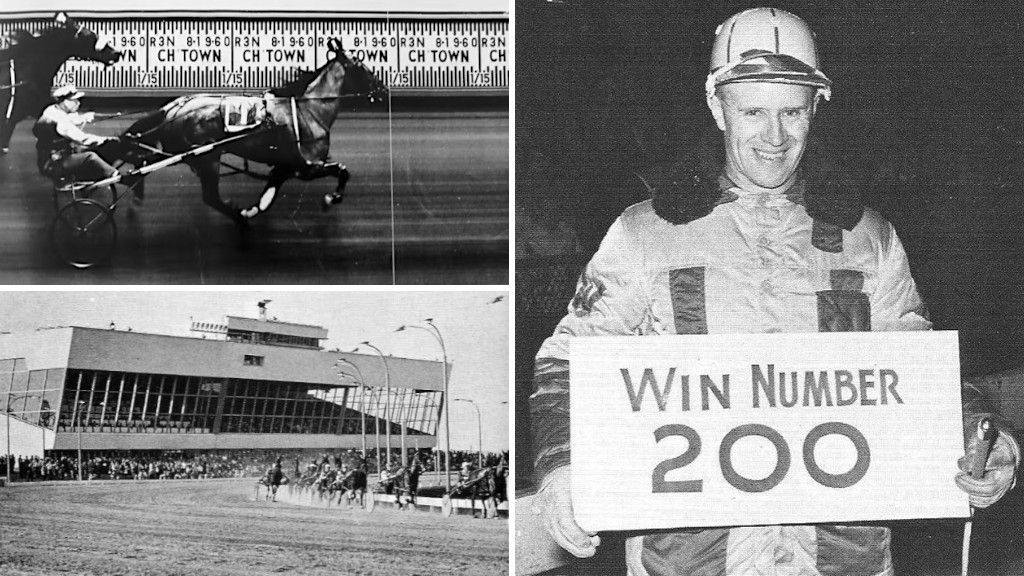
In this week's Rewind, Robert Smith takes a look back at some of the events and people in the sport during the decade of the 1960s in the ongoing monthly feature Years Ago. At this time in history, harness racing in Canada was growing by proverbial "leaps and bounds."
1960 – First Gold Cup & Saucer Race Held 65 Years Ago
In 1960 a totally new era began in Maritime racing when the Gold Cup & Saucer race was conceived. Its introduction coincided with the building of a new grandstand at the Charlottetown Driving Park, which replaced the old one that was gutted by fire after the end of the previous racing season.
The race was rather hastily arranged and co-sponsored by the City of Charlottetown and the local newspaper, the Charlottetown Evening Patriot. Firmly behind the project were E. Frank “Duck” Acorn, Driving Park co-owner as well as the race secretary, and Bill Hancox, the Patriot publisher. Their names will be forever attached to the starting of this now very famous race.
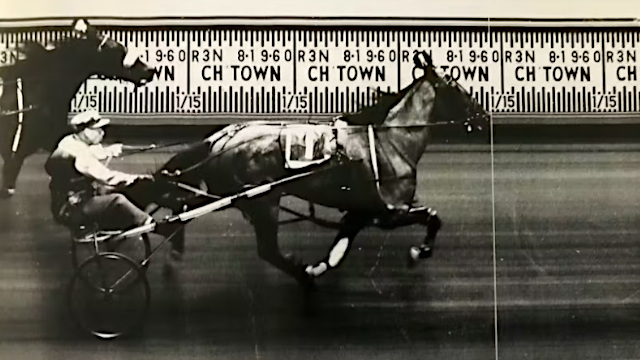
The winner of the first-ever race, held on Aug. 19, 1960, was Dee’s Boy, shown above with driver Lloyd MacAulay. Their fastest heat-winning effort in 2:06 earned the lion’s share of the $2,500 purse for owner Donnie McKenzie of Glace Bay, N.S.
A field of just six participants were entered in the inaugural. Dee’s Boy, a four-year-old roan son of White Mountain Boy – Dee’s Pride, had an incredible season that year following a brief career on U.S. soil as a three-year-old in Indiana. In 1960 he went on to make 41 starts and ended the year with 12 wins, 14 seconds and seven third-place finishes. His season bankroll was quite remarkable for a Maritime performer as he earned a tad over $9,000. His best mile was clocked in 2:06h flat.
Today the Gold Cup & Saucer trophy is considered the “Stanley Cup” of Maritime harness racing.
1960 – 1969: Two-Minute Miles Still Rare
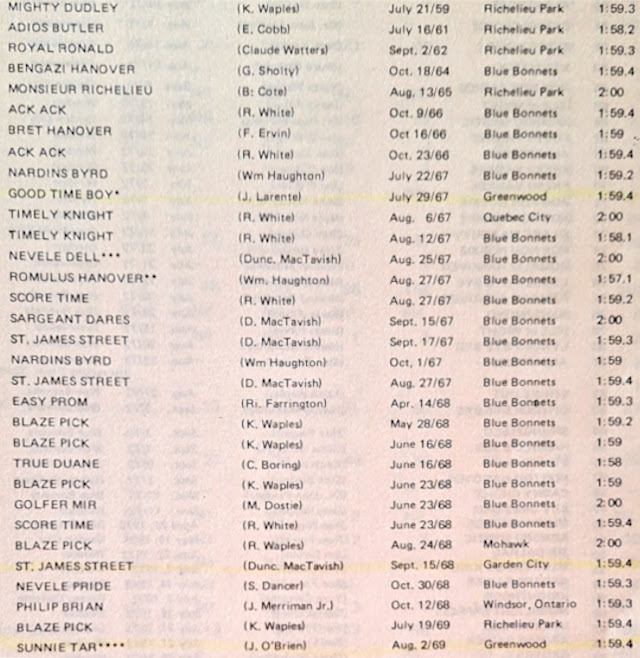
As the decade of the sixties began, the elusive 2:00 mark in races was still very much at hand. Just one “Miracle Mile” had been achieved on Canadian soil prior to 1961, and that was recorded in 1959, of course, by Mighty Dudley and Keith Waples at Richelieu Park.
During the years 1960 to 1969, just 31 miles were recorded in 2:00 or under — an amazing statistic compared to the modern-day trend. During that time span, most of the sub-2:00 miles occurred at Quebec-based tracks. Blue Bonnets led the way with 21, while Richelieu Park tallied 4 and Quebec City had 1. Trailing the pack were four Ontario tracks: Greenwood (2), Mohawk (1), Garden City (1) and Windsor (1).
One horse stood out in the number of two-minute miles scored, and that was Blaze Pick, the beautiful chestnut pacing stallion owned by J. Russell Miller of Dutton, Ontario. He had five on the 2:00 list in total — four with Keith Waples and one with cousin Ronnie in the sulky.
1967 - Kincardine Track Holds Civic Holiday and Centennial Celebrations
Aug. 7, 1967: In 1967, Canada was in the midst of a year-long series of celebrations to observe Centennial Year, Canada’s 100th birthday. A number of racing locations held special race days; one was at Kincardine, Ontario.
An afternoon of harness racing was held here by the local Kinsmen Club as part of the annual Civic Holiday weekend celebrations. This year it was a combined gathering. Proceeds were used by the club to assist in local projects as well as their funding of a new roof for the grandstand earlier that year.
A full program of five races, each going two heats, entertained the large crowd of some 1,400 people on hand at Connaught Park, as the track was known. Several happenings, including the return of a local horseman, highlighted the afternoon. Bill Habkirk, who started his career here many years ago, was on hand to drive and was a popular winner behind Verso Lee from the Vern Soper barn.
His early lessons came at this track under the guidance of Joe Shelton, a local veteran horseman. Mr. Shelton was still active although he had reduced his involvement. At this time he sold harness racing equipment and acted as a local judge. Through his efforts, merchants of the town sponsored the gift of a cooler to the horse going the fastest heat in each race. Habkirk had gone on to be a well-known and successful horseman much further afield.
Thanks to the generosity of Mr. and Mrs. William (Ted) McLean of Goderich, who provided a prize to the driver of the fastest heat of the afternoon, Mr. Grant Betts of Flesherton went home $20 richer. His mile in 2:11.4 behind Speedy Hedgewood earned him the honour. The gift was to remember McLean’s former star Deep Run Danny, who raced here with distinction in years past.
1967 - A Season to Remember
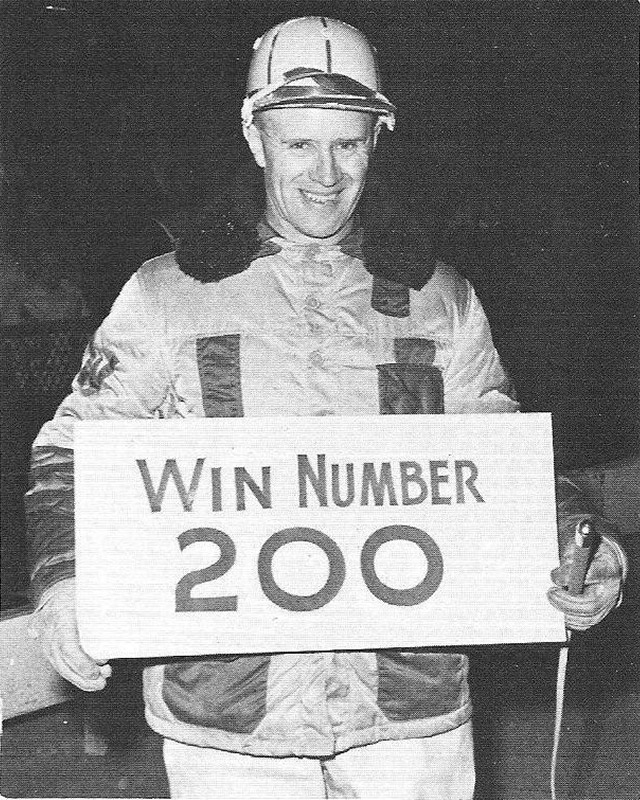
On Oct. 14, 1967, Keith Waples, then 43, paused for a short while to hold up a sign following his 200th win during that season. The milestone was passed when he won the opening race that evening at Garden City behind the trotter Armbro Echo.
His lifetime total was 1,783 at the time and eventually rose to an official total of 3,206. Observers believed that many more were not recorded in the early days. In 1967 he drove the winners of 252 races, with 246 at home — an all-time record for a teamster racing almost solely in Canada.
1969 - New Bridge at Garden City Raceway
When the Ontario Jockey Club opened their third track on the circuit at St. Catharines, Ont., it was a state-of-the-art facility. The 5/8-mile stonedust track was engineered with banked turns and a surface that was designed not only to produce speed but also be efficient even in times of inclement weather.
Perhaps one area that was not as user-friendly as possible was the path from the stabling area to the paddock and grandstand. The stables were located south of Glendale Ave., while the track was across the street. For the first years of its existence, a set of traffic lights operated by a security person assisted the crossing of horses.
In 1969 a new bridge was constructed at a cost of $30,000 to make crossing the busy thoroughfare much safer, as it eliminated the street traffic. The new bridge was for horses and their handlers only and included three lanes, intended to meet the needs of the backstretch personnel. The official opening of the new structure was observed on July 4, 1969.
Because of the rather unusual layout of the Garden City facility, with a public street so close, it often attracted “non-paying” customers. People parked their cars on the shoulder of the road and watched a race or two from the comfort of their own automobile. Remember, in those days racing fans had to pay to enter the facilities.
At the time of the bridge’s opening, some 624 trotters and pacers were recorded as residents at the Garden City backstretch. That number would ensure that the new bridge would be well travelled. (See photo below.)
By now history has told us that while the Garden City track was initially successful, it did not enjoy a long history. It operated from 1964 to 1976.
The track was closed in 1976 and the three-location circuit was reduced to just Greenwood and Mohawk.
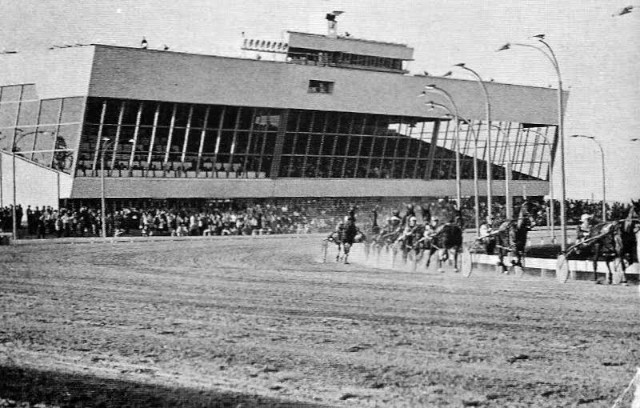
A view of the Garden City grandstand where the first-ever O.S.S. event took place on June 1, 1974. At this time the track was 10 years old.
Quote for the Week: “The people who are crazy enough to think they can change the world are the ones who do.” — Steve Jobs
Who Is It?
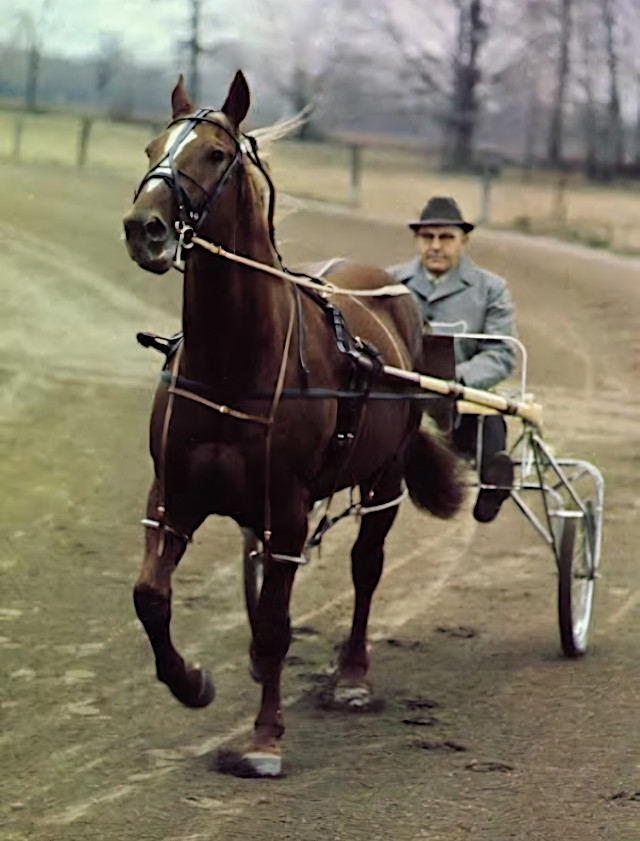
Can you identify this horse and trainer-owner? Not a lot of people jogged their horses while wearing a top coat and fedora, but this gentleman did at least on this occasion. Who are they? (Hoof Beats photo.)
Who Else Is It?
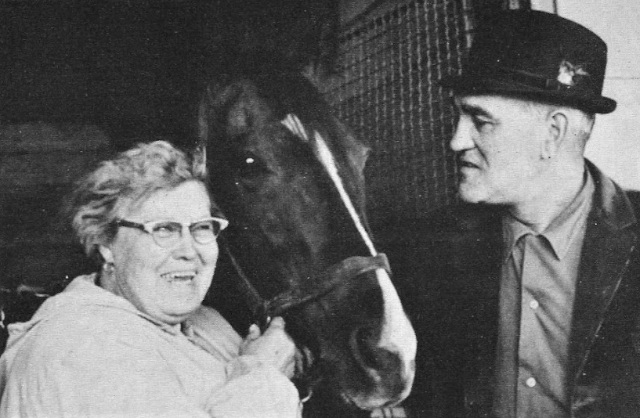
Can you identify this long-serving horseman and his wife, who was the stable’s trainer? They were both going pretty strong in the 1960s.
Who Else Is It #2?
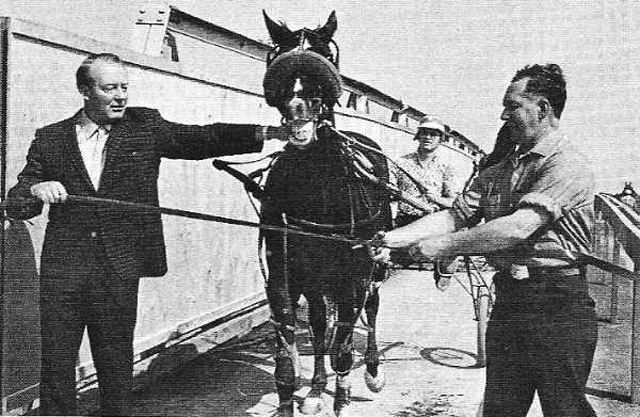
Can you identify the people in this photo taken in 1969 when the Garden City horse bridge was officially opened, as discussed above?
(The correct answers will be posted here by Robert as a comment in a few days.)
This week's picture answers
This week's Quiz photos were correctly answered by our experts. Correct answers are shown below:
Who is it was the late Russell Miller of Dutton, Ont. with his great pacer Blaze Pick. His stylish attire seemed to draw a lot of interest.
In the who else #1? photo was the couple Sadie and Bill Habkirk with Camper, their stable star at the time.
In the who else #2 was (l-r, front) Ed Bradle,y Dir. of Racing, horse was Superior Richard, Les Ehrlick, OHHA Pres. on the right. In the rear was driver Carman Hie.
Thanks to everyone for some very thoughtful comments. Your input is always appreciated so please keep sending them in.
SC Rewind
Love hearing & looking at all the old stories & pictures. Really like old Keith Waples memories as the Durhamite is one of favorite hometown sons here in Durham. Good to see Gord Waples add in his thoughts on here!!
rewind
If you look at some of your old Harness Horse or Horseman and Fair world training issues, many of the trainers of old wore ties, and fedoras, even sports jackets when they trained.
Very stylish way of doing things back in the day.
Years Ago: 1960s
I won't answer as many already have. Thanks for another excellent article Robert and for keeping these great memories alive.
Laurance Geisel
#1Blaze pick driver Russ Miller
#2 camper Sadie &Bill Habrick
#3 Ed Bradley & Les Ehrlich
Who is it??? Blaze pick and…
Who is it???
Blaze pick and j.r miller
Who else is it???
Sadie and bill habkirt
Who else is it #2???
Ed bradley and Les erling and bill elwood
Who is it - J. Russell…
Who is it - J. Russell Miller and Blaze Pick
Who else is it- Bill and Sadie Habkirk
Who else is it #2- Ed Bradley , Les Ehrlich and the driver..... maybe Wayne Hussey
Who is it is Russell Miller…
Who is it is Russell Miller and Blaze Pick. I remember Morley MacDonald coming to Garden City Raceway in 1976 with a stable of horses. A lot of those trainers back then wore a sports jacket and shirt and tie and a fedora while they trained their horses. Morley would stand at the track gate and the groom would bring the horse to him to train. Morley wore a sport jacket and shirt and tie and a Fedora and a nice pair of leather Kroop boots and leather driving gloves. He looked very classy as Russell does in the picture of him and Blaze Pick. Who else is it is Bill and Sadie Habkirk. Who else is it number two is Ed Bradly CEO of the OJC and Les Erlick President of the OHHA. And Carmen Hie driving his horse Superior Richard.
Who is it # 1
This is a picture of my grandfather J Russell Miller of Dutton, Ontario jogging Blaze Pick , who was a very special Chestnut colt and a family favourite. As far as the top coat and the fedora, this is a classic look I remember as a child, on several occasions.
Who is it.Russ Miller and…
Who is it.Russ Miller and Blaze Pick. Who else is it
Bill and Sadie Habkirk and Camper.Who else is it 2.Ed Bradley and Carman Hie.
Another Great Article Robert…
Another Great Article Robert
My first drive on the Jockey Club Circuit was at Garden City. Went off as the favourite in the preferred and finished last. Foggy night and I remember coming over the bridge across Glendale Ave.
Can you believe that in 1969 you could build a bridge for $30,000
Today the building permit would be more than that.
Keep up the great work.
Who is it Blaze Pick
Who is it Blaze Pick
Who is it Russ Miller Who…
Who is it Russ Miller Who else is it Bill & Sadie Habkirk & Camper Who else is it 2 Ed Bradley Les Ehrlick Carman Hie with Superior Richard, it was a three lane bridge which I had the privilege of crossing it a few times
Who is it? Blaze Pick with J…
Who is it? Blaze Pick with J. Russell Miller at the controls.
Who else is it? Sadie and Bill Habkirk with the horse Camper.
Who else is it #2? Ed Bradley on the left, Les Ehrlick on the right, horse is Superior Richard with Carmen Hie at the controls.