


Near the end of a TROT feature on him in our January 2017 issue, Trevor Henry discussed the possibility of one day taking a step back from driving, and just training a few babies instead. He said to writer Keith McCalmont at that time: “Who knows, down the road I might just do that instead of driving. I don’t think I’ll drive after I’m 55.” By total coincidence, after recently hearing rumours that the winner of 7,869 races and over $86.8 million in purses was planning his semi-retirement, we sat down with Trevor, just seven weeks shy of his 55th birthday, and asked him to share his thoughts on the matter. The rumours were true - beginning in the fall of 2026, Trevor Henry will no longer be driving horses year-round at Mohawk Park. Instead, he and his wife Shannon will be heading to Florida with a stable of young horses, and leaving the harsh winters of Arthur, Ontario behind. It’s a dream come true for the couple who met in their teens, and loved wintering in Florida, years ago, before their kids were of school age. It doesn’t mean, however, that the future of our sport itself looks all rosey to them. Trevor has grave concerns - like many others - as to where we’re headed, and he took this opportunity to voice his thoughts on that important issue as well. By Dan Fisher.
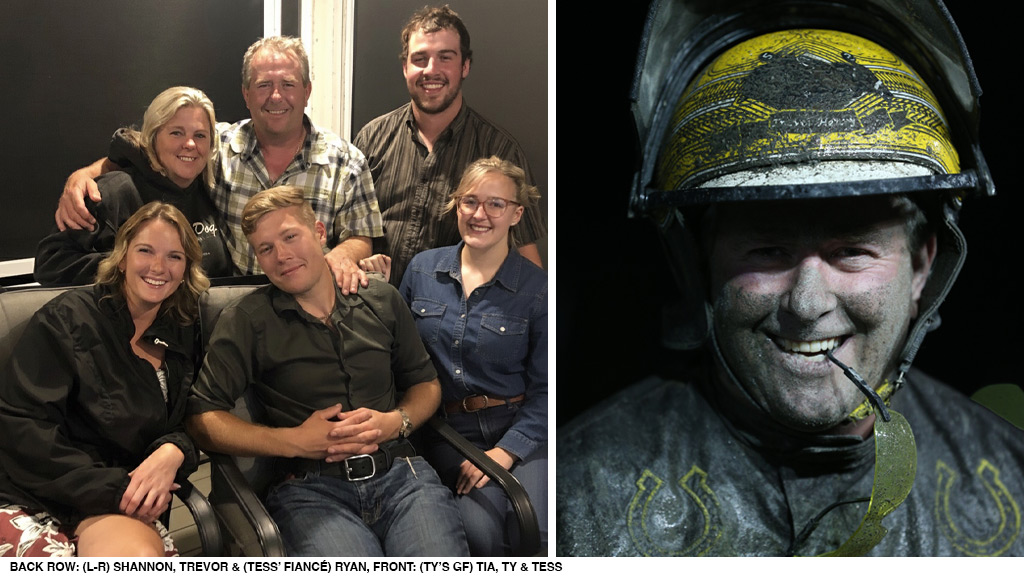
“You know, we quit going to Florida a long time ago because of our kids,” Trevor joked, “and now that we’re rid of them we can finally go back again,” he said with a laugh.
A man who adores his children, Trevor is obviously kidding - to some degree - about being ‘rid of them,’ but he and his wife Shannon have also recently found themselves to be empty-nesters.
“Ty is 29 [years-old] now and Tess is 25. She’s getting married in May and they both have their own places, so I guess it gives us the freedom to head back south again.
“My dad [Ross] had a farm in Okeechobee you know… we used to work there for him every winter. I even drove a few at Pompano for him in the 90s,” Trevor shared.
“Ty was born in [19]96 and we kept going until he was old enough to start school - then we started staying home after that.”
“That’s actually how Trevor and I started training horses together,” Shannon explained. “Trevor’s dad actually got really mad when we first said we weren’t coming down to Florida to work in the winter any longer. They wanted me to pull Ty from school here, part way through the year, and then put him in school down there - I refused. It caused quite the fight… he [Ross] and I weren’t even talking for a while,” she reminisced.
“Then one day, after he realized I was super-serious, he just showed up at our place and said, ‘How many [horses] do I need to leave behind then, for you guys to train up here?’ That’s how we first started our barn together,” Shannon smiled.
Yes, Trevor Henry definitely came from a harness racing family, one that included parents Ross and Joyce, brothers Wayne, Paul and George - who all made a living in the business as well - and sister Sharon, who went into real estate instead. And it was growing up in that family, and sitting behind horses that didn’t necessarily have the nicest manners or gaits, that helped Trevor eventually get to the highest level of his sport.
“We raised a lot of OSS horses back then and my dad taught me a lot about trotters,” shared the strong and sometimes silent horseman. “Bill Cass was the one that got my dad to buy in on his first horse - that’s where our colours came from. The barn and the track were the only two places that I was ever around… it’s all I ever wanted to do. My dad wanted me to be a vet but I didn’t have the smarts for that,” he laughed.
“I always loved Orangeville [Raceway]. It was a great track for me growing up… we went there every Sunday afternoon and Thursday. I just loved it there - it was a great spot.
“Other than my dad, the guys I really looked up to were Ray McLean and Bud Fritz. We were at Elmira a lot and they were both there too. I eventually drove against them, which was pretty cool. Ray was just a really good driver, but I’ll tell you, Bud was a tough guy to drive against. Let’s just say he used a lot of track,” Trevor said with a chuckle. “If you wanted to get around him, you really had to work some magic.
“We had as many as 70 horses on our farm at one point,” Trevor stated proudly. “All trotters. And they weren’t always real pretty ones either,” he shared with a chuckle. “It makes you a better driver though, that’s for sure… sitting behind ill-gaited ones that are breaking all over the track… been there, done that,” he laughed. “I’d train them all morning and be out at night to drive them. I had a lot of practice.”
All that practice paid off, and although eventually most of the horses Trevor has driven over the past 15-20 years have had better manners than the ones in those early days, there was one bad actor in particular, just a few years ago, where the experience he got in his youth directly paid off for the youngest of the five siblings - both as a driver and an owner. In fact, it was because of his touch with ‘hot-headed’ trotters, that Trevor’s name ended up on the ownership papers of one of the best horses he’s ever been involved with.
In the fall of 2018, trainer Jeff Gillis was given a three-year-old trotting daughter of Donato Hanover to train, by the name of Hey Livvy. She had lots of speed, but not many manners. That is, unless Trevor Henry was sitting behind her.
“She was a handful. She was very tough to drive, but that’s how I got to drive her,” he shared.
And, as it turned out, that’s how he got to own part of her too.
“Nobody else really wanted to drive her, but I seemed to get along with her ok,” said Trevor, downplaying his role. “Eventually they [Blue Chip] gave me part of her - so I had to drive her… like if my name was down on the ownership, I couldn’t pick-off of her. It worked out pretty good for all of us,” he smiled.
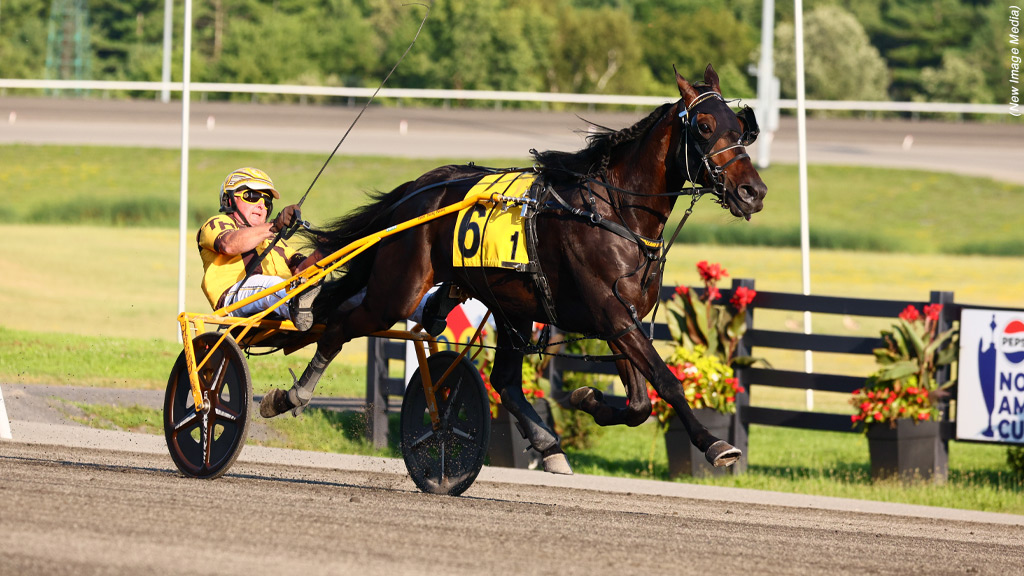
Another understatement, as the mare would go on to earn $864,743 lifetime, winning multiple Preferred and Open Trots at both Mohawk Park and Yonkers, as well as the $220,000 Armbro Flight Stakes at Mohawk, with part-owner Henry in the bike, on North America Cup night, 2020.
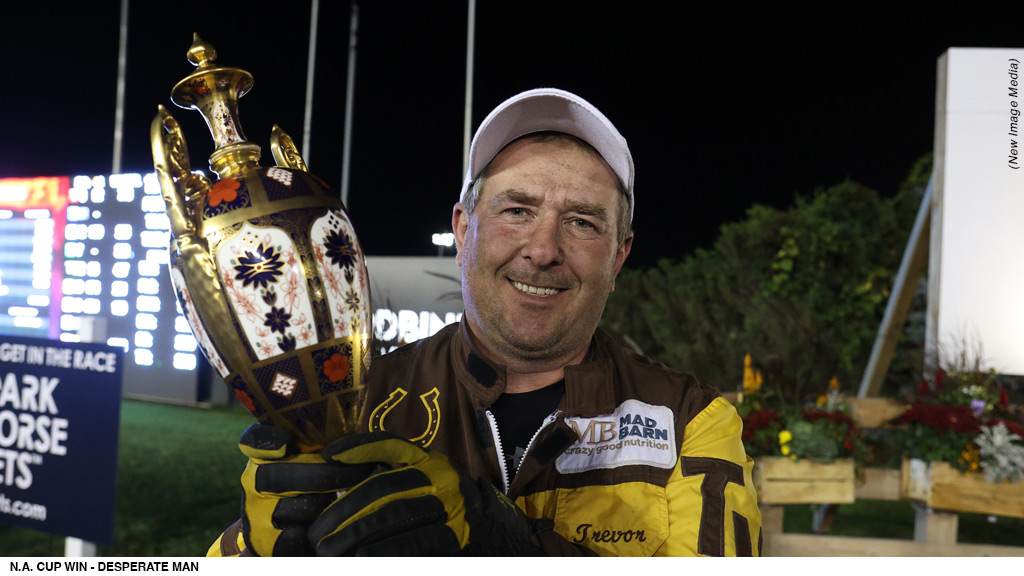
It was a year later, however, on N.A. Cup night 2021, when Trevor would win the biggest race of his career - this time driving Desperate Man, the family horse of Trevor and Shannon’s close friends, John and Kathy Cecchin, and Paul and Nikki Davies.
Ya, like, it was just one of those things, it just worked out, you know? The stars just lined-up - it was COVID - and it was later in the year. He just got a perfect trip… it couldn’t have worked out any better. Dougie [McNair] let me in front of him [with Jimmy Connor B] and I just followed [David] Miller and Perfect Sting around the track… It was just one of those things. Everything worked out… it couldn’t happen to a nicer bunch of people either.”
Driving in stakes finals on North America Cup night and winning Canada’s biggest race might be things Trevor Henry became more known for over the past decade, but unlike many of the sport’s leading men, he didn’t become a regular on Canada’s A-circuit until the somewhat later age of 43 - but it wasn’t because he was unsuccessful at his craft prior to then. On the contrary, the winner of multiple driving titles at tracks like Western Fair, Grand River and Clinton, was simply having too much success to leave the B-circuit.
“I was winning a lot of races year-in-year-out, and you just don’t think about leaving. Why would you change it? But at one point, I was going to both Western Fair and Flamboro because the guys would ask… but then it got to be too much.”
In October of 2014, Trevor made the decision to race full-time on the Woodbine Entertainment Group circuit. He was tired of running from track-to-track and racing every night of the week. The cancellation of the Slots at Racetracks Program played a part as well.
“When the government stepped in I thought if I was going to make money in this game I needed to make a change, start driving at Woodbine and Mohawk and race for more money,” he reasoned.
The switch was almost seamless for the natural horseman, who saw his career-high in purses jump from $3.4 million (in 2012 and 2014) to $4.3 million in 2015 and $5.1 million the following year. The 2015 season was the beginning of a nine-year run where Trevor’s purse earnings never dropped below the $4.2 million mark.
Henry’s success on the bigger track surprised no one, and in the 2017 TROT feature he explained it to McCalmont like this: “It’s harder at the smaller tracks to be honest. Here [WEG] everyone is a very good driver and you know what they’re going to do… but it can be harder on the smaller tracks when you have no idea what they’re going to try and do!”
Trevor has never forgotten the people who helped him make the transition to the WEG Circuit either.
“Richard [Moreau] was using me quite a bit then, and then after the first year I was there, Mike Weller was really hot and I got driving for both him and Victor Puddy.
“Mike [Weller] was a hell of a good guy. We were great friends. He got cancer… it was in his intestines I think. He did all of that chemo and everything, but eventually it just got him,” said Trevor, as his voice trailed off a little.
“Then, eventually, I picked up Bob’s barn,” he said, his voice bouncing back a little while reminiscing how he became the main driver for double Hall of Fame trainer Bob McIntosh.
“That was a good client to pick up,’ he said with a smile. “He just put me down on L A Delight one night. Randy [Waples] had been driving her… I don’t really know what happened there but he [Bob] just put me down on her. I think I won with her that night and he started putting me down on more of them.”
A winner of the 2019 Lampman Cup, as the leading driver in the Ontario Sires Stakes, and annually a top-five driver in that program, Henry still plans on being a regular in both the OSS and at Mohawk moving forward - just not in the winter.
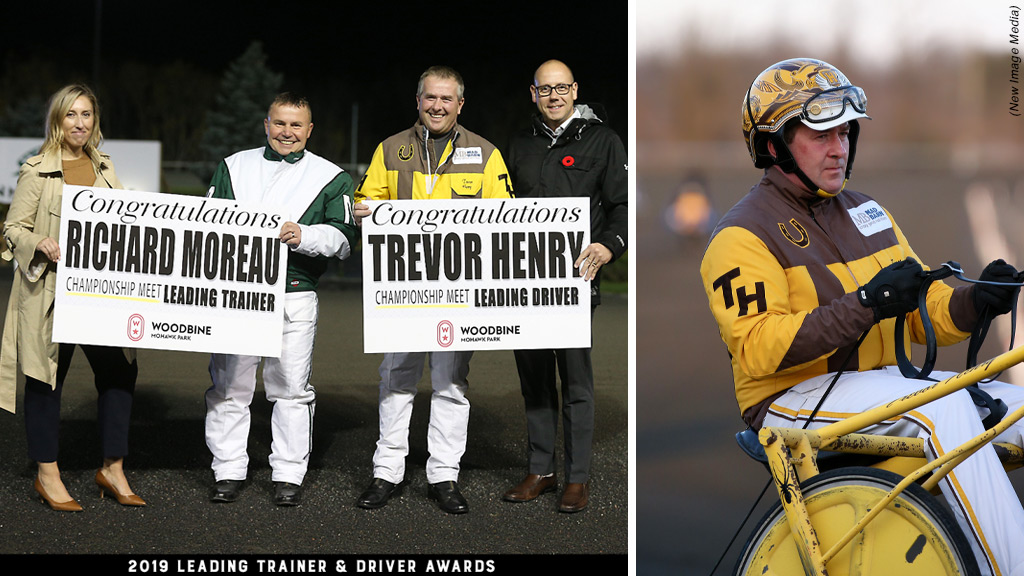
“I’ll still be driving our own, and for anybody that wants to list me while we’re up here.” he reasoned.
Trevor’s purse totals the past few years are still just shy of $4 million annually, so it’s not like the game has passed him by - by any means.
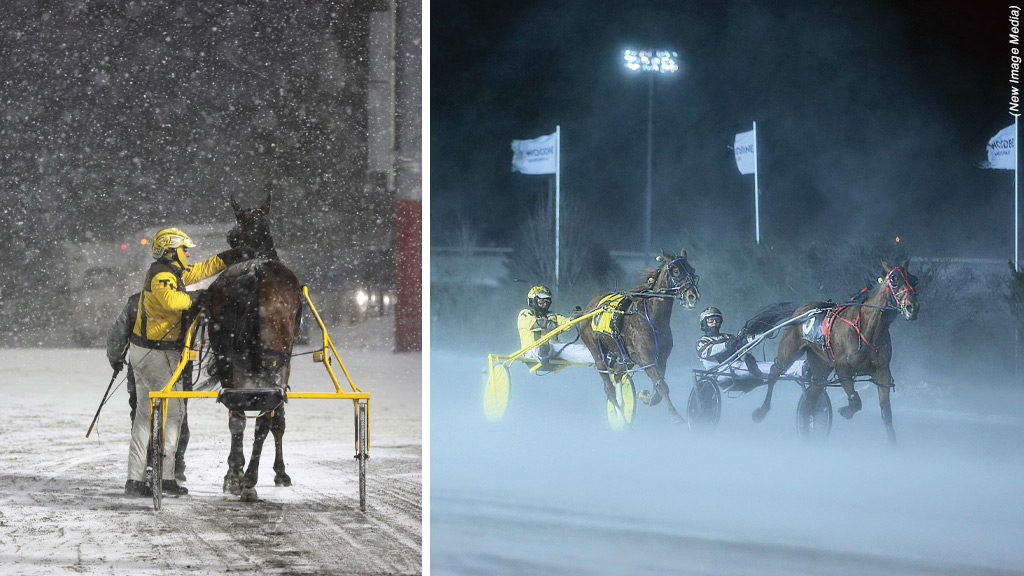
“I know that I can still drive,” Trevor smiled. “You know, you just start to get a bit older though, and like the other night when you saw the Greek, you realize that you don’t bounce like you used to,” referring to a January 11th accident at Mohawk that saw driver Chris Christoforou break a number of bones in his leg and ankle.
All things taken into consideration; the age of their children, their affinity for Florida, their love of young horses, and the point where Trevor is at in his career, made the timing perfect when Trevor and Shannon recently got a call from an old friend - Robert Schlegel of Glenview Livestock.
“Robbie and I go way back,’ Trevor stated. “Years ago, when I was doing really well at the small tracks for [trainer] Paul Taylor, Glenview Livestock owned most of those horses. They were spending the money and buying good horses, and that’s what gave us all the power.
“He recently reached out to us and asked us if we’d be interested in training babies for him in Florida in the winter, so we’re going to have four of our own down there, and probably about ten for him… he’s got a bunch of homebreds but I think we’ll go to the sales and maybe look for a couple of trotters as well.
“We were a bit surprised when he asked, to be honest, but the timing just seemed right,” Trevor suggested.
Shannon Henry, Trevor’s best friend and partner since they were in their teens, concurs.
“I’m happy for us, but I’m really happy for Trevor,” said Shannon, who met her husband when they were 16 or 17-years-old, when she was hanging around Flamboro Downs with her friend Patty Budd (now Pereira) and Trevor was working for Patty’s dad, Billy, and living in a trailer at Budd’s farm.

“He’s lived that high stress, go-go-go life for so long. He needs this for himself. I’m glad he’s doing it because he’ll get more of a life now. He’ll be able to enjoy things more,” she explained.
When asked if Trevor is more the strong, silent type that doesn’t always show a lot of emotion, and if that personality takes its toll on a catch-driver, Shannon acknowledged that to be true.
“That’s why I have to be the bitch of the family,” she laughed. “But I mean it. I’ve got to defend my man sometimes,” Shannon said in all sincerity.
“Sometimes he takes the defeats harder than he lets on, and he gets quiet at home… he can be pretty hard on himself. If he wins a big one, you know, we’ll be watching the replay three months later,” she laughed. “But he never misses a beat on anything. He sees everything that happens in every race, because he watches them so much. And I can tell when he’s down, you know? So eventually I just say to him, ‘What is it?‘
“He’ll be like, ’I could have driven that one better’ and so on. Not as much now that he’s older, but there was a time when it would really affect him. Or, you know, if somebody set him down, it used to really bother him, but not so much anymore. He never would never say anything though, but I would know.
“So, it’s time for him to feel less stress, and he’ll probably even enjoy it more, just driving in the spring, summer and fall.
“You know, he’s our blacksmith as well… a lot of people wouldn’t know that. He shoes all of our own. So I mean, he’s not done in the morning when the driving is done. Now you’ve got to shoe a couple and then go drive all night. Then before you know it, it’s the next day already. Most of the rest of them [drivers] get a day or two off when Mohawk is dark… not Trevor,” lamented Shannon.
Stepping back a little, spending his winters in the south, and training babies with his wife, definitely sounds like a good move to help keep Trevor Henry fresh and enjoying the game he loves - and love it he does. So much so, that he’s also very concerned about racing’s future, and what’s being done to ensure that we even have one.
“There’s just no change in it [racing]. You know, like every other game - football or baseball - they change with the times. We don’t change anything to get people to the track. You know, it just seems like they actually don’t want people at the track. You hear so many stories about people that do go, and they don’t get looked after at all - terrible customer service.
“If anything, the way we treat our customers has gone backwards. People have told me stories where the hospitality part of it at some tracks is so bad it’s crazy.
“Nobody in the industry seems to work together to make things better either. At Grand River it’s called ‘Industry Day’ right? It used to be that nobody else raced that day, so everybody could go to that track and celebrate, and watch the races - the grooms, the trainers and everybody. What about moving it to a Sunday? You know, where Mohawk doesn’t race. Nobody else would race. Have it at four o’clock in the afternoon, at eight o’clock, when the races are over, have fireworks and a band or something like that. You know, more of a party. Or let’s say, even if they wanted to keep it on the Monday… have Mohawk dark that night. Work together. All the money’s going into one pot now anyway, so why not have all of them work together?
“I’m not blaming any single track or group, I’m just saying that we need to work together as an industry.
“It’s the same as North America Cup night. Why does anybody else have to race that night? There doesn’t have to be racing a Georgian or fu@#ing Hanover or anywhere else that night does there? Because all the money’s going into one pot anyway… What are they making off Hanover on that Saturday anyway? It wouldn’t be f@#k all. And everyone who’s at those tracks that night are just watching Mohawk on the TV anyway, but if they weren’t, they might actually go to Mohawk in-person and we could have a bigger crowd that night. Then you’re going to increase the popularity of it, with a bigger crowd, more noise, more action, more excitement. Then some people might come back and bring their friends - if the beer wasn’t $15 a bottle. You know what I mean?
“We all have these questions but nobody ever speaks to them or does anything about it. You can go to Clinton on a Sunday afternoon and have a beer for $5, so why does it have to be so expensive at other tracks?
“The problem is that not enough of the people making the decisions have any skin in the game,” he laments. “It seems that a lot of them are just happy taking their paycheque and going home. But where are we going to be 10 or 20 years from now if this continues?
“I remember being at Grand River on Industry Day years ago, and you couldn’t move because the crowd was so big. I was at Greenwood when Apaches Fame won the N.A. Cup, and you were stuck in traffic for 30 minutes just to get into the place.
“Look at the Confederation Cup. I have memories of the parties in the backstretch at Confederation Cup, right? They used to say how Charlie [Juravinski] was tight. I’ll tell you what, I bet you they wish he was back there now. On Confederation Cup day they used to give you a coupon for a free case of beer if you were stabled there. Everybody that was stabled there got a free case of beer because they wanted to promote a big party - that’s the god’s honest truth.
“I ended up winning that race twice [with Western Fame in 2017 and Fourever Boy in 2023] and when you look out at the tarmac it’s kind of embarrassing. I remember when they’d be lined up all the way around the outside fence and there was a huge party after. Now there’s nobody there, so after the races you just hop in your truck and go home. There’s no good excuse for it either - it’s just really sad.
“I know it will never be that way again altogether, but now with sports wagering and other competition, it’s even more reason for them to try and pack the place - at least on those big nights. There’s no reason why they can’t either.
“It’s the same with O’Brien Awards night - they shouldn’t race at Mohawk on that night. They’re putting out three nominees for each horse now, well if they didn’t race the night of the national awards ceremony they wouldn’t have to worry about filling their tables.
“It’s supposed to be for the horsemen. So why are the horsemen working? It’s one night - it’s an awards night. There’s a guy like Travis Cullen - his mom and one of his horses was nominated and here he is at Mohawk. Because he has to be, right? I mean, they were short horses, they’re phoning them for horses to make the card up, so he had to go and race them. But again, we can’t get together, right? Why can’t Woodbine and Standardbred Canada work together one night of the year? Surely you can have one Saturday night off per year?
“Can you imagine if they played NHL games the night they gave out the Hart Trophy and their other major awards? That would be the stupidest thing I’ve ever heard of,” he stated emphatically.
Trevor Henry cares about our business deeply. If he didn’t, the man of few words wouldn’t have gone on as passionately as he did about these, and other, legitimate concerns he has in regard to its future.
For now however, he and Shannon are focussing on preparing for their new partnership with Glenview Livestock, and returning to Florida next winter - for the first time in 25 years - to train babies.
To Shannon, the partnership with Robbie Schlegel is just simply meant to be.
“Robbie’s grandfather, Waz (Bill Weitzel), loved Trevor, and his dream race to win was The Battle of Waterloo. A few years after Waz died, Trevor won it with Bronx Seelster, and Robbie’s mom came out to the winner’s circle bawling her eyes out - I’ll never forget it.
“Trevor’s a trotting man though, and his dream race is the Hambletonian. Sure, it’s only a dream that he might win it one day with Waz’s grandson, but Trevor never thought he’d win the N.A. Cup either, so there ya go,” she reasoned.
So this fall it’s off to a new barn in Florida for the fun-loving couple - whose comedic barbs toward one another are sure to keep things exciting - and a dozen or so young racehorses, all starting a new chapter of their lives together.
And when asked who the boss is, in that barn, the couple answer simultaneously:
Shannon: “I am.”
Trevor: “I let her think she is.”
When asked who the boss is, away from the barn, Trevor replies, “Same. I’m just like a bull’s prick - I just go wherever they shove me.”
To which Shannon rolls her eyes and replies, “He’s such an idiot.”
This feature originally appeared in the March issue of TROT Magazine. Subscribe to TROT today by clicking the banner below.