


After winning 19 of 25 starts at ages two and three, for earnings of over $1.9 million, and then becoming the fastest aged pacing mare of all-time at age five - after missing her entire four-year-old year due to injury - it’s easy to see how Put On A Show changed the lives of her part-owners, Richard & Joanne Young. But if Richard had had his way before all of that happened, none of it may ever have happened. By John Rallis. (With files from the July 2023 issue of TROT).
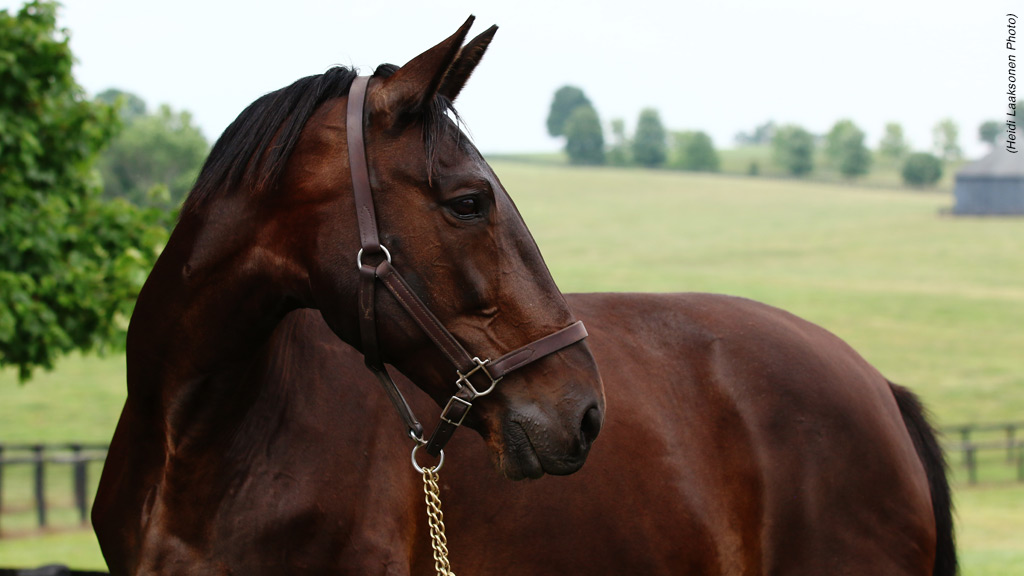
As the saying goes, the best deals in life are often the ones that never happen, and for Richard Young, no failed deal ever changed his life more than the one involving his superstar mare, Put On A Show.
At the time, however, it didn’t feel like fate. It felt like frustration.
“Where do I begin?” Young said with a chuckle.
Honestly, in this case, the beginning is probably the best place to start, because in the beginning, there was very little to suggest that Put On A Show would eventually become one of the greatest pacing mares - and broodmares - of her generation.
The early stages of her career were anything but smooth; filled with setbacks, uncertainty and enough frustration to make Young seriously believe that his long and often difficult journey through harness racing was nearing its end.
Instead, what looked like another frustrating chapter in a long run of near misses, would eventually turn into the horse that would change everything for him and his then-wife Joanne. Young just didn’t know it yet.
“I guess when people say that ‘patience is a virtue,’ they aren’t kidding,” Richard said with a chuckle. “Because that word ended up playing a huge role in her career as a whole… but I can’t really take much credit for always showing it when I needed to. I’m not necessarily the patient type,” he laughed.
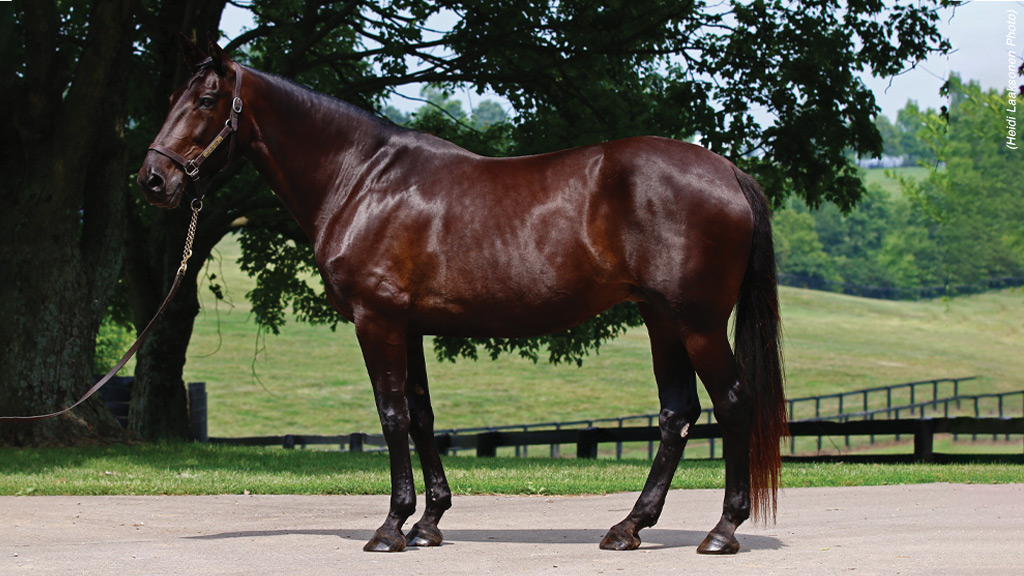
What Young can certainly take credit for, however, is originally identifying the eventual superstar at the Lexington Selected Yearling Sale in 2008. She was one of two yearlings he was seriously focused on going into the sale, and in the end, he gave the edge to the daughter of Rocknroll Hanover-Stienams Place. A decision that would ultimately prove transformative.
Still, like most major calls in his career, Young didn’t rely on instinct alone. He sought confirmation from a few trusted voices before committing.
“There were two yearlings I really liked, and they were only three hips apart,” Richard recalled. “I asked Chris [Ryder] and Linda [Toscano] who they’d take, and both of them landed on ‘Show.’ I mean, I was already leaning that way, but had they gone the other direction, I probably would’ve followed them too.”
For $75,000, Hip #120, bred by Green Mountain Farms and Kentuckiana Farms, was secured by Richard and Joanne Young, along with Craig Henderson.
Like every buyer at the sale, they were chasing potential, but for the Youngs in particular, the hope carried a little more weight. Years of persistence in the sport had produced more frustration than reward, and this filly represented another swing at finally changing that narrative.
“We’re all dreamers in this business, and we all need a little bit of luck,” Richard said. “Unfortunately, luck wasn’t something I had much of over the previous twenty-plus years of owning horses.
“I kept telling my ex-wife, Joanne, ‘Okay, just one more year,’” he said with a laugh. “After several bad results and a lot of poor investments, she’d look at me and say, ‘Don’t you think it’s time to get out?’ I mean, she had a point, but I’m pretty stubborn.”
In the months that followed, nothing about the early stages of Put On A Show’s development suggested that Richard’s stubbornness would be rewarded in this case. In fact, it looked like it might finally be the tipping point.
Through the breaking and early training process, the filly showed glimpses of real ability for trainer Chris Ryder, including moments that hinted at something far better than average, but those flashes were inconsistent at best. The breaks, the gait issues, the unpredictability; it all piled up quickly.
“Put On A Show struggled a lot during training,” Richard recalled. “She made repeated breaks, was fighting her gait, and became increasingly frustrating to manage. Based on those progress reports, she looked like another expensive disappointment.”
The frustration eventually pushed Young to consider cutting his losses.
“I approached Bill Perretti [whose Perretti Farms stood the sire - Rocknroll Hanover]. I made a pitch to him to buy the filly for $35,000. That was less than half of what I paid for her at the sale.”
That offer was fairly telling. It wasn’t just a business decision anymore; it was exhaustion setting in.
“After mulling it over, Bill didn’t want another Rocknroll Hanover, so he declined,” Young said. “At that point, I was stuck with her, and all I could really do was hope for the best.”
Hope, however, had been in short supply for a long time, but after Chris Ryder and company figured out what was the impetus of the filly’s struggles, things started to take a positive turn.
“She actually had EPM [Equine Protozoal Myeloencephalitis],” Richard explained. “Once we started treating her, we saw a dramatic improvement.”
Suddenly, the same horse that had looked erratic and unreliable began to change shape. The ability Ryder had occasionally glimpsed was no longer buried under inconsistency. It was starting to surface more regularly, and with more force each time she trained.
“It’s funny,” Young added, “because while the possible sale was discussed, Chris [Ryder] would be the first to tell you he never would’ve let me sell her anyways. But when I really want to do something, you’re probably not going to stop me… but he would’ve fought it pretty hard.”
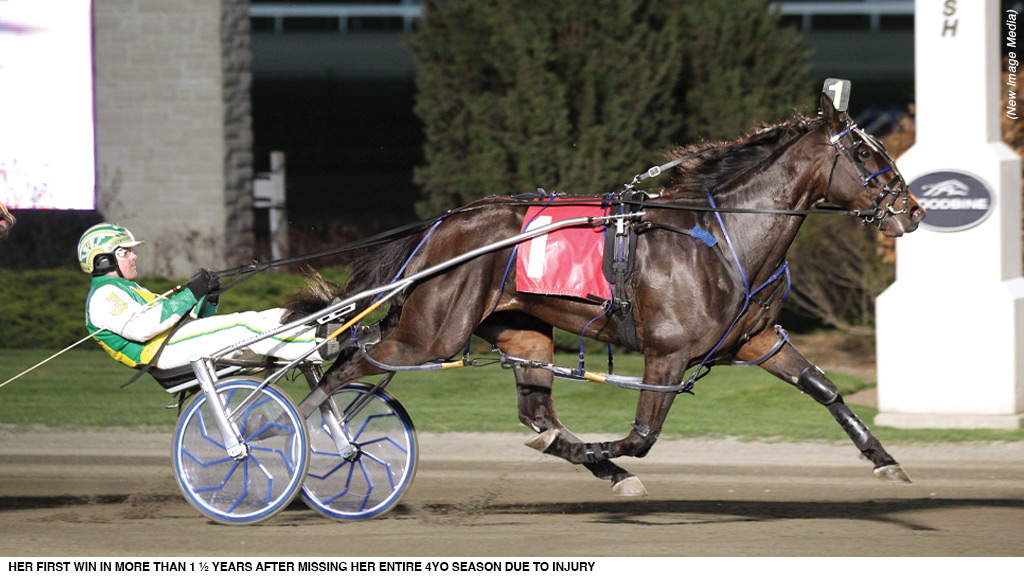
Once healthy, Put On A Show didn’t just improve, she took off. She reeled off victories in her first seven career starts, including five in stakes events in both Canada and the U.S. The filly had developed a lot of confidence, and that trickled over towards everyone involved with her.
“Her first start was unbelievable,” Richard shared. “It was pouring rain at The Meadowlands, and she came from absolutely nowhere to circle the field and win going away for John Campbell. Right then, I said, ‘Okay, we have something special.’
“After her career debut, we sent her to Ontario to race, and even then, I don’t think anybody really knew how good she was at the time,” Young recalled. “I didn’t know, but eventually found out that John [Campbell] had wanted to stick with her… I would’ve stuck with him, had I known of course,” admitted Richard. “That was my mistake.
“[In Canada] I wanted to get either Jody Jamieson or Steve Condren to sit behind her north of the border, two guys I felt were at the top of the WEG Circuit… but both either declined or had other commitments. It didn’t take long, however, for Jody to circle back.
“She easily won an overnight with Jason Brewer in [1]:52.2, and I remember Jody circling back pretty quickly and saying, ‘Okay, I’ll take that one.’”
The partnership between Jamieson and Put On A Show clicked immediately. The filly captured the $120,437 Eternal Camnation, and her elimination and the $810,300 final of the Shes A Great Lady at Mohawk.
The pair then travelled to Lexington and came from well off-the-pace in each, to win the $126,300 Bluegrass, and $104,000 International Stallion Stakes at The Red Mile.
They closed out her rookie season with a runner-up finish, to Fancy Filly, in the $628,178 Breeders Crown at Woodbine. In nine starts, she never finished worse than second, winning seven times and banking $776,498.
By the time the season ended, the question was no longer whether she was good, it was how far could she go?
The winter that followed felt completely different from anything Young had experienced before. There was no uncertainty, no quiet hope that things might finally click. There were real expectations now, something he hadn’t been used to carrying.
“It was an amazing year, and waiting for her to come back at three was incredible,” Richard said. “She truly changed my relationship with harness racing. I owe a lot to her… I mean, once you start winning, do you get out?”
And win she did; again and again.
As a sophomore, Put On A Show continued down the path she started as a rookie. She won 12 of 16 starts and added another $1,171,228 to her earnings, confirming that her freshman year was no fluke, but rather the beginning of sustained excellence.
That was until November 13th of that year, when she suffered a major setback in her final start of the season.
“She was competing in the [$191,000] American National at Balmoral Park, and she suffered an injury,” Young said. “Another horse broke directly in front of her and caused her to make a bobble at the start… she ultimately still finished second. The result [at odds of 1/9] was frustrating, but the aftermath was worse.”
What looked like a minor interruption in stride turned into something far more serious.
“She came back to the paddock labouring,” Richard said. “She had busted up her knee, and the injury required surgery that included having three pins inserted into her leg. It was the type of injury that ends careers for many elite racehorses… and for a mare with immense broodmare value, retirement was the logical move.”
After successful surgery and veterinary consultation, the prognosis about a potential return to racing resulted in cautious optimism, with a 60-70 percent chance of Put On A Show returning to the races. For a mare already nearing $2 million in earnings, the sensible path was obvious. But Young wasn’t always in the sport for sensible decisions.
“I just didn’t want to get into the breeding business… I didn’t want to be a breeder,” he said candidly. “I loved racing, and I loved the competition. That’s what always kept pulling me back in.”
Even then however, the decision wasn’t rushed.
“After discussions with the vets, I wanted to give her all the rest she needed,” he said. “And if she showed signs she was willing and able to come back, we’d give it a go.”
Put On A Show did eventually show everyone signs that she was indeed willing and able, and after 15 months off, the now five-year-old returned to the races with a couple of winning qualifiers at The Meadowlands, in February, 2012.
A week after the second qualifier, her first start back came in a $40,000 split of the Overbid Series, where she started from PP #10 and finished ninth - but the actual result barely mattered.
“The word was that she not only felt okay, but that she was just fine,” Young recalled. “After that, we started seeing flashes again, and we felt pretty comfortable about where she was at.”
Those flashes quickly turned into form, and two weeks later she finished second to Anndrovette in the $101,750 Overbid Final, pacing her own mid-March mile in 1:49.4.
Back to Mohawk next, and reunited with Jamieson for three starts and Condren for one, she rattled off four straight wins in the Fillies & Mares Open. Just like that, she was no longer a comeback story, she was a force once again.
Her return escalated throughout the summer with strong efforts in top stakes like the $100,000 Betsy Ross at Harrah’s Philadelphia and the $391,000 Roses Are Red at Mohawk. Then came one of the defining performances of her entire career.
On Hambletonian Day 2012 at The Meadowlands, in the $253,700 Lady Liberty, Put On A Show and Jody Jamieson delivered a statement that went far beyond just winning a race.
“She won that event in [1]:47.3 and went three-fifths of a second faster than any female had ever paced before, a record that stood for eight years,” Young stated proudly. “She didn’t just break the record, she smashed it.”
For a horse returning from major knee surgery, it bordered on the unthinkable. But - for the most part at least - you can’t measure heart.
“You just never know how they’re going to come back from injuries like that,” Richard said. “You’re cautiously optimistic, but you never really know. That effort alone shows you why she’s a champion.”
That performance vaulted her right back into the conversation for divisional honours as top aged pacing mare, adding another chapter to a resume that already included a Dan Patch Award as a three-year-old.
But even in the middle of that resurgence, Richard’s ambitions began to creep in, and not always wisely.
“I entered her against the boys in the Breeders Crown that year,” he admitted. “I truly believed she was the best pacer in the sport when she was right, and I thought if she beat the boys, it would lock up Horse of the Year for her.”
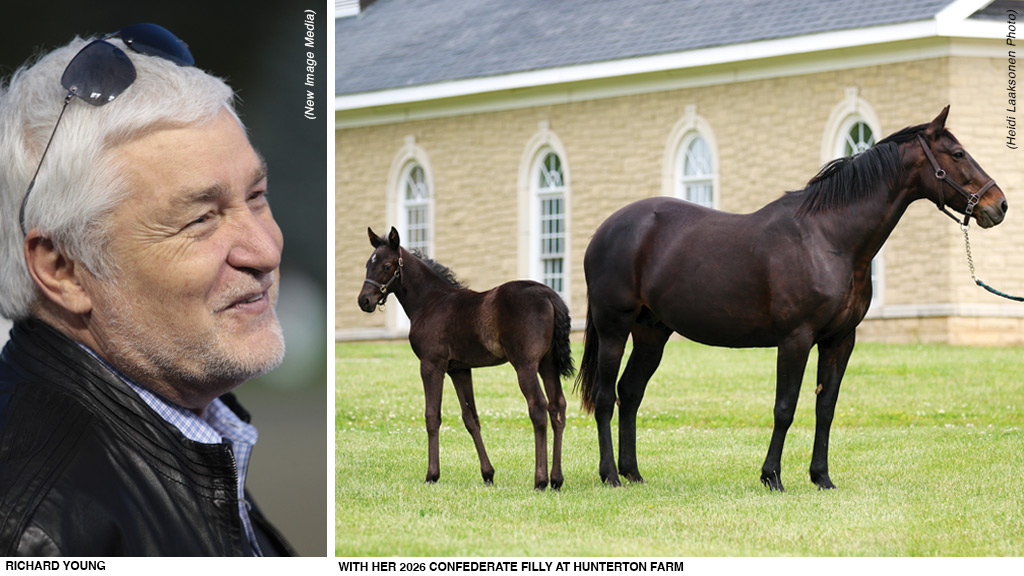
He pauses on that decision even now.
“Unfortunately, it turned out to be a pretty poor decision by yours truly,” he said with a chuckle. “She tied up that night and finished last. So honestly, even if she’d been in with the mares, she probably wouldn’t have been herself that night anyway.”
“She probably would’ve won Aged Pacing Mare that year,” Young admitted. “But I started thinking bigger.”
Put On A Show raced until mid-December of that five-year-old season, making what would ultimately be the final start of her career on December 12th, with a second-place finish in a $75,000 Mares Open Handicap at Harrah’s Philadelphia.
Despite returning from the lengthy layoff, after missing her entire four-year-old year, she still managed to win 12 of 25 starts at five, while earning another $512,177, and becoming the fastest mare in history.
The filly he tried to sell for $35,000 before she ever raced, had banked $2,459,903, and cemented herself as the greatest horse Richard Young had ever been associated with.
And her on-track impact would only be the beginning.
“I didn’t want to get into the breeding business, but all of a sudden, I was in the breeding business,” Young said with a laugh. “And just like the start of her racing career, it wasn’t smooth sailing as a broodmare either.”
“Put On A Show had a filly that almost died at birth, and then developed complications that made things difficult right after foaling,” Young explained. “Her first foal didn’t go as planned... It was unfortunate.”
Along with the breeding woes, Young’s partnership with partner Craig Henderson would become strained, and Put On A Show was eventually sent through public auction. In the end, Richard and Joanne bought back their double-millionaire mare while she was carrying her third foal - one by Bettors Delight.
“Her second foal [Come See The Show] looked like a big Thoroughbred… she was a goddess by Somebeachsomewhere… She won her first start in [1]:52 and change, and was third in the Shes A Great Lady. She then had a kind of injury where we decided not to race her anymore. We put her up for sale in Harrisburg… and she sold for $450,000.
Despite the rocky beginning to her broodmare career, the tide had begun to turn. They sold the second foal for $450,000, as a broodmare prospect, and the aforementioned Bettors Delight foal that was in her belly when they bought out Craig Henderson, would turn out to be Best In Show.
“He [Best In Show] trained down like we had something good, but he got injured at two,” Young recalled. “At three, he came back and showed a lot of ability.”
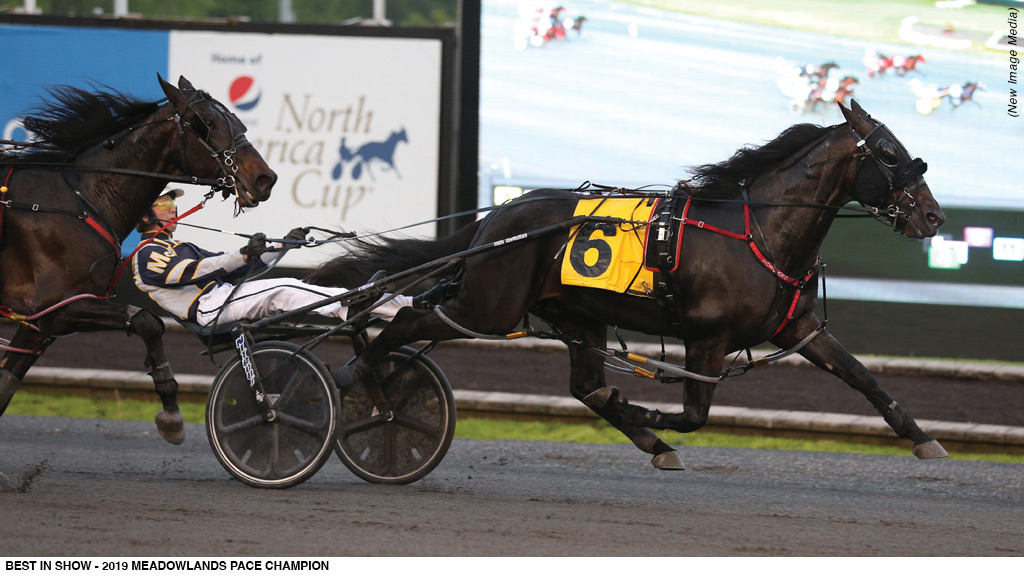
After just three starts as a rookie, Best In Show put together a memorable sophomore campaign for Richard and Joanne. The colt would hit the board in 13 of 16 starts that year, and earn $619,712 for trainer Linda Toscano, with his biggest moment delivering yet another unforgettable chapter for the Youngs.
Sent off at odds of 27/1, Best In Show stormed to a 1:48 victory in the $682,650 Meadowlands Pace, on July 13, 2019.
“Winning that race was a huge thrill, especially because nobody really looked at us as a major threat,” Young said with a grin. “He showed in the elimination that he was sitting on a big mile, and then he proved it in the final.”
It was another unforgettable moment born from the mare that gave Richard and Joanne so many thrills throughout her racing career - and many more long after it ended.
“After Best In Show there was a foal she aborted, and a few barren years, then she eventually had Magic Showman… but he was really bad,” Richard laughed. “He was so bad that I had to pay someone $3,000 to take him off of our hands. He went to Purple Haze [Standardbred Adoption Program] and will have a good life. It’s a great story though, isn’t it? I sold the sister for $450,000, and two foals later I had to pay someone $3,000 to take him,” Young laughs.
“Magic Showman, though, was by Sweet Lou, and then, because you have no idea how good that one will be, we had gone back to Sweet Lou again. The first one turns out to be shit and now you’re sitting there with his full brother as a yearling, and you’re not too excited because the first one was so bad. But it was out of Put On A Show, and it was by Sweet Lou, and he throws a lot of beautiful horses, so you just hope.
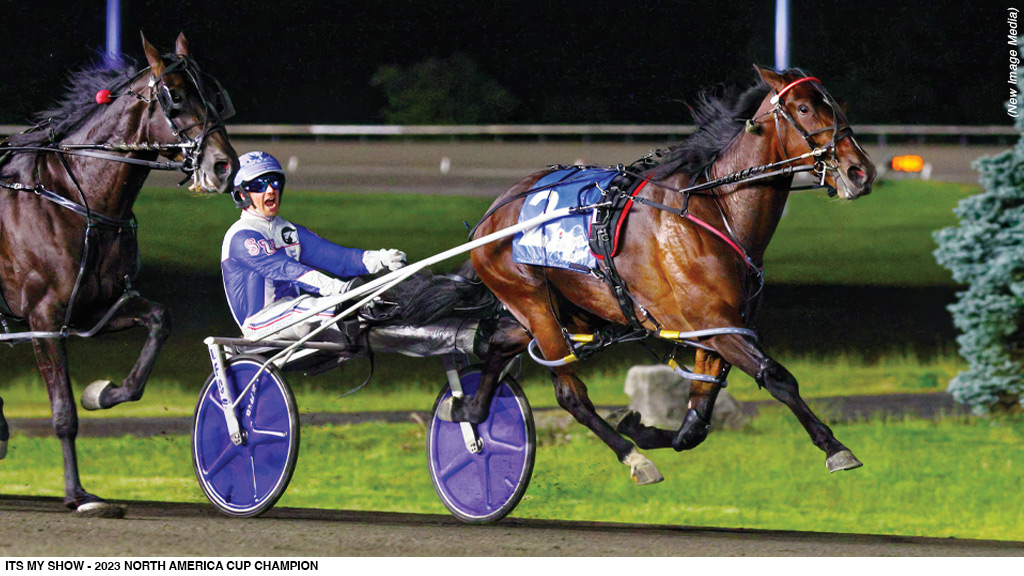
“So now you end up getting Its My Show. He went winless as a rookie, so I figured nobody would really be interested in him as a sire after that. We decided to geld him before his three-year-old season, and then he wins the North America Cup, the Little Brown Jug and the Canadian Pacing Derby,” Richard smiles.
Despite all the success, however, Richard never envisioned himself staying in the breeding business, eventually parting ways with Put On A Show in a deal with prominent breeder Steve Stewart of Hunterton Farms, under one important condition.
“We agreed that we’d get to keep her next foal,” Richard said. “That was the arrangement with Steve.”
Things went better during Richard and Joanne’s time in the breeding game than anyone could have imagined. Even if it didn’t always appear that way in the moment, fate consistently seemed to land on the Young’s side. It simply took time for Richard to realize it.
“To think about everything that transpired during my time in racing, and the horses I’ve been fortunate enough to be associated with, it’s truly remarkable,” Richard said. “I’ve been lucky in so many ways - with horses, and with people like Linda [Toscano], Chris [Ryder], and so many others.”
He also made sure to acknowledge the one person who’s remained beside him through all the highs and lows.
“My ex-wife, Joanne, stayed in a 50/50 partnership with me throughout my entire time in harness racing, even after our divorce in 2011,” Richard said. “We didn’t have any success early on. In fact, before Put On A Show, we were probably down close to $2.7 million. But she stuck with it, and then everything changed. Over a three-year stretch, we earned around $4 million in purses, and Put On A Show was the horse that really launched all of that.”
At one point, Richard Young appeared destined to quietly fade away from the sport. Instead, Put On A Show pulled him back in, first through her own Hall of Fame racing career, and later through the champions she produced. Now, as Young slowly begins contemplating another exit from harness racing, there may still be one final chapter waiting to unfold.
Fittingly, it once again traces back to the mare that changed everything.
The Youngs currently have a two-year-old colt by Bulldog Hanover out of Put On A Show, offering one more reminder that her story may not be finished just yet.
“In a lot of ways, it feels fitting,” Richard said with a laugh. “Now we’ll see if lightning can strike a third time.”
For Richard Young, Put On A Show became far more than a champion racehorse. She became the reason he stayed in the sport when he was ready to walk away. She validated years of trusting his instincts and ultimately changed the course of his life in harness racing.
Most of all, she became proof that sometimes the moments that shape a lifetime come from other opportunities that never materialized.
A failed sale. A deal that fell apart. A horse somebody else passed on.
What once looked like a disappointment, ultimately became the defining stroke of fortune in Richard and Joanne Young’s harness racing lives, one that delivered a Hall of Fame career, unforgettable memories, and a legacy that continues to grow through the offspring she’s produced.
Now, fittingly enough, Put On A Show is finally set to take her rightful place in the Canadian Horse Racing Hall of Fame.
This feature originally appeared in the June issue of TROT Magazine. Subscribe to TROT today by clicking the banner below.