
SC Rewind: Years Ago - 1930s


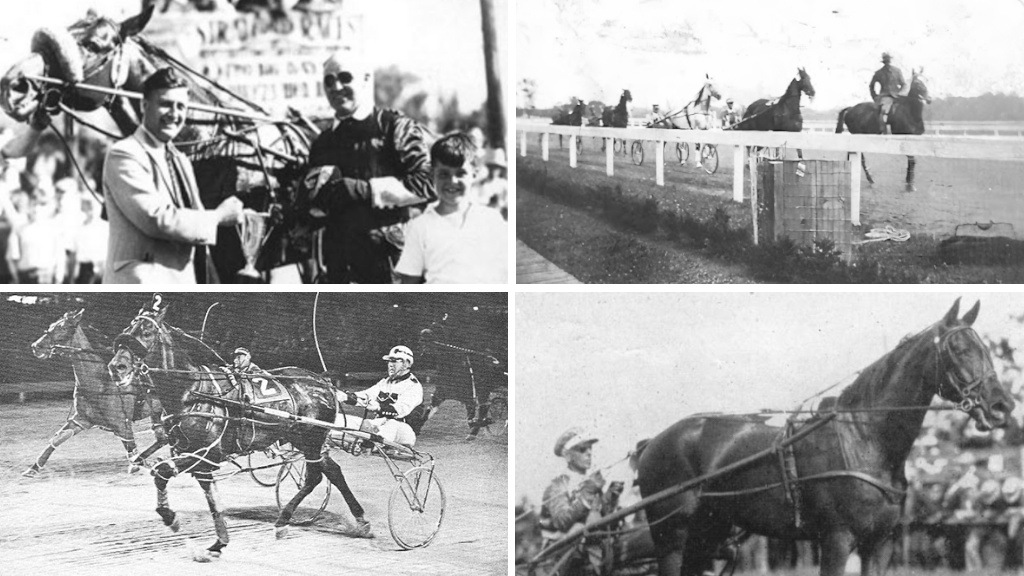
In this week's Rewind, Robert Smith takes a very long look back at events and people involved in the sport from the decade of the 1930s. This is the regular monthly "Years Ago" feature. Thankfully, a few old photos from back then help to capture the times. At that time, virtually no raceways as we know them today existed, so all of the racing occurred at fairs and small meetings, often held to coincide with holidays.
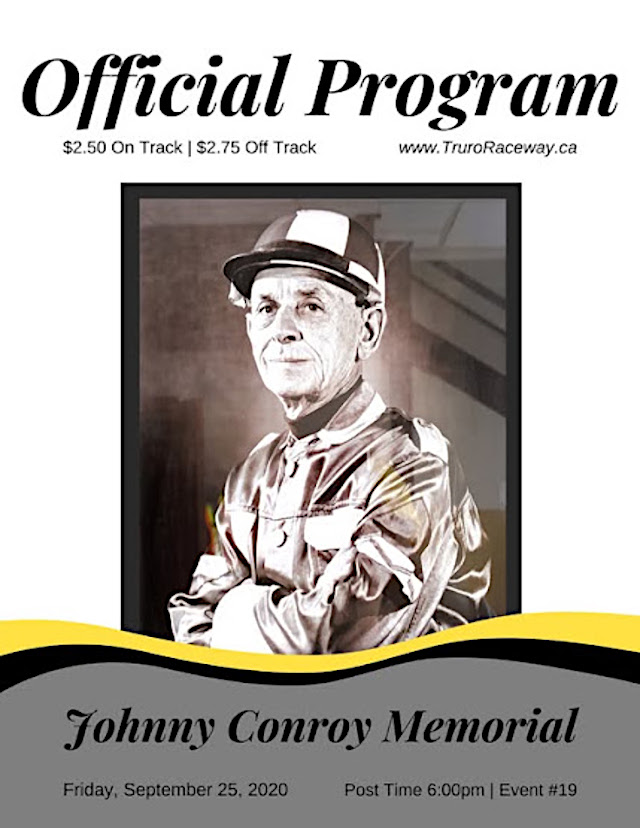
1930s - Johnny Conroy, A Maritime Favourite
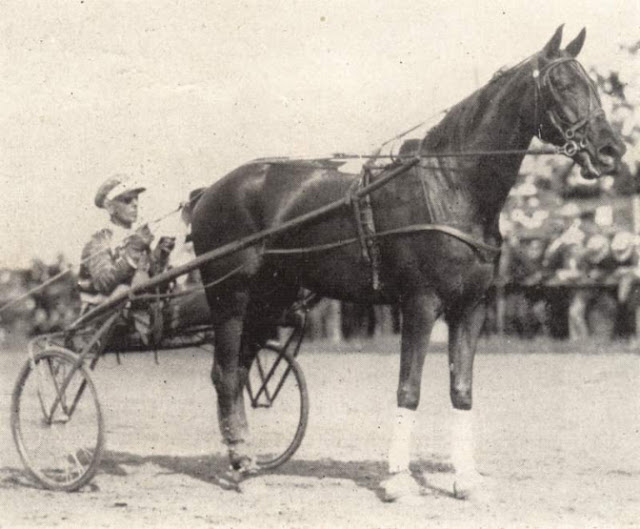
Johnny Conroy appears with the champion trotter Johnny Miles. Bred and owned by Dr. J. O. Calkin, Sackville, N.B.
The following passage was provided by the Nova Scotia Sport Hall of Fame in remembrance of a great horseman who raced throughout the Maritimes for many years.
Born at Indian River, Prince Edward Island, in 1897, Johnny Conroy was the son of Peter Conroy, himself a noted Maritime horseman and blacksmith. Johnny Conroy earned an enviable reputation throughout a lifetime of attention, care and painstaking labour devoted to the sport of harness racing. Nova Scotia fans began to notice him in 1928 when he was stabled in Truro and raced Lambert Todd, Katherine Claude, Captain Mack, Baron Aubrey, August Queen and Worthy J.
Johnny was the leading driver at Charlottetown Old Home Week in 1930 and 1933. And, in 1933, his horse Darkey Grattan was the fastest in the Maritimes. Johnny equalled the pacing record for a Maritime mare in 1937 with Josie the Great. In the same year, racing out of Amherst, he won the British Consol Trophy as well as the Three-Year-Old Futurity.
He set new track records, established new Maritime records, won driving championships and dash-winning records, edging out the now-famous Joe O'Brien for driving honours in 1944. At the end of the 1962 season, he won his last race with Phillips Queen and hung up his famous blue and white silks.
Even after he retired from racing, Johnny trained young trotters and pacers. Disliking the "big-time" race circle atmosphere, he stayed in the Maritimes and greatly helped shape the history of the Truro Raceway, which holds the annual "Johnny Conroy Memorial," an invitational pace in Conroy's memory.
1937 - Peter Chilcoot and the Hon. Earl Rowe
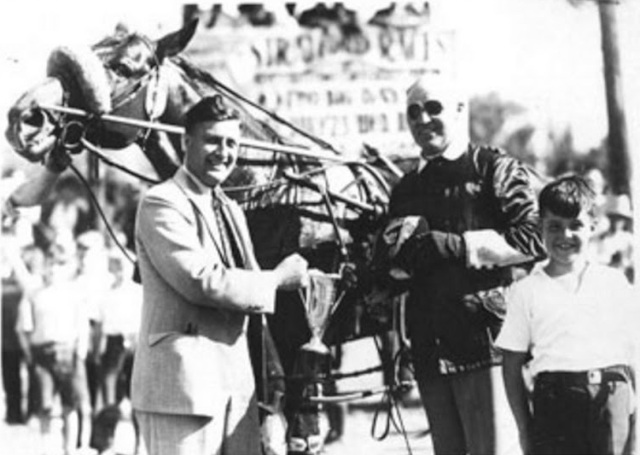
An unidentified presenter is shown congratulating winning owner and driver The Hon. Earl Rowe and handing him a large trophy following a victory at the Owen Sound track. Standing beside his father is son Lennox "Butch" Rowe.
Whenever The Hon. W. Earl Rowe of Newton Robinson, Ont., has a day away from his political duties, it is quite likely he is tending to his racing interests at some local town track. This year, 1937, was a good one for Mr. Rowe and his star, Peter Chilcoot, a son of Peter Brewer.
The chestnut pacer set new track records at Orangeville, Stratford and Goderich that season. The new mark of 2:07 recorded at the Goderich oval replaced one of 2:07 1/2 that was just three days old, set by Grattan Axworthy and driver Gid Litt.
During the second day of the Goderich races, Mr. Rowe addressed the crowd and requested a minute of silence in observance of the recent passing of Dr. J. Benson Whitely, a longtime participant in the sport who hailed from this town.
Historical note: Although Mr. Rowe did not become Lieutenant Governor of Ontario until 1963, I referred to him with that designation, which he is best remembered by.
1938 - Young Driver Seriously Injured at Leamington Fair
The three-day racing program, which was part of the annual Leamington Fair, was marred by a serious accident on opening day, September 28. Jack Evan Herbert, a young driver from London, Ont., was involved in a spill in the third heat of the first race. Exactly what happened is unknown, but Herbert, driving Busy Grattan, and veteran teamster Fred Wilmore, behind Sandy Signal, became involved in the mishap, which resulted in a very serious leg injury to the young Mr. Herbert.
The lack of medical care at the track resulted in a delay, and eventually the injured man was taken to Hopewell Hospital, a few blocks away, where he was admitted for observation. He had fairly recently begun driving in races and, for several years, had been working with his father, Bill Herbert, a horseman well known throughout the sport. With limited facilities at the local hospital, it was likely that he would be transferred to a more advanced facility. It was hoped he would soon be back in action.
Note: For those who remember Jack, they might recall that this injury would plague him throughout his long career. Jack left us in 2006 at age 89.
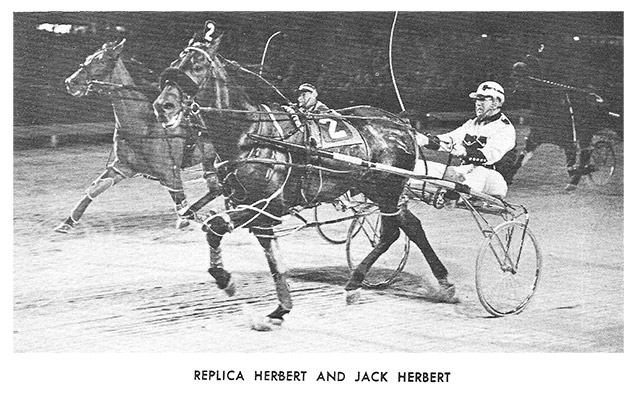
Jack Herbert in a later-years photo.
1934–1939 - The Decade of Greyhound
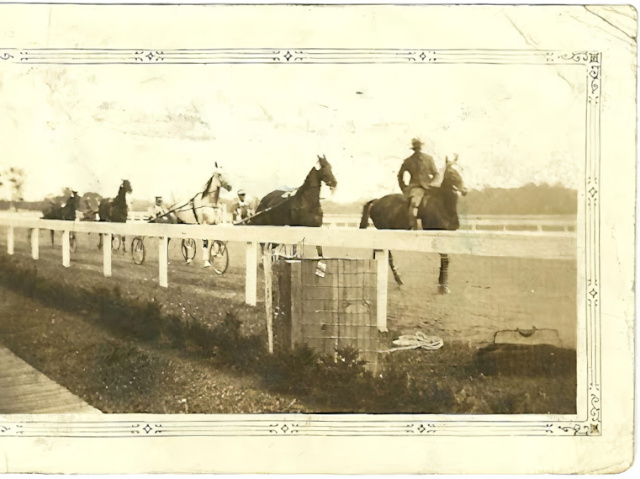
Greyhound at Thorncliffe at age two, parading to the post. This old photo was taken by Tom MacDonnell, the man who introduced the starting gate to Ontario racing in 1947. His son Bill, long associated with Ontario harness racing, gave me this oldie a number of years ago.
When the world-famous Greyhound came along in 1934, he eventually became harness racing's poster child in a very quiet way. Some 30 years had passed since the Dan Patch era, and the sport of harness racing was in need of a hero to raise people's spirits.
The world was experiencing a very difficult period in history as tough economic times made everyday life a burden. People still turned out to watch harness horses in action. Greyhound appeared before huge crowds for seven straight years, often in exhibitions, as there was little in the way of racing competitions.
He raced briefly in Canada as a two- and three-year-old at Toronto's Thorncliffe Park in 1934 and 1935. In his seven-year racing career, he made 82 starts, winning a total of 71 times. His best season was in 1938, when he won all 10 starts and set a new world's record when he trotted a mile in 1:55 1/4. His record would stand for an amazing 31 years.

Greyhound as he appeared in the winner's circle after winning the 1935 Hambletonian with driver Sep Palin and owner Col. E.J. Baker (far right). (Hambletonian Society)
Quote for the Week: "The person is a success who has lived well, laughed often and loved much." - Seen in an obituary.
Who Is It?
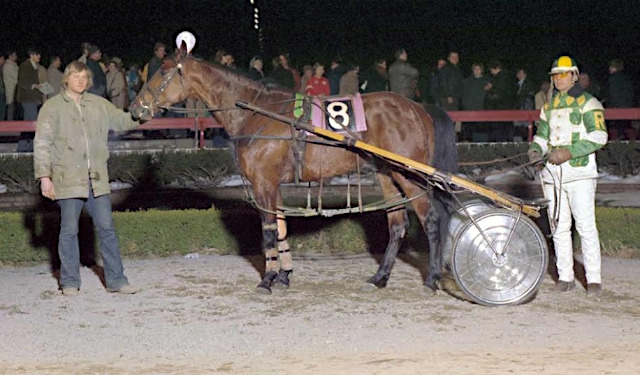
Can you identify the driver in this picture? Believe it or not, it was taken over 50 years ago.
Who Else Is It?
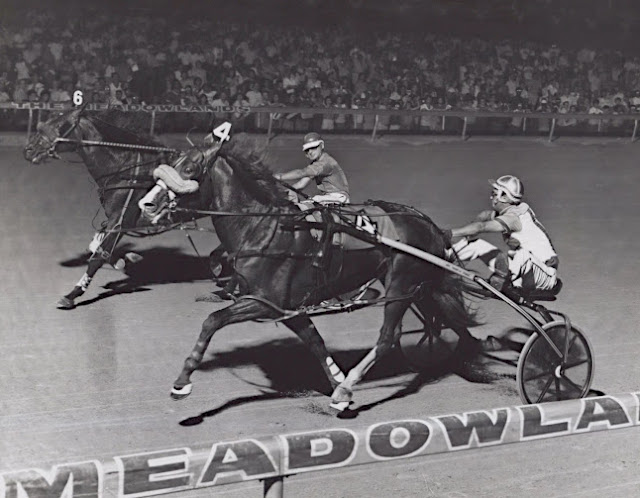
Can you identify one or both of these two gentlemen in this 1983 photo? Which one do you think ended up as the race winner?
It was not a dead heat, and also no points will be given for the track's location.
Blast From the Past
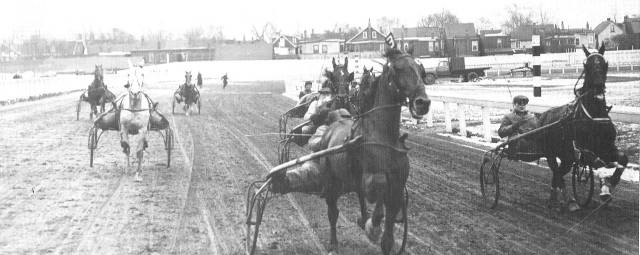
Who can identify where this old picture was taken? One clue: it was at an Ontario track. Give it a try.
(The correct answers will be posted here by Robert as a comment in a few days.)
LEST WE FORGET
This coming Wednesday, Nov. 11 is Remembrance Day. Be sure to take a moment from your day to remember and thank those many folks who in days past fought for our country and our freedom.

A scene from a Remembrance Day gathering in New Brunswick. Photo courtesy of New Brunswick Museum St. John
The ranks of harness racing has included many of those who served in various branches of the armed forces. Many had to set aside their involvement in the sport during WWII and a number of fairgrounds were closed to racing as they were temporarily utilized as military bases. Some did not return but many did and continued their careers.
Growing up in a small town I had the opportunity to know most of the residents of our 2,000 or less citizens and most from the surrounding area. Just a few years ago there were still five survivors who were veterans of WWII and I knew them all. I believe they have now all passed. From a very young age I can remember them as they often donned their military uniforms and often sold poppies around November 11th each year. While I always knew that they were special people, I have even more respect for what they did for our Country with each passing year.