
Century Mile, Century Downs Sold


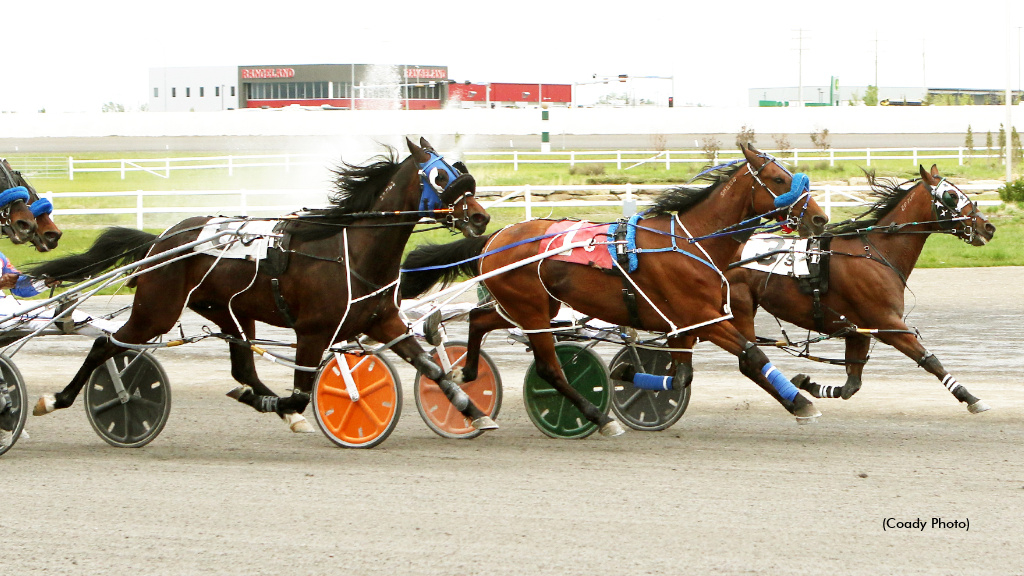
Alberta’s Century Downs and Century Mile racing entertainment centres have been sold, along with their expanded gaming operations, to Highfield Investment Group. Adrian Munro, President of Highfield Investment Group, discussed this venture and why it’s positive news for both Standardbred and Thoroughbred racing in an exclusive interview with Trot Insider.
The name Adrian Munro might not resonate with members of the Standardbred industry, but the Calgary native is no stranger to Canadian horse racing. Munro’s background in horse racing draws from decades of involvement with Highfield Stock Farm in Okotoks, just south of Calgary, while also serving as the President of CTHS Alberta for more than a decade.
“My grandfather owned racehorses and my dad [David] owned racehorses from the time I was a kid,” said Munro. “We hung out at the racetrack when I was a kid, rode horses and had horses our entire life. I spent more time growing up in the mountains riding horses than I did in Calgary at our home throughout the years. So horses have always been a part of our life throughout all of my history.
“In 2004, when I came back from the U.S., where I worked for IBM, we had bought the farm so I was pushed into the breeding side of the equation and it's morphed from there. Kind of Alberta-centric, but we've always been a proponent of racing here in Alberta.”
Proponents of racing not just with breeding, either. Back in 2010, David Munro and Highfield helped United Horsemen of Alberta (UHA) with financing to keep plans alive for the project that would become Century Downs.
“We, as a company, bought all the debt so that the United Horseman Of Alberta (UHA), who was awarded the gaming license, could preserved the gaming license. At the time there was a moratorium on new gaming licenses here in Alberta, and we worked very collaboratively with UHA to #1, pay down their debt and #2, find a casino operator, someone who would come in and build the facility, which led to an introduction to Century probably in 2012.
“So, we've been involved right from the beginning. One of the things that we probably regret the most is not pursuing the racing and casino side of the equation when we had an opportunity in 2012 as the debt holder and UHA being the gaming license holder at the time. So, fast forward, because of that relationship, I had a relationship with Century and the co-CEOs of Century, and kept involved on the horse racing side and obviously as president of CTHS here in Alberta, on the breeder side of the equation.”
Little did Munro know he and Highfield would get another chance at operating such a facility in the province.
“Century has been great for Alberta, building two new ‘A’ facilities,” stressed Munro.
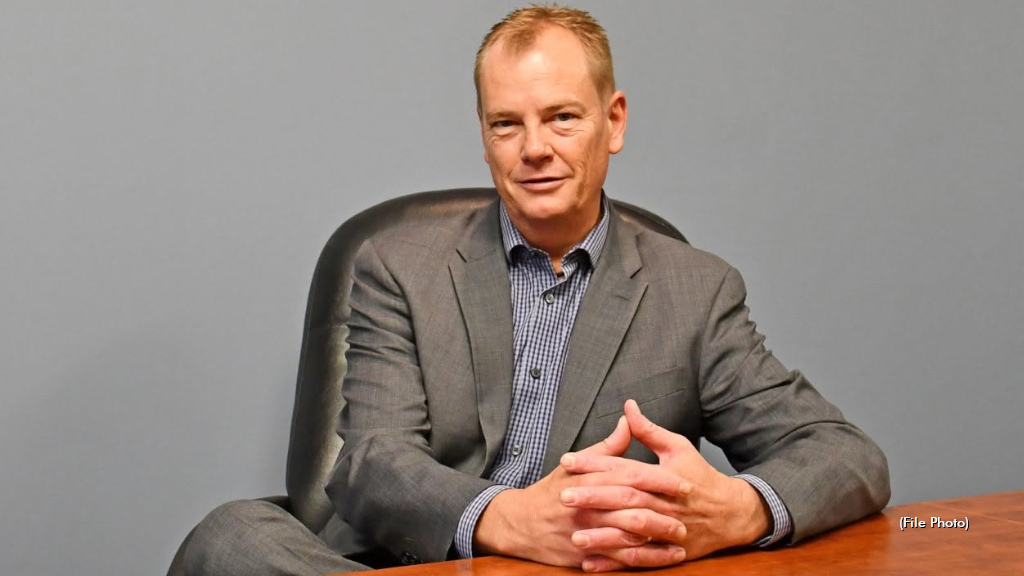
Adrian Munro, President of Highfield Investment Group
Century Casinos announced in August 2025 that the company planned “a strategic review process” as part of its “ongoing commitment to driving long-term value creation and optimizing [its] portfolio of assets and operations.” Century co-CEO Peter Hoetzinger said in a second-quarter earnings call this past August that there were sale possibilities for the four Century gaming properties in Alberta
“We could sell all four together or we could go the direction of selling the two racinos in one package and the two commercial casinos in another package,” said Hoetzinger in August. “There’s interest for both. And again, one is a little bit more ahead than the other. I think that at least for one of those packages, we should be able to publicly disclose something before the end of the year.”
On Monday, the news broke that the two racing and entertainment properties owned by Century in Alberta — Century Downs Racetrack and Casino and Century Mile Racetrack and Casino — were sold to Highfield Investment Group for an aggregate purchase price of approximately $23.2 million. Century's two casino properties in Alberta — Century Casino & Hotel Edmonton and Century Casino St. Albert — were not part of this agreement.
“We came in and, unfortunately, none of the horsemen's groups were really in tune with what was going on,” noted Muro. “So, in order to stay engaged, we became involved in the request for proposal process for the assets, teamed up with another group here to put an offer in place to purchase the four Alberta casino assets with the other group taking the two casinos and ourselves taking the two racing entertainment centres. We were selected in the first round to go to the second round. In February, we came to an agreement on price and have been working through that exclusivity period on our due diligence and working towards purchasing these assets from Century.
“I kept on top of it,” Munro continued. ”I've had relations with the upper echelons within Century just to ensure that horse racing wasn't left out in the dark. The last thing we really wanted was for Century to have another casino organization come in and buy the two racinos and work towards eliminating horse racing, which would not be good for western Canada.”
Munro’s business background merges with his love of the horse during the conversation to convey a sense of pragmatic yet confident optimism regarding the horse racing industry.
“This is a great industry. We have great people. Alberta is poised for growth if we have the right management throughout all levels, including our regulator on down to the operator on down to the horsemen's groups. And if we work collaboratively, we — Alberta — can be very much the centre of growth for at least Western Canada, and contribute to a very healthy industry across Canada.”
The deal is still subject to regulatory approval. According to Munro, that process could be completed as soon as Dec. 1, 2026, but is contingent on approval from Alberta Gaming, Liquor & Cannabis (AGLC).
When that deal becomes official, changes are inevitable. Munro indicated that rebranding is in the works for existing Century Mile and Century Downs locations, but the staff and staffing will remain the same.
“As you look through the teams that are both in place at Century Mile and Century Downs, they have a very solid core of individuals who are committed to the operations, whether it's the casino operations, the food and beverage operations or horse racing,” said Munro. “Our only real change is we're going to change the culture from the top down. There are some culture issues within a couple areas of the organization and we're bringing a brand new attitude and our focus is not just on the casino operations, not just generating money from the casino — obviously that's needed in order to facilitate horse racing — but we're also going to focus on horse racing. So the biggest change you'll see — it's not necessarily the boots on the ground or the people in the organization — but we will work with the existing management team to create the vision. We are going to create a culture of customer service and hospitality right from the top down.”
Two names very familiar to the Canadian harness racing industry — Paul Ryneveld and Dawn Lupul — will work closely with Munro on the execution of that culture change.
“Paul has a wealth of knowledge here in Alberta, working for Century for almost a decade. He was sorely missed when he left Century and it was very evident that there was a cultural shift and a shift away from being a horse racing-focused organization,” noted Munro. “When we started the RFP process with Century, I reached out to Paul. I respected his work and what he created at Century, and as we moved farther down the process, Paul and I came to terms. Paul's the guy to lead the racino operations, and he'll be in charge of the two facilities.”
A longtime industry professional in western Canada, Ryneveld returns to Century after recently taking the reins as the General Manager of the World Professional Chuckwagon Association.
“To come back in and get things moving in the right direction again as far as you know the overarching concept of leveraging horse racing to drive all the business units at both facilities and grow all aspects of the business,” said Ryneveld on his vision. “Doing that should build the pie and make Alberta a jurisdiction where people want to come and race, or at least want to send a string to race.
“I've seen in the years that I've been in the racing business you're either spiraling upwards or spiraling downwards and you can't stand still. If you stand still, you go backwards. We're going to hit the ground running. We're going to start getting back into the swing of things. Most of the staff is still very much the same as when I left — so for me there's not a huge learning curve with people — but it's about getting the buy in all the way down to the frontline staff and changing that culture, as Adrian alluded to. Entertainment, a place that you're welcome to be and that we want you to come back to and a place that's exciting to come to. I think those are the key things.”
Dawn Lupul joins Munro’s team as the Director of Marketing.
“I've been a fan of Dawn Lupul’s for numerous years,” added Munro. “I think the customer service that she had in B.C., where I really got to know her a little bit, was ideal. Her attitude and her desire to move horse racing forward was something that we felt was lacking within these organizations.“
Most recently the Manager of Racing and Communications with BC Racebook, Lupul’s career includes decades of experience as an owner, breeder and trainer in both Thoroughbred and Standardbred racing that led to becoming a respected analyst and broadcaster.
“I'm super excited to be a part of this, definitely,” admitted Lupul. “I was much like Adrian. I was running around the racetrack as a child, picking up tickets. It was more so on the Standardbred side of things, though, and then I definitely evolved my love for Thoroughbreds early on when I was full-time handicapping at Northlands. My roots are here in Alberta. My mom and dad are still here in Alberta. I lived in Toronto for 15 years working at Woodbine, which was an absolutely fabulous experience. Just seeing how to do things on kind of a world-class level in terms of treating horsemen and guests and everything else.
“Then my experience in B.C. really reiterated the fact that you need to have that government support. Those relationships with the government are probably the most important that you can culture and foster as you go along. If you lose that, you lose the sport. Unfortunately, that's just the way it is. So we are fortunate here in Alberta that we do have support of the government and we still have their ear. We have a fairly solid amount of money that we're working with each and every year and that we can promote racing. We can do incentives for the breeding programs. Adrian, as a breeder, understands that the breeders are of paramount importance to building your sport. You can provide incentives to get horses from other jurisdictions, but you have to have that grassroots developing as well at the same time.”
Lupul stressed the importance of what Century Casinos created for horse racing in Alberta at a time where confidence in the future wasn’t strong.
“We always want to reiterate that we are thankful for what Century Casinos did for the business of horse racing in Alberta. There's really not anywhere else where two racetracks like this were started up in the last decade, and they built a world-class really nice facility in Edmonton. We thank them, but we're looking forward to taking the baton, bringing the horseman's view of things and running with it and seeing what we can do.”
Going forward, the Highfield team doesn’t anticipate changing the framework of how the province’s breeds race at both ‘A’ racetracks. Munro stressed the importance of having Standardbred and Thoroughbred racing in each major centre.
“I think there will be a couple of things that will be pretty evident and pretty important to us as an organization. Number one, there have been some conversations here in Alberta where we would have one breed and one track as a focus. So, all the Standardbred racing would be in southern Alberta and then the Thoroughbreds would be 100 per cent committed to the Century Mile facility in northern Alberta. You know, we see that as a fallacy. It doesn't help to grow our fan base, grow our ownership, our breeder base. So, the importance of having both breeds having exposure at the right times at both facilities is going to be important.
“I think what you'll see and we're working towards is a longer Standardbred meet in Edmonton so they can have times that will allow them to reconnect with their fan base up there outside of December, January and February, which are difficult times in Edmonton, as you can well imagine. Both breeds working at both facilities, a little longer meet for the thoroughbreds here in Calgary, a longer meet for the Standardbreds in Edmonton.”
Munro also reiterated his focus on team culture and customer service in all aspects of the operation.
“The horsemen are clients too. Whether you're a groom, a trainer, a driver, a breeder, an owner, you deserve a certain level of respect and you will be treated with that respect. We are in the hospitality industry and no longer will some of them be treated like they're an annoyance to the organization. We're going to reset the culture so that we are focused on horse racing. We are going to spend marketing dollars to ensure that our product and our signal get out there and we're trying to attract a new fan base on a go forward basis. It's not simply about drawing people into the casino. Horse racing is important.
“The other thing we're going to do is reinvigorate and revise the OTB network. We believe it's been a forgotten component here in Alberta for a long time and we're going to do our best to make sure they're integrated into our foreign simulcast, into our wagering on our product, to do the little things to allow us to, as Paul suggested, grow the pie here in Alberta.”
In terms of race dates and purses, data compiled by Ryneveld suggested more race dates are feasible but ultimately that’s out of the new track operator’s hands.
“Our regulator, Horse Racing Alberta, is really in charge of those two components — setting blocks of time for race dates and splitting the purse up between all groups here in Alberta,” said Munro. “But our goal is to increase the pie, use our marketing dollars to increase the amount of money that's available to the breeds, to the industry and hopefully that leads to more horses on the ground.
“We do need horse population to substantiate more racing days. Paul, in his analysis, believes we can probably get away with another 10 racing days for Standardbreds and we want to grow the Thoroughbreds, which I think are 53 days in 2026, and get them back to where we were 70-75 days of racing. But again, it all is incumbent on having healthy purses, attracting new owners and attracting new horses into the province. It's not going to happen overnight.”
What can happen overnight, or closer to it, is addressing existing issues at the Calgary and Edmonton locations.
“We understand there are weaknesses in both facilities that we need to correct. And in some cases, they're egregious issues,” confessed Munro. “The backside at Century Mile is not very good. It doesn't drain in rain and snow events. The horsemen have to walk through a foot of mud to get to the racetrack. It's not conducive to the drivers and the trainers retaining staff and retaining grooms. That's one of our things that we need to figure out how to fix so we can change that environment on the backside.
“Our challenges here in Calgary are a little different,” added Munro. “The Edmonton facility has great viewing areas. It's very customer-focused. It's a great venue for racing while our facility here in Calgary is very weak on that side. So, how do we update and redo some of the facility here in Calgary to cater to racing fans and to make it an inviting place to come and watch the races? There are things that we need to do as operators. spend some capital in order to improve both facilities so that we're positioning the industry for growth.”
Along those lines, Munro noted these projects would take priority over expanding and developing consumer-focused amenities such as a hotel.
“That is a possibility in the future. One of the things that Century did for both the Mile and the Downs is they actually sold the land and sold the facility to a third party, VICI. So VICI owns the land and leases it back to both groups. We've negotiated a new lease and we'll be assuming the lease. Our goal would be to provide amenities but there are other things we want to do in the front end first. If the opportunity presented itself and the economics made sense, yeah, things like creating hotels on each location would be ideal. There is excess land. But there are other projects that are going to be a priority. Century Downs here in Calgary needs barns. How do we create and build more barns and use our limited capital wisely to grow the industry and grow the brand, right?”
Growing the industry resonates most with Munro, Ryneveld and Lupul. Growing the horse racing industry, all breeds, and no one left behind.
“We may be Thoroughbred owners and breeders today but we understand the global impact of this industry and that global impact includes all three breeds — when I say three breeds, I'm talking Thoroughbreds, Standardbreds and Quarter horses,” said Munro. “A vibrant and thriving Standardbred industry helps create a thriving Thoroughbred industry. So all breeds are important and the proliferation of one breed really accentuates the proliferation of the other breeds. One of the things I learned long ago in this industry is that it's a global industry and you have to protect all interests if you're going to grow.”
(Standardbred Canada)
Century
Wow, a race track purchased by people who have a racing background and interest. As a Quebec resident with a son in Alberta, I have visited both tracks, harness and thoroughbred. Generally liked both plants and the existing spirit. Good luck going forward, and, can't wait for my next visit.