
Racing's Ties To A Medical First


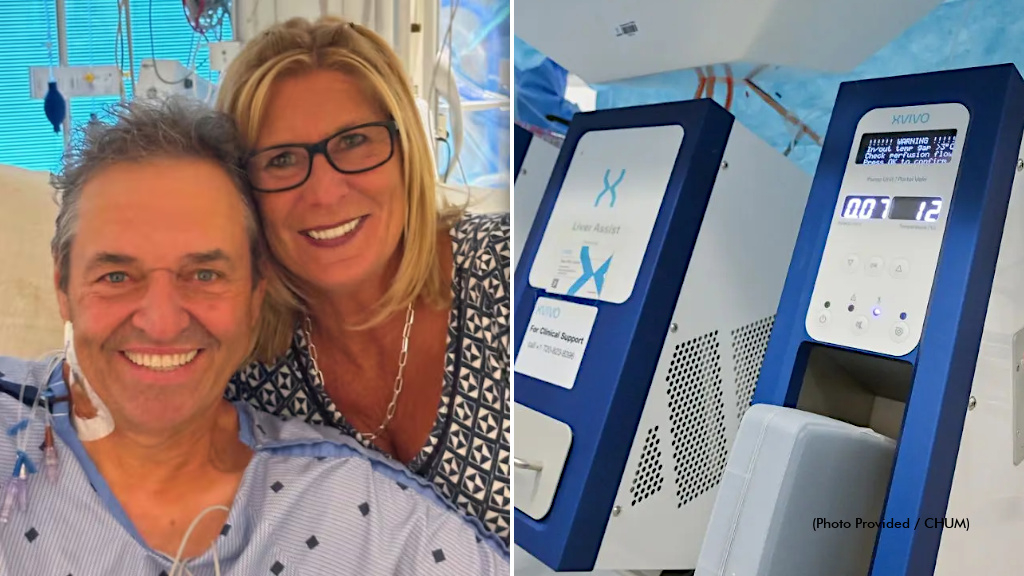
A participant in the harness racing world was one of Canada's first and longest surviving heart transplant recipients. Now, another individual with ties to the Standardbred world is making headlines in the medical world.
It's a story that harkens back to 1985 when driver Don MacDonald Jr. became one of Canada's first and longest-surviving heart transplant recipients. Some 40 years later, Gerard Landry is making headlines for his recent successful surgery.
Landry, a former Standardbred Canada Director and current Standardbred owner, recently received a liver transplant at Centre Hospitalier de l'Université de Montréal (CHUM). Landry had been living with liver disease and cancer for nearly 15 years, but what he didn't know heading into surgery is that he was the first patient in North America to receive a liver regenerated by a new machine.
CHUM is the first medical center in North America to acquire and clinically use XVIVO's Liver Assist technology in liver transplantation. This device allows a liver to be maintained outside the human body while circulating an oxygenated solution through it.
"This innovation will allow for better preservation, evaluation and reconditioning of certain livers before transplantation, thus paving the way for a greater number of transplants," said CHUM in a news release announcing the medical breakthrough.
Organs intended for transplantation are usually preserved on ice. With Liver Assist, the liver is instead placed in a device that replicates certain physiological conditions by circulating an oxygenated solution through it. This approach helps limit damage caused by oxygen deprivation during organ preservation and can allow some weakened grafts to recover before the transplant process.
“[My doctor] told me about the new machine that he worked on for a few years,” Landry told CBC News. “It was like a Christmas gift."
In Landry's case, doctors reported signs of a successful transplant shortly after the procedure with better than expected blood work.
“I do believe that the machine really helped in this case,” said Dr. David Hénault, hepatopancreatobiliary surgeon and liver transplant specialist at CHUM.
(Standardbred Canada)