
Doug Arthur: Recognizing Equine Greatness



Doug Arthur may have been a licensed horse trainer and driver, but he was known just as much - if not more - as a ‘developer’ of young horses. The man who selected and developed horses like Cam Fella, Justin Passing, Bo Knows Jate and Kingsbridge - to name just a few - probably developed and sold more good, young horses than anyone in the business, and his affinity to do so has landed him in the Canadian Horse Racing Hall of Fame. By Chris Lomon.
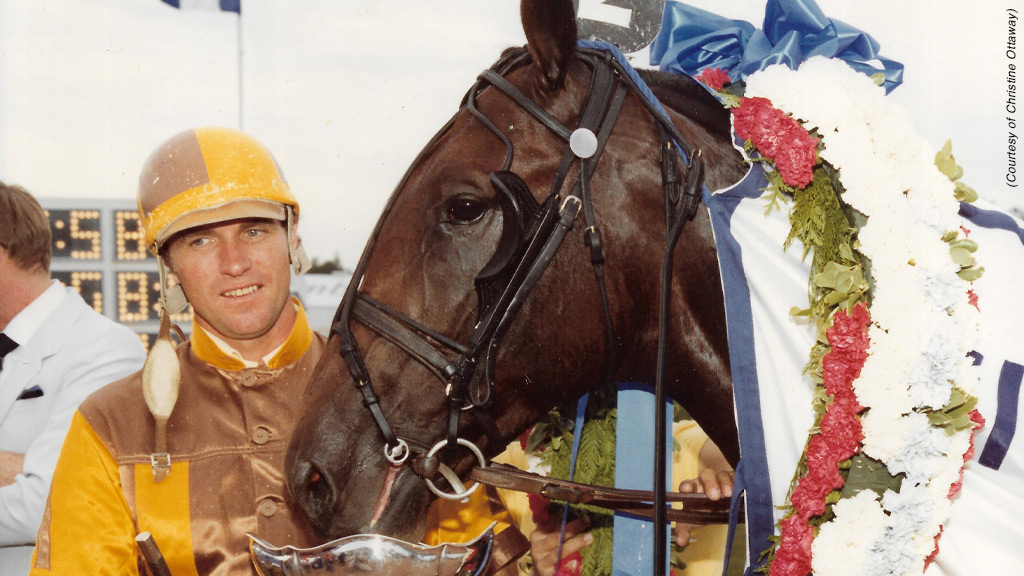
Some horsepeople buy yearlings with hope. Doug Arthur bought them with vision, and few had a sharper eye for untapped talent than the man who discovered the one-and-only Cam Fella.
To those in Standardbred racing circles, Arthur was long-known as a man with a Midas touch, a savvy scout with an uncanny instinct for uncovering future stars.
The genesis of that future reputation started with a specified blueprint.
“From the beginning, I wanted to concentrate on yearlings,” recalled Arthur. “I figured that was the only way I could get my hands on a good horse, so that was my game plan from the start.”
He embraced this role of specific expertise over a jack-of-all-trades approach.
“Very early-on in the horse business, I said to myself that if something doesn’t make sense to me, I was not going to pay any attention to it.”
What he did give his attention to - well before he even joined the ranks of horse racing - were the words and work ethic sourced from a familiar figure in his life.
The Standardbred world had been even closer than he had known.
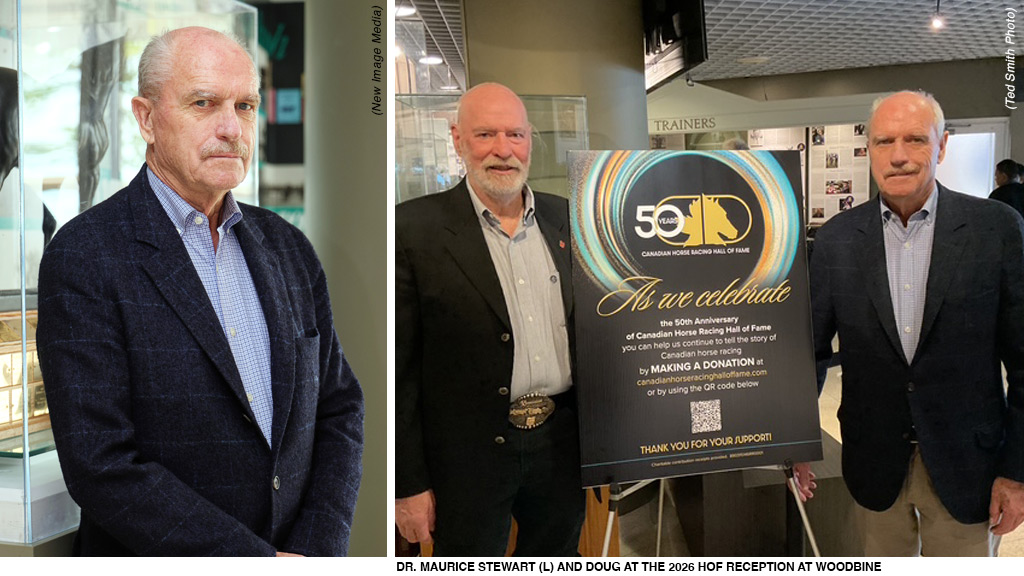
“I had an uncle, Ed [Arthur], who raced horses, which was the beginning of my path towards a career in racing. I owe a great deal to him. He was a pretty special person. Growing up, I just knew him as a Sunday School superintendent. He would disappear in the spring though, and return in the fall, having taken a string, each year, of horses to New York State to race at various tracks.”
When it came time to choose a career path after college, Arthur wasn’t sure what direction to take. He knew exactly where to turn for clarity and counsel though.
“It was probably in the back of my mind when I was very young, that there might be an opportunity there [in racing]. When I was finishing college and all the other guys in my year were taking interviews for jobs and so on, that didn’t appeal to me too much. Trying to make a sport my career was an exciting thought however.”
Jumping in headfirst was another matter entirely though.
“I had no idea what I was getting into. I went and talked to my uncle and he said, ‘It’s the easiest thing in the world.’ He agreed to take me on, and it went from there.”
Where that would take him were places that a young Arthur could never have envisioned.
Working under the tutelage of his uncle, he was a model student of the game, eager to learn and willing to put in the work.
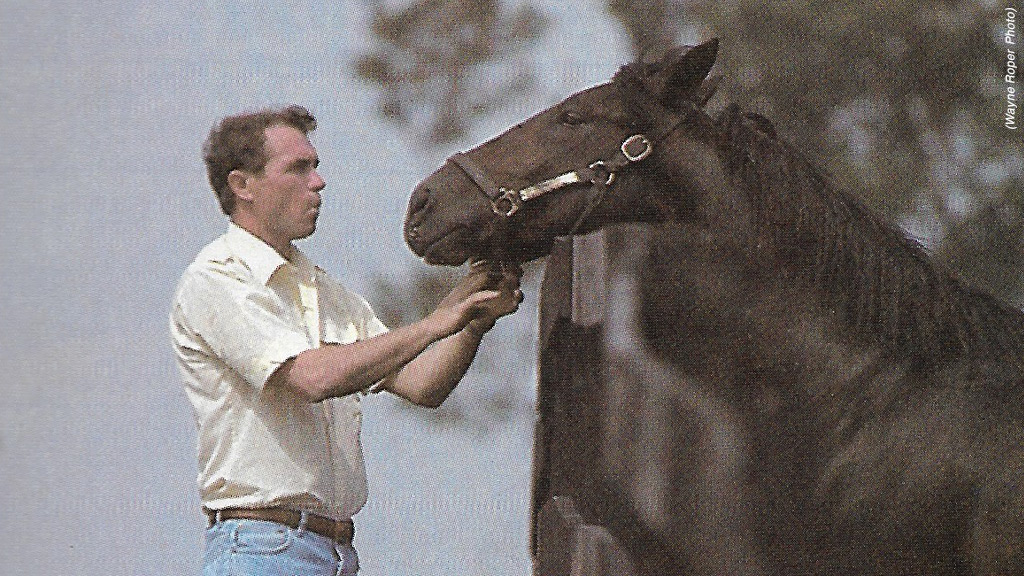
“My uncle always had young horses that we broke and started, so I got good experience there.”
Just as he did when the pair stepped into the bright lights and talent-laden scene of Ontario’s top circuit in the 1970s.
“When I first arrived at Greenwood - my uncle went there the first year - I worked for him. The trainers on the backstretch there were tremendous, setting a good example for me. Percy Robillard, Jimmy Holmes, Harold McKinley, Allan Walker - just unbelievable horsemen - were trainer/drivers, who I aspired to be like.”
Arthur worked devotedly to achieving that treasured goal, all while displaying a look that paid homage to his uncle.
“Those [driving colors] came from my uncle. He had brown-and-gold, so I just adjusted them a little. He started out with green-and-white - he liked his Irish heritage - but at one point he decided to switch to brown-and-gold. It was from copying Del Miller.”
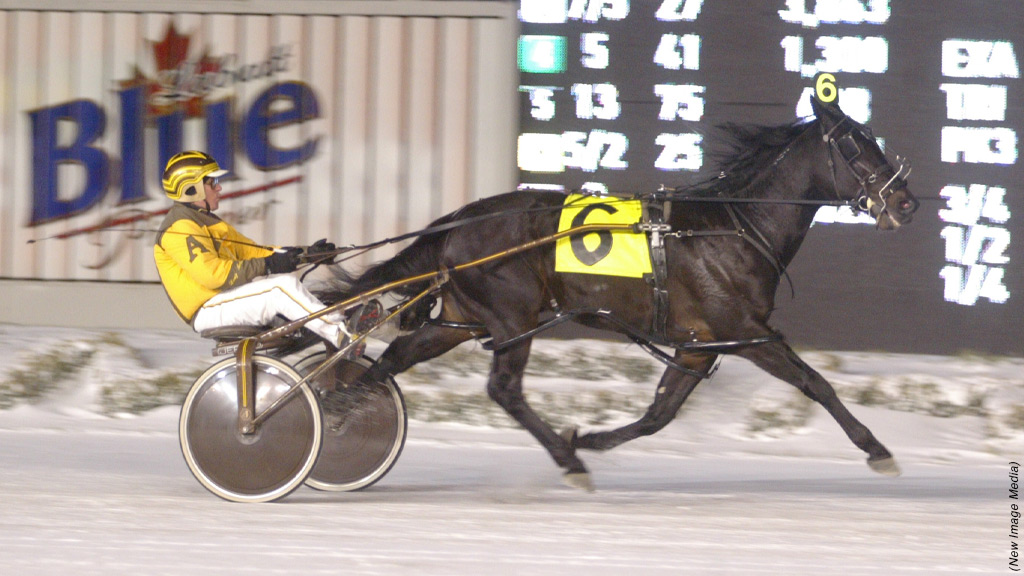
Donning a white helmet on occasion was not a fashion statement by Arthur, however.
“If you saw me with an unpainted helmet, I’d either have left my regular one out of my luggage or I had to get a new one and it wasn’t painted yet. Luckily, I didn’t wear that too often.”
It would be a son of Tar Heel with a white right hind ankle however, who gave Arthur his first winning look as a horseman.
“The first good horse I had was Tarboro [$121,204],” he said of the horse bred in Pennsylvania by Paul Schell. “He raced against [champion and Canadian Horse Racing Hall of Fame inductee] Armbro Nesbit. He was a pretty nice horse and we were successful with him.”
Candid Camera [$129,621] was another early standout for Arthur.
“He was probably the next good one after Tarboro, and I was fortunate to have had him. I always really liked the sire Good Time, so it was nice to get one from his last crop.”
In the second elimination of the inaugural Confederation Cup at Flamboro Downs, in 1977, Candid Camera, with Arthur in the racebike, dueled to a dead heat with River Captain and a young John Campbell. A thrilling final saw the great Governor Skipper best Candid Camera by just a half-length.
“We had a lot of success with him,” recalled Arthur. “He was a very nice horse, very talented.”
It was in 1980, though, when he found the horse who would define his career.
Any story about Arthur cannot be told without note of the horse who would become known as ‘The Pacing Machine.’
Having already earned a reputation as an astute judge of young horseflesh by this time, Arthur travelled to the 1980 Tattersalls Sale in Lexington, unaware at that time he was about to make a life-changing purchase.
A son of Most Happy Fella, out of the Bret Hanover mare Nan Cam, Cam Fella, who was bred by Wilfred Cameron, certainly did not look, to most, the part of a future megastar.
Arthur saw something that others didn’t though.
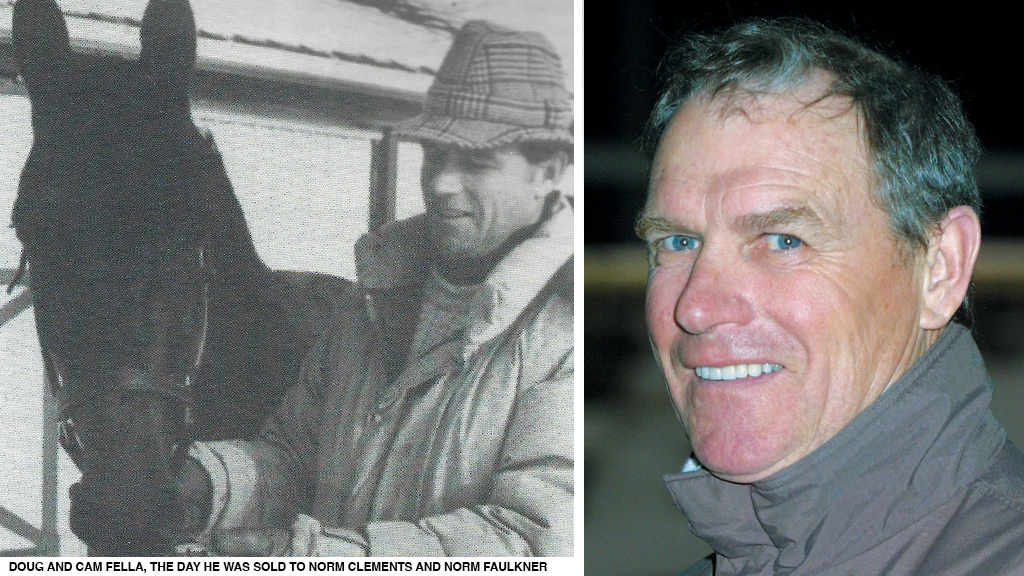
“The horses who looked ready to race as yearlings would be priced way out of my league, so I always had to look for a horse who needed to grow and develop into itself. Most of the time that was the case.
“As I went along, I understood conformation very well. I always paid attention when a good Grand Circuit horse was visiting the track, to make sure I had a good look at them. I always had an image of that good horse in my mind.”
Cam Fella, purchased by Arthur for a paltry sum of $19,000, fit that very image.
“Years later, when I look back on it, seeing horses like Cam Fella, and many others for sure, it was just where I instantly liked the horse. I have to believe that intuition played a part in it.”
As did, of all things, love at first sight.
“Initially, I used to say that I had to fall in love with a horse right away… I’d have to do that if I were interested in buying them. So that was the intuition part.”
And, no doubt, intelligence played a role - even if Arthur deflects such praise.
“I’m not the only one who could do that. I have seen other trainers make some great purchases and find those diamond-in-the-rough types as well.”
Cam Fella was the Koh-i-Noor (Persian for ‘Mountain of Light’).
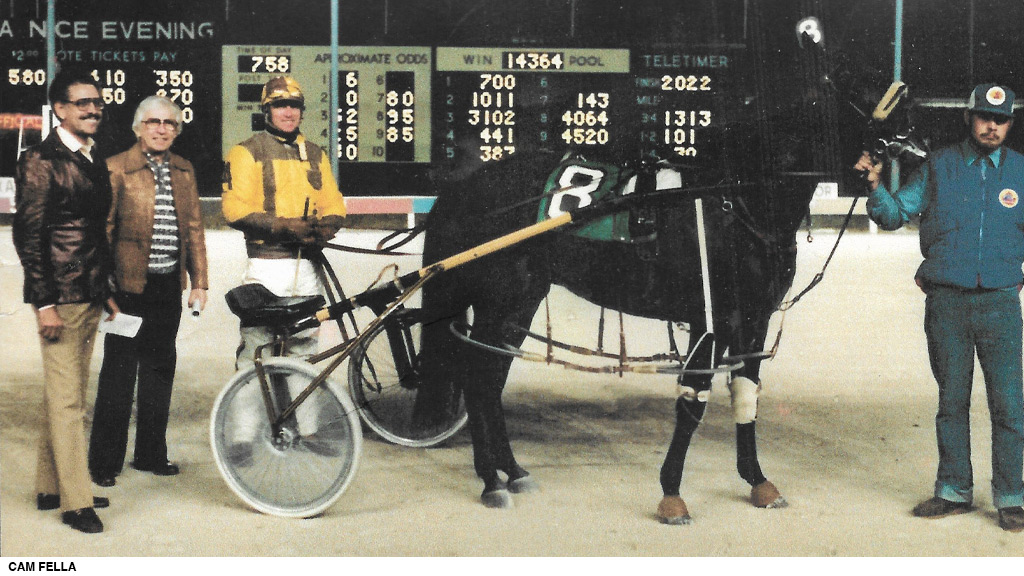
Arthur’s faith in the fledgling pacer remained unflinching in the aftermath of a two-year-old campaign that yielded three wins from 11 starts, and it was a victory in his final start of that freshman season - in the 1981 Valedictory Series Final at Greenwood Racetrack - that caught the attention of Norm Clements and Norm Faulkner.
The pair then approached Arthur with a $140,000 (USD) offer to buy the unassuming rookie.
Over the next two seasons (1982 & 1983), Cam Fella captivated the horse racing world, winning 58 races in 69 starts - including a 28-race winning streak - and was feted as Horse of the Year in both Canada and the United States at the end of each year.
As a three-year-old, his victories included the Queen City Pace - now known as the North America Cup.
As a four-year-old especially, he drew large crowds and adulation wherever he competed. He won 30 of his 36 starts that season.
“He changed horse racing in both Canada and the United States,” his eventual trainer/driver, Pat Crowe, once remarked. “People just loved him.”
When he paced his final mile, his resume brimmed with excellence, and $2,041,367 in purse earnings. He retired as the richest pacer in history.
Although a ridgling, Cam Fella was also a pre-eminent sire.
His breeding career resulted in six progeny that won more than $2 million, headed by Eternal Camnation ($4,129,390), Presidential Ball ($3,021,363), Cams Card Shark ($2,498,204), 1991 Canadian Horse of the Year Precious Bunny ($2,281,142), Camtastic ($2,117,619) and Goalie Jeff ($2,003,439).
His credits also include ten other pacers with earnings in excess of $1 million, including Village Connection, Village Jiffy, Cambest (at one point the fastest Standardbred of all time - 1:46.1), Ellamony, Carlsbad Cam, Electric Stena, Armbro Positive, Pacific Fella, Armbro Operative and Camluck.
In all, Cam Fella, also a member of the Canadian Harness Racing Hall of Fame, as well as of the U.S. Harness Racing Hall of Fame, sired 1,002 foals with earnings in excess of $107 million.
He passed away on May 9, 2001, at the age of 22.
“Early on, even when I was working with my uncle, once a horse left, I forgot about them,” said Arthur. “When I heard something good about them later on, I took that in and appreciated it. Too often, it went the other way as well, but once they were gone, they were gone, because I always had another one in the barn who I could give my full attention to.”
Cam Fella was not Arthur’s only development and training success story. Far from it, indeed.
Bo Knows Jate, Justin Passing and Kingsbridge are just three more examples of Arthur’s expertise.
Justin Passing, a son of By And Large, enjoyed big-time success over a 76-race career.
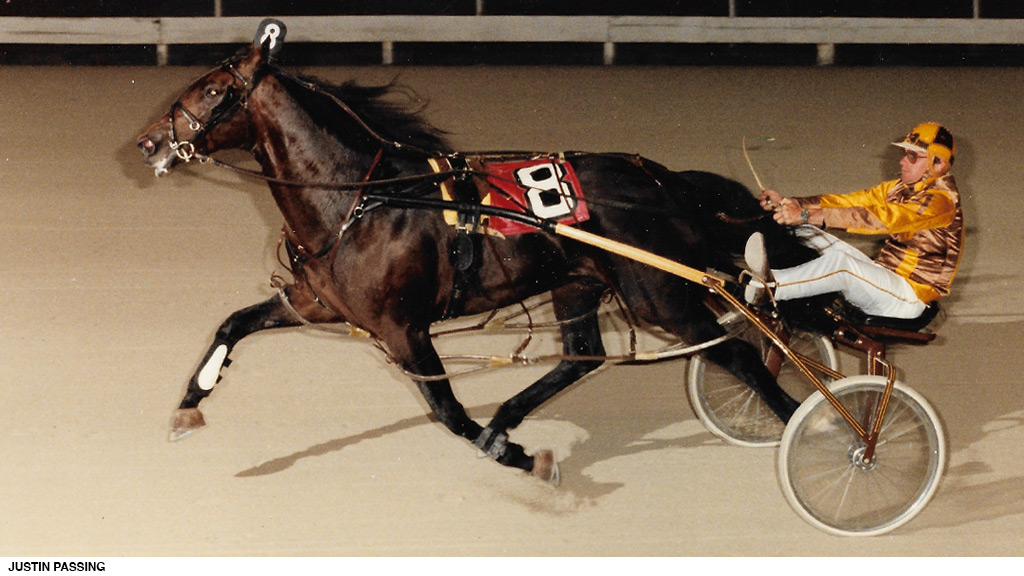
The bay pacer’s accomplishments included a magical three-year-old campaign, in 1980, when he won the Confederation Cup, with Doug in the bike, the Canadian Classic, and finished a strong third to the legendary Niatross in the Prix d’Été at Blue Bonnets, where the latter set a Canadian Record of 1:53.4. He also competed successfully at a high level during his aged career.
In all, Justin Passing went 21-26-6, in those 76 starts, and posted purse earnings of $806,348, before a stud career that saw him sire the winners of over $12.4 million.
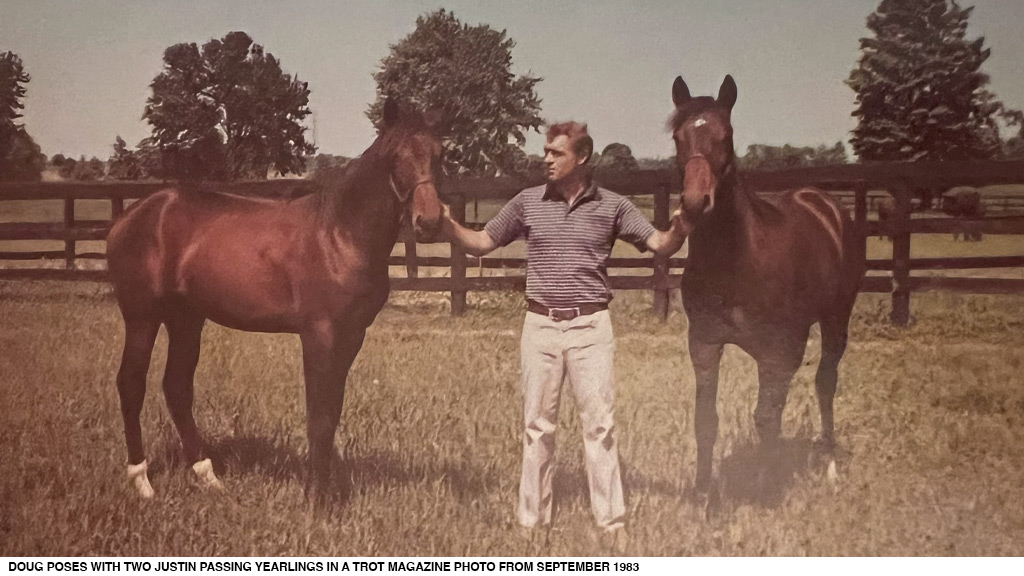
“He was very consistent,” said Arthur. “I liked him a lot, too. He took on some heavy hitters and he showed that he belonged with them.”
A son of the great Jate Lobell, Bo Knows Jate went 26-20-24 from 127 career starts, accompanied by $921,603 in purse earnings.
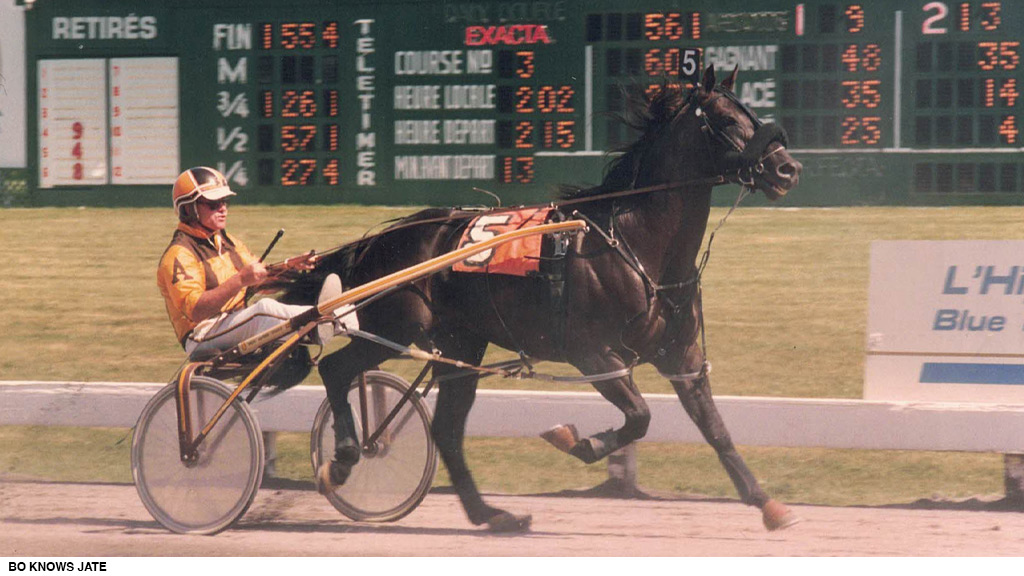
He was a multiple stakes winner at age three, earning $313,120 as a sophomore, and came back at age five to be named the 1994 WEG Aged Pacing Horse of the Year, when he competed in the Free-For-All ranks, posting 10 wins and earning another $259,245, while travelling across North America.
“He was another good one,” said Arthur, who remained part of the Bo Knows Jate ownership team right through a stallion career, at Mac Lilley Farms in Ontario, that saw him sire winners of over $26 million. “He was one of those who gave you everything he had every time he raced.
“You know, I bought both Kingsbridge and Bo Knows Jate in Lexington, from Kentuckiana Farms, in the 1990 yearling sale down there. I left them at their farm for about two weeks and then went back down with my daughter to bring them home. We got them back and I just kicked them out together in the field. A lot of people might not have turned two stud-colts out together at that point,” he smiled, “but I knew that they knew each other - they were best friends - and I guess it turned out ok,” he said with a laugh.
“I eventually sold Kingsbridge, but I stayed in on Bo Knows Jate right through his stallion career.”
By Jate Lobell, out of the Albatross mare Aquinia Hanover, Kingsbridge’s biggest win was a massive upset in the 1992 Breeders Crown Three-Year-Old Colt Pace at Northfield Park. Ten months earlier, Arthur had sold Kingsbridge to Roger Mayotte, just three starts into his young career.
When Kingsbridge upset odds-on favourite Western Hanover in that Breeders Crown victory, the paddock-buddy from his youth, Bo Knows Jate - trained and driven by Doug - was a very close third, beaten by only a neck.
“I just couldn’t get a trip that day, and I was flying past them at the wire, but it was too little, too late,” the now 81-year-old Arthur lamented.
In 70 races, Kingsbridge, who was third to Safely Kept in the 1993 North America Cup, fashioned a 15-10-15 record, and recorded $693,569 in career purse earnings.
Other notable standouts developed and trained by Arthur include $500,000+ purse earners Stock Boy, Kettle Bee, Rock Music, Cinnamon Reel, Diamond River, Classy River Gal and Stonebridge Prize.
“I was also proud to have had three horses who raced in the Invitational at The Meadowlands over the years. One trainer wanted a horse who would race there in the Invitational, and the horse I sold him - Ivan Hanover - fulfilled that promise. I sold him the same year that I sold Cam Fella… and I sold Ivan Hanover for more money!”
Another of Arthur’s most notable attainments as a driver and trainer came with Mystery Skipper.
The son of Senor Skipper, out of the Adios Vic mare Laura Lobell, and Arthur were a dominant force in OSS action during the 1984 campaign. They paced the fastest mile, 1:55, in OSS history at the time, at Kawartha Downs, during the Hugh Pearson-bred’s three-year-old season.
Arthur and his wife Linda co-owned Mystery Skipper with Kim and Danny Husted.
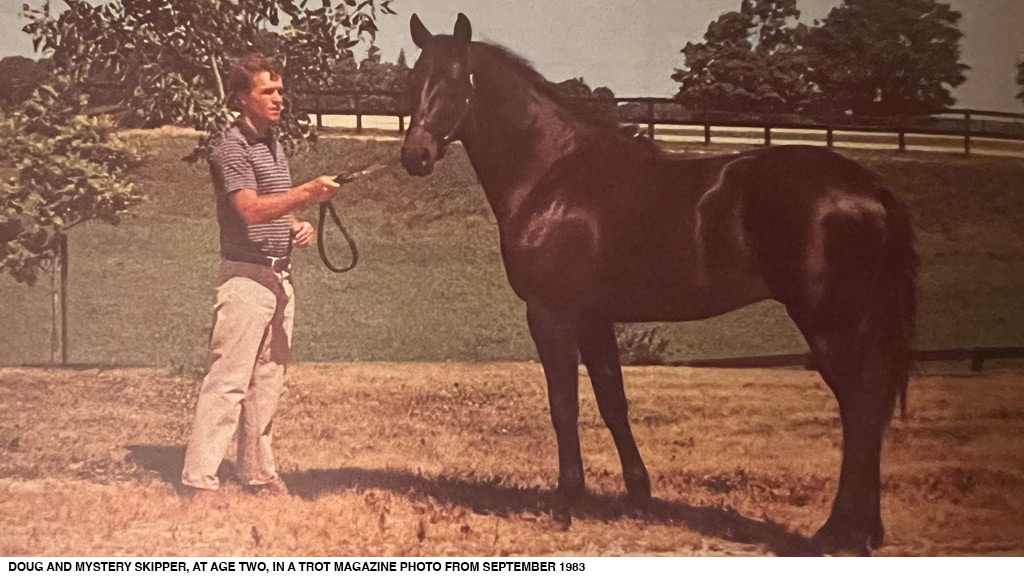
“That was quite a thrill, having the chance to drive and train him. He was fast, and he had a lot of grit.”
As both a trainer and a driver, Arthur won many big races, and he’s grateful for the entire thrill ride, whether he was the one engineering the victory from the racebike himself, or the times when he handed the keys to another.
More than anything however, Doug Arthur was always known as one of the finest developers of young equine talent that Canadian Standardbred racing has ever seen.
From the start, Arthur trusted his eye, instincts, and the lessons passed down from his uncle. While some searched for polished yearlings and immediate answers, Arthur looked deeper, for raw ability, untapped potential, and the promise hidden beneath imperfections.
That method led him to horses like Tarboro, Candid Camera, Justin Passing, Bo Knows Jate, Kingsbridge, Mystery Skipper, and the incomparable Cam Fella.
Some became winners in his barn, while others fulfilled their promise elsewhere.
“There was probably pressure on me to fulfill that hope,” said Arthur. “I always liked to buy horses on my own account, and that put pressure on me to make the right decision. I was never afraid to stick my neck out though.”
That willingness to trust his judgment became the hallmark of what will now always be known as a Canadian Horse Racing Hall of Fame career.
Doug Arthur didn’t just discover and develop great horses, he recognized their greatness long before their first call to post.
This feature originally appeared in the June issue of TROT Magazine. Subscribe to TROT today by clicking the banner below.

Doug Arthur
i remember living in Hamilton around 1967 and going to the races at mohawk ,he had a nice trotter by the name Little Art that he drove.
Doug Arthur
Well Deserved ....Great Horseman...Great Career