
HRAP Rules On Moreau Appeal Regarding DPO Sample


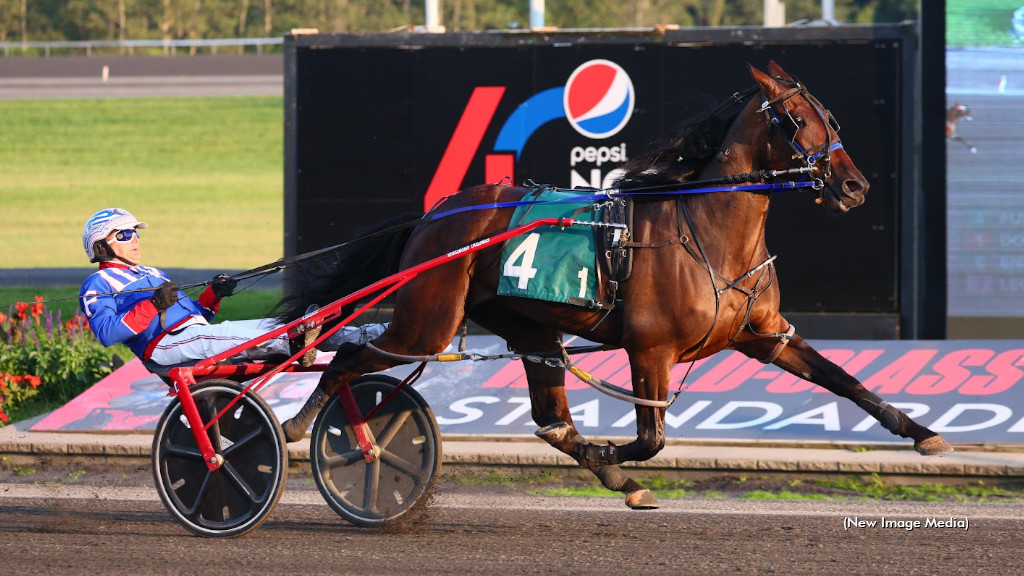
The Horse Racing Appeal Panel has issued a notice of interim decision along with reasons for decision regarding an appeal from suspended trainer Richard Moreau.
The Alcohol and Gaming Commission of Ontario (AGCO) received a Certificate of Analysis confirming the presence of the non-therapeutic drug darbepoetin alfa (DPO) for the horse Funtime Bayama, collected on June 10, 2024, as part of its Out of Competition Testing Program. DPO is a non-therapeutic, performance-enhancing prohibited substance that adversely affects racehorses and the integrity of racing.
For these violations, trainer Richard Moreau was suspended for 10 years, inclusive from July 23, 2024, to July 23, 2034. Driver Sylvain Filion has also been suspended for 10 years, inclusive from Oct. 31, 2024, to Oct. 31, 2034. Both licensees have also been issued a monetary penalty of $40,000, and both licensees have appealed these sanctions. Individual appeals for both Moreau and Filion are ongoing.
In a notice dated April 22, 2026, the Panel released its decision and reasons regarding an appeal lodged by Moreau pertaining to the validity of the Certificate of Positive Analysis that found that the blood of Funtime Bayama did contain synthetic DPO.
In its notice, the Panel upheld the validity of the Certificate of Positive Analysis, and indicated that the Panel will hear the remaining issues on this appeal on dates to be determined.
The reasons for decision from the Horse Racing Appeal Panel follow.
HORSE RACING APPEAL PANEL
TORONTO, ONTARIO – APRIL 22, 2026
SB HRAP 05011 2026
NOTICE OF INTERIM DECISION
IN THE MATTER OF THE HORSE RACING LICENCE ACT, S.O. 2015 C. 38 Sched. 9;
AND IN THE MATTER OF AN APPEAL BY RICHARD MOREAU OF
STANDARDBRED RULING NUMBER 2893588
Date of Issue: April 22, 2026
Horse Racing Appeal Panel (Panel):
Stanley Sadinsky, K.C., Chair
Dr. John Hayes, Member
Nicolle Pace, Member
Appellant:
Richard Moreau
Counsel for the Appellant:
Jean-Marc MacKenzie
Counsel for the Registrar:
Brendan van Niejenhuis
Alexandra Heine
Interim Decision: The Panel upholds the validity of the Certificate of Positive Analysis that found that the blood of FUNTIME BAYAMA did contain synthetic DPO.
WHEREAS Richard Moreau (“MOREAU”) is licensed with the Alcohol and Gaming Commission of Ontario (“AGCO”) as an Owner/Trainer/Authorized Agent, Licence Number HPR8958;
AND WHEREAS ON June 10, 2024, MOREAU was the trainer of record for FUNTIME BAYAMA;
AND WHEREAS as a result of the Certificate of Analysis #117913 confirming the presence of Darbepoetin alfa (“DPO”) for the horse “FUNTIME BAYAMA” (tattoo number 1WP27), in a sample collected on June 10, 2024, as part of the Out of Competition Testing Program for the North America Cup, DPO being a prohibited performance enhancing nontherapeutic substance, the use of which adversely affects the integrity of racing;
AND WHEREAS MOREAU is found to have violated Rules 26.02.01, 26.02.02, 26.02.03(a) and (b) of the Rules of Standardbred Racing;
AND WHEREAS in accordance with Rules 4.02(i), 6.04, and 6.49 of the Rules of Standardbred Racing and Policy Directive 1-2018, MOREAU is hereby fully suspended for a period of 10 years and issued a monetary penalty of $40,000.00 and the suspension shall be served from July 23, 2024, to July 23, 2034, inclusive;
AND WHEREAS in accordance with Policy Directive 1-2018, MOREAU is required to complete the AGCO Equine Medication Use and Awareness Program before reinstatement;
AND WHEREAS all horses owned in whole or in part by MOREAU are not eligible to race during the above noted suspension period, in accordance with Rule 6.13.01 of the Rules of Standardbred Racing. Any horses trained by MOREAU are ineligible to race but may, with the consent of the AGCO Race Officials, be released to another trainer in good standing or sold, in accordance with Rule 26.08 of the Rules of Standardbred Racing and Policy Directive No. 2-2008;
AND WHEREAS in accordance with Rule 6.01(a) of the Rules of Standardbred Racing, MOREAU is prohibited from accessing association grounds, including the “Winner’s Circle”, with the exception of the grandstand, while his licence is suspended;
AND WHEREAS on August 6, 2024, MOREAU filed a Notice of Appeal;
AND WHEREAS at the request of the Parties, the Panel convened on December 10, 11 and 12, 2025 and on March 19 and 20, 2026 to hear that part of the Appeal dealing with the validity of the Certificate of Positive Analysis that found that the blood of FUNTIME BAYAMA did contain synthetic DPO;
AND WHEREAS the Panel agreed to render an Interim Decision on the aforesaid issue;
TAKE NOTICE of the following:
1. The Panel upholds the validity of the Certificate of Positive Analysis that found that the blood of FUNTIME BAYAMA did contain synthetic DPO;
2. The Panel will hear the remaining issues on this Appeal on continuation dates to be set by the HRAP Secretariat in consultation with the Parties.
The Panel’s Reasons for Decision are attached to this Notice.
DATED on this 22nd day of April, 2026.
Stanley Sadinsky, K.C., Chair
Horse Racing Appeal Panel
Dr. John Hayes, Member
Horse Racing Appeal Panel
Nicolle Pace, Member
Horse Racing Appeal Panel
REASONS FOR DECISION - RICHARD MOREAU
The Horse Racing Appeal Panel (PANEL) convened on December 10, 11 and 12, 2025 and March 19 and 20, 2026 to hear the Appeal of Richard Moreau (MOREAU). MOREAU has appealed Standardbred Official Ruling #2893588 dated October 31, 2024 wherein the Deputy Registrar of the Alcohol and Gaming Commission of Ontario (AGCO; REGISTRAR) fully suspended MOREAU for 10 years and issued a monetary penalty of $40,000 as a result of a positive test for Darbepoetin (DPO) taken in Out of Competition Testing (OCT) from the horse FUNTIME BAYAMA, (the HORSE) trained by MOREAU. The Ruling had the usual provisions that any horse owned by MOREAU could not race during the period of his suspension and horses trained by him could be transferred to other trainers with the consent of AGCO Officials.
On the Appeal, Brendan van Niejenhuis and Alexandra Heine appeared for the REGISTRAR and Jean-Marc Mackenzie appeared for MOREAU. The REGISTRAR called seven witnesses: Brian Nagano, Inspector with the AGCO (NAGANO); Dr. Pamela Chesterfield, Veterinarian and Manager of Veterinarian Services at the AGCO (CHESTERFIELD); Devan Loganathan, Laboratory Supervisor responsible for OCT testing at Bureau Veritas Lab in Burnaby, British Columbia (LOGANATHAN; BV); Zoe Green, Senior Scientist at LGC Laboratory Confirmatory Team, Cambridge, England (GREEN; LGC); Catherine Scarth, Senior Leader of the Confirmatory Team at LGC; (C SCARTH;); Dr. James Scarth, Analytical Chemist and Laboratory Director of Animal Sports Drug Testing at LGC (J SCARTH); and Tyler Durand, Senior Manager of Racing at the AGCO (DURAND). The Appellant called one witness, Justin Turcotte, assistant trainer. (TURCOTTE)
Seven Exhibits were received into evidence: Exhibit 1 – Registrar’s Book of Documents containing 30 Tabs (RBD); Exhibit 2 – Appellant’s Book of Documents containing nine Tabs (ABD); Exhibit 3 – I LAC G7 Accreditation Requirements and Operating Criteria for Horseracing Laboratories (I LAC), found in the Appellant’s Hearing Brief, Tab 10 (AHB); Exhibit 4 – IOS/IEG 17025, Requirements for the Competence of Testing and Calibration Laboratories (IOS), (AHB), Tab 11; Exhibit 5 – Standards Council of Canada -SCC Requirements and Guidelines for Accreditation of Forensic Testing Laboratories (SCC), (AHB), Tab 12; Exhibit 6 – Canadian Pari-Mutuel Agency (CPMA) Policy Paper P-005 (AHB), Tab 8; Exhibit 7 – Request for Proposals Form from Public Works and Government Services/ CPMA, Canada 2016.
Following the hearing of the evidence and submissions on behalf of the parties, the PANEL reserved its decision and it is now provided with Reasons.
OVERVIEW
In June 2024, the HORSE qualified for the final in the prestigious Pepsi North America Cup race to be run at Woodbine Mohawk Park. The AGCO decided to conduct OCT of all of the horses in the final, prior to the race. A team from the AGCO attended at MOREAU’S farm on June 10 and drew blood and took samples of hair from the HORSE for testing. The blood was packaged and shipped to BV for screen testing. BV reported a “hit” for Erythropoietin (EPO) activity and subsequently shipped the plasma to LGC for confirmatory testing. LGC reported the presence of DPO, a laboratory-made (synthetic) version of EPO in the sample shipped. LGC issued a Certificate of Analysis identifying and confirming DPO in the plasma sample. As a result, the AGCO issued the Official Ruling referred to above.
MOREAU then launched this Appeal primarily on two grounds: first, whether the Certificate of Positive Analysis for DPO is accurate and valid, and second whether he adhered to his obligations as the trainer of record of the HORSE.
As to the first ground, MOREAU’S Appeal was primarily focused on the chain of custody of the sample from the time that the blood was drawn to the time that the Certificate of Analysis was issued. MOREAU alleges that standards, protocols and procedures in place were not followed and that this compromised the sample’s integrity when tested. His Appeal was less focused on the testing procedures themselves.
The parties agreed that the PANEL should render a decision on the threshold issue as to whether the Certificate of Positive Analysis should be upheld and the PANEL has agreed to do so. Depending on the result, further days of hearing may be required to deal with the other issues in this Appeal.
These Reasons begin with the evidence relevant to the chronological movement of the sample from the drawing of the blood to the Certificate of Analysis together with evidence with respect to the testing.
THE REGISTRAR’S EVIDENCE
The Drawing of the Blood
CHESTERFIELD testified that she, NAGANO and Laura Mathews (MATHEWS) attended at MOREAU’S farm on June 10 to draw blood and obtain hair samples from the HORSE. NAGANO had done all the necessary paperwork in advance and brought with him the supplies that were necessary. The HORSE’S identity was established by scanning its microchip and an identification number was assigned to the samples that were taken. (MX 047015) The HORSE was handled by TURCOTTE, an assistant trainer in the employ of MOREAU. MOREAU was initially in a field nearby when the AGCO group arrived but was later observed at the other end of the barn where CHESTERFIELD was working with the HORSE.
CHESTERFIELD testified that she drew blood from the HORSE and it was put into five tubes and given to NAGANO for labelling with the identification number and each tube was sealed with a tamper-proof seal. The tubes were shown to TURCOTTE and he initialed each seal and compared the identification number with that shown on the Test Card that he also signed (Exhibit 1, RBD, Tab 1-E). The tubes were then put into a tamper-proof sealed container that was also initialed by TURCOTTE. This evidence was confirmed by NAGANO in his testimony.
CHESTERFIELD prepared a document for shipping purposes that included the name “Richard Moreau Stables”. (Exhibit 1, RBD, Tab 1-Q)
CHESTERFIELD testified that DPO is a synthetic version of EPO. It increases the red blood cells of a horse and allows them to carry more oxygen. This in turn, improves the performance of a horse but is also a risk to a horse’s health.
In cross-examination, CHESTERFIELD testified that she did not use plasma-separating tubes when she drew the blood and that she later had email exchanges with BV regarding hemolysis in the sample. She also testified that she recalled speaking with MOREAU in the parking lot after the blood was drawn and he expressed no concern as to why she was there or what she had been doing.
When he arrived at the MOREAU farm, NAGANO testified that he introduced himself to TURCOTTE and advised him of the purpose of the visit. TURCOTTE then led the AGCO folks to the HORSE. NAGANO testified that when he was handed the tubes containing the samples of blood by CHESTERFIELD and after having their seals initialed by TURCOTTE who also signed the Test Card, he placed them in a cooler, added cold packs and sealed the cooler with a tamper-proof seal that TURCOTTE also initialed and then he locked the cooler. NAGANO placed the cooler in his car that was always locked when he was not in it.
In cross-examination, NAGANO testified that he believed that TURCOTTE was a ‘designate’ for MOREAU within the OCT Policy and procedures and that he remembered seeing MOREAU a few stalls away from where the blood was being drawn. When he spoke with MOREAU in the parking lot after the blood was taken, MOREAU made no objection to what had taken place.
NAGANO, along with CHESTERFIELD and MATHEWS then went to two other locations to draw blood from two other horses. When he got home, he placed the cooler in his home office and changed the cold packs later that night and again on the next morning. NAGANO then shipped the locked cooler to BV on June 11, utilizing Purolator Courier. (Exhibit 1, RBD, Tab 1-J)
The Receipt of the Blood by BV and the Screening Test
LOGANATHAN testified that the shipment from the AGCO arrived at BV on June 12th and that it appeared to be intact. All of the tamper-proof seals on the tubes were in place and there was no evidence of tampering. (Exhibit 1, RBD Tab 1-S). The tubes in the shipment each bore the identification number MX 047015. The shipment was placed in a refrigerator.
LOGANATHAN then testified in detail about the screening test that BV performed on all five samples of separated equine plasma using a Quantikine IVD Elisa Kit. (Exhibit 2, ABD Tab 4; Exhibit 1, RBD Tab 1-K) There was some evidence of hemolysis but insufficient to affect the testing. The Kit involves immunoassay technology testing for human EPO and possibly synthetic variations such as DPO. A work plan for the testing was approved and there was a “hit” for EPO. All 5 samples were tested with the same result. LOGANATHAN concluded that the Elisa Kit worked perfectly. The result was considered to be a potential positive, but the samples had to be forwarded to another lab for confirmation. LOGANATHAN testified that neither human EPO nor DPO should be present in a horse’s blood.
LOGANATHAN was given instructions by the AGCO to send the samples to LGC located near Cambridge, England for confirmatory testing and 2 tubes were sent along with the Analysis Report of BV. (Exhibit 1, RBD Tab 1-K) The shipping document that CHESTERFIELD had prepared that noted the “Richard Moreau Stables” was sent to LGC with the samples.
In cross-examination, LOGANATHAN testified that he did not know the name of the horse nor its trainer when the screening test was performed. He had never heard of MOREAU and to his knowledge, neither did anyone else at BV who was involved in the testing.
In further cross-examination, LOGANATHAN testified that in order to comply with the lab’s accreditation protocols, BV follows ISO, I LAC and SCC standards. (Exhibit 5) However, when packaging the samples for shipment to LGC, tamper-proof seals were not placed on the top of the two tubes containing the sample nor were the tubes put in a tamper-proof bag. Rather the tubes were wrapped in bubble wrap, taped, and a cold pack was added. These items were placed in a styrofoam cooler whose lid was sealed with packing tape but not with tamper-proof tape. (Exhibit 2, ABD Tab 2) LOGANATHAN felt that this was sufficient in the circumstances of this case as the AGCO does not provide shipping standards. The cooler was placed in a shipping box and was then couriered by BV to LGC.
Subsequently, LOGANATHAN was shown photos taken by LGC of the inside of the box that BV shipped and he confirmed that the photos accurately showed what had been shipped. (Exhibit 1, RBC, Tab 1-K)
The Receipt of the Blood/Plasma by LGC and the Confirmatory Test
GREEN testified that she opened and examined the package that was received by LGC from BV on July 10. She described it as an external cardboard box containing a polystyrene box with a top sealed with clear packing tape that appeared intact with no obvious signs of tampering. Inside were two tubes wrapped in bubble wrap and a freezer pack. The two tubes contained plasma as BV had apparently performed separation. There were no seals on the tubes and they were not in a tamper-proof bag. The identification number MX 047015 was on the tubes. The freezer pack was not frozen but GREEN did not consider this to be a problem for testing purposes as DPO is a stable drug. Photos were taken of the inside of the box and these photos were subsequently sent to BV. (Exhibit 1, RBD, Tab 1-P) Because there was no tamper-proof layer (bag), the Sample Receipt Form recorded “insufficient integrity”, a description generated by LGC’s computer information system. (Exhibit 1, RBD, Tab 1–O) There was no indication that the package had been interfered or tampered with.
The tubes were placed in a freezer prior to the testing that commenced on July 16. GREEN described in great detail the testing procedure using a SCIEX 7500 instrument and the processes of liquid chromatography and mass spectrometry. (Exhibit 1, RBD, Tab 1-Q) The result was that a Certificate of Analysis was issued identifying the presence of DPO in the plasma sample. The testing revealed the presence of the T9 peptide that is singularly associated with synthetic DPO. GREEN was satisfied that the instrument and processes employed worked properly and that all of LGC’s criteria for testing were met. J SCARTH reviewed the case file that included all the data and procedures that were used and he, as Laboratory Director, signed off as well.
In cross-examination, GREEN confirmed that at all relevant times, she was unaware of the name of the trainer and the name of the HORSE whose sample was being tested. However, because of the insufficiency of the wrapping, the AGCO was contacted to determine whether testing should proceed and it did proceed. She also testified that testing plasma was appropriate in confirmatory testing and that her lab sometimes received blood both separated and not separated. When asked about hemolysis, GREEN testified that so long as she could observe layers in the sample, it was appropriate for testing.
In re-examination, GREEN testified that the confirmatory process is separate from the screening process as screening simply indicates to the confirmation lab what to test for.
C SCARTH as the Senior Team Leader of the Confirmatory Testing Team at LGC, oversaw the testing of the sample in question that was shipped from BV on July 8th and received at LGC on July 10. LGC developed a case file that recorded the steps that were taken by LGC in the confirmatory testing process. (Exhibit 1, RBD, Tab 1-Q)
C SCARTH testified that she determined that there was sufficient sample for testing purposes and that the sample had been separated so that LGC was receiving plasma. She was aware that the sample had been previously frozen and was not in its original tube but this did not affect the integrity of the confirmatory testing. C SCARTH confirmed the evidence of GREEN that the two tubes containing the sample were wrapped in bubble wrap and contained in a polystyrene box but that there was no security bag or tamper-proof seals. She saw the photos of the content of the box as well. She confirmed that this was noted as “insufficient integrity”, a computer- generated description derived from a populated selection in LGC’s information management system and that this was the only issue that was flagged for the AGCO to consider. Furthermore, she was not aware of who the trainer of the HORSE in question was when the confirmatory testing was done.
C SCARTH testified that the sample was in a physically suitable state for testing when it was received by LGC.
In cross-examination, she agreed that naming the trainer of the HORSE in the shipping documents did not conform with IOS Standards but that she had no knowledge of MOREAU. (Exhibit 5) She also testified that knowing the concentration of DPO does not constitute bias. When LGC noted “insufficient integrity” in its report to the AGCO, DURAND sought an explanation as to what this meant and she replied that it was noted because of the absence of a tamper-proof security bag layer. Otherwise, C SCARTH had no other concerns regarding the sample’s integrity and she saw no evidence of tampering.
C SCARTH further testified that ISO and I LAC set standards that accredited labs follow and there was nothing in the standards that indicated that a sample had to be shipped in a tamper-proof layer. She also confirmed that the photos of the inside of the container that housed the sample were sent to both LOGANATHAN and DURAND as this information was for the Regulator to consider.
In re-examination, C SCARTH testified that if there was a concern such as hemolysis about the state of the sample to be tested, that would have been flagged by GREEN and GREEN did not note or flag it.
J SCARTH who is an analytical chemist, described the properties of EPO and DPO. He testified that DPO is a synthetic form of EPO and can be readily detected in testing. DPO does not occur naturally in horses and if detected, must have been administered to the horse. LGC has its own method for detecting DPO using mass spectrometry and liquid chromatography and its method has been in place, peer reviewed and accredited by both ISO and I LAC (Exhibit 1, RBD, Tab 1-N and Tab 1-X)
In his testimony, J SCARTH described in detail the process that was used in testing for DPO in this case. He described the science behind the test and the SCIEX 7500 mass-spectrometer instrument that was used. He pointed out the separation that exists between the screening and confirmatory processes in that screening informs the confirmatory process as to what to look for. This direction could have come from a suspicion as to what to test for rather than from screening. It is the confirmatory testing that is definitive. LGC is accredited by IOS and I LAC and it seeks to follow their respective guidelines when performing its functions. (Exhibits 3 and 4)
In cross-examination, J SCARTH testified that the sample received by LGC was suitable for testing and analysis and temperature variations did not affect the test result. He was satisfied with the integrity of the entire process subject only to the issue of the absence on receipt of a security bag layer that contained the sample. He testified that “insufficient integrity” does not mean that something has happened to the sample but it alerts the customer of the absence of the security layer when the sample was received. He also testified that hemolysis is not relevant in confirmatory testing. He further testified that the conditions of the shipping did not preclude LGC from proceeding with the testing.
J SCARTH testified that failure to follow a standard does not preclude accurate results. Depending on the circumstances, it is up to the Regulator whether to proceed with the testing and with possible regulatory charges. He also testified that the naming of MOREAU in the shipping documents was not a high-risk concern to LGC as no one at LGC was aware of this document when the confirmatory testing was performed.
In the result, J SCARTH testified that after reviewing all of the procedures that LGC followed in testing the sample, he concluded that they were correctly followed and that the analytical result correctly found that the sample tested contained DPO. Accordingly, he signed the Certificate of Analysis.
The AGCO’S Decision to Issue the Official Ruling
DURAND testified that the AGCO’s OCT program is governed by Chapter 37 of the Rules of Standardbred Racing (RULES) and by its own OCT Policy and Procedures for testing for EPO and its derivatives such as DPO and that the sample in question was handled and tested under that Policy. (Exhibit 2, ABD, Tab 1) The OCT program is completely separate from the in-competition and OCT testing that is sometimes done by the Canadian Pari-Mutuel Agency (CPMA) and that Agency’s standards do not apply in this circumstance.
The AGCO conducts OCT in order to detect substances such as DPO that may have been given to a horse and are not detectible in in-competition testing but would continue to have benefits to a horse while racing.
DURAND testified that the AGCO asked BV to conduct a screening test on the sample in question and BV did not report any integrity issues when it received the sample. When BV reported a “hit” for EPO activity, the AGCO determined to have the sample sent to LGC for confirmatory testing. The AGCO had no standards for BV to follow with respect to packaging and shipping and relied on BV to determine how it would deliver the sample to LGC.
DURAND testified that a confirmatory test result is what the AGCO would and did rely on in issuing the Official Ruling in this case and never the screening test result.
When he was advised by LGC that there was an “insufficient integrity” issue with respect to the lack of a tamper-proof layer in which the sample was shipped to LGC, DURAND testified that he investigated and reviewed all of the circumstances related to the chain of custody from the time that the sample was taken from the HORSE to the time that the Certificate of Analysis was issued by LGC. He saw the pictures of the contents of the box that LGC received and confirmed with BV that the pictures accurately showed the contents as they were sent. He also determined that there were no issues when the sample was taken from the HORSE nor when it was sent to BV. (Exhibit 1, RBD, Tab 1-S) In addition, there were no issues when the sample was sent to LGC other than the absence of a tamper-proof layer containing the sample.
DURAND testified that he concluded that the likelihood of someone tampering with the sample by adding DPO during transit was virtually non-existent. He also concluded and was confident that neither did anyone at BV or LGC introduce DPO to the sample. In a chain of emails that he read, he was convinced that the samples arrived at BV with no signs of tampering with the tamper-proof labels and that it arrived at LGC in the same condition as it was sent. (Exhibit 1, RBD, Tabs 1-O, 1-Q and 1-S).
DURAND testified that he felt confident that the sample taken from the HORSE was the sample that LGC tested and concluded that it contained DPO. He concluded that in these circumstances it was incumbent on the AGCO to proceed and accordingly, the Official Ruling referred to above was issued.
In cross-examination, DURAND testified that BV is accredited by the SCC and is required for accreditation purposes to comply with its standards. (Exhibit 5) However, the OCT that was done in this case fell under the AGCO’s Out-of-Competition and Liquor Samples Testing Policy. (Exhibit 2, ABD, Tab 1) When questioned about the CPMA Policy Paper P-005 (Exhibit 6), DURAND testified that it did not apply to the circumstances of this case as the sample in question was sent to a laboratory chosen and paid for by the AGCO under its OCT Policy and under Chapter 37 of the RULES. While the CPMA did out of competition testing for EPO in some cases which it paid for, this was not such a case as this sample was not tested under any CPMA program.
DURAND testified that he was satisfied that the sample was taken from the HORSE on June 10 and was done in the presence of someone (TURCOTTE) who represented MOREAU. He also concluded that there was no ‘bias’ against MOREAU by anyone at LGC when it did its work, as apparently no one knew him or had any dealings with him.
THE APPELLANT’S EVIDENCE
TURCOTTE testified that he was employed by MOREAU on June 10, 2024 when three AGCO Officials attended at MOREAU’S farm to draw blood from the HORSE. The gate to the farm was locked and MOREAU ‘buzzed’ the AGCO team in. TURCOTTE led them to the lower barn where the HORSE was located. At the time, MOREAU was in the top barn some 50 to 100 feet away.
TURCOTTE testified that AGCO Officials had attended at MOREAU’S farm on previous occasions to draw blood for OCT and that he, TURCOTTE had assisted by watching the procedures. On the occasion in question, after the blood was drawn, he initialed the labels on the tubes and signed the accompanying form, he said, “on MOREAU’S behalf”. (Exhibit 1, RBD, Tab 3) The Officials did not ask to speak to MOREAU prior to drawing the blood. TURCOTTE testified in re-examination that he assumed that the OFFICIALS had already spoken with MOREAU on every occasion before the blood was drawn.
THE SUBMISSIONS
Mr. van Niejenhuis submitted that the REGISTRAR’S position was straight forward viz. on a balance of probabilities, the blood taken from the HORSE on June 10, 2024 was the same blood/plasma that was subjected to confirmatory testing by LGC leading to the issuance of the Certificate of Positive Analysis for the drug DPO. The REGISTRAR acknowledged that on the sample’s way to LGC some chain of custody and laboratory standards may not have been followed but none of them alone or in combination affected the integrity of the test result that LGC reported.
Mr. van Niejenhuis argued that the blood was properly drawn from the HORSE in the presence of TURCOTTE, an express or implied designate of MOREAU and TURCOTTE initialed the seals on the tubes containing the blood and signed the Test Card. The tubes were properly shipped to BV and arrived intact. BV conducted a screening test using a Quantikine IVD Elisa Screening Kit and reported a “hit” for EPO.
Two tubes containing the sample were then shipped to LGC near Cambridge, England for confirmatory testing. Mr. van Niejenhuis made it clear that the REGISTRAR was not relying on the result of the screening test but only on the result of the confirmatory test. When shipped, the tubes were wrapped in bubble wrapping, secured by tape and placed in a styrofoam cooler whose lid was sealed with packing tape. While there were no tamper proof seals on the tubes and they were not in a secured layer, Mr. van Niejenhuis submitted that there was no evidence of tampering. However, LGC noted in a report to the AGCO that there was “insufficient integrity” due only to the absence of a tamper proof layer.
Mr. van Niejenhuis submitted that the confirmatory testing was done properly using a proven and peer reviewed liquid chromatography protocol and the T9 peptide was identified in the sample, a peptide uniquely and singularly related to synthetic DPO.
In sum, Mr. van Niejenhuis argued that the laboratory testing done by LGC unequivocally determined that DPO was contained in the sample tested and that this sample came from the HORSE. Synthetic DPO is not a naturally occurring substance and therefore it must have been administered to the HORSE by someone.
Mr. MacKenzie argued that there were 29 discrepancies (with some overlap) in the entire process that collectively rendered insufficient reliability to support the integrity of the confirmatory test result. Many of these discrepancies, he argued, offended the standards set by I LAC and IOS for laboratory accreditation and by the SCC, an organization that seeks to set and establish uniform laboratory standards and protocols and provides accreditation to laboratories in Canada.
These standards, protocols and practices cited by Mr. MacKenzie were as follows: non-recommended type of tubes used at collection; no temperature logs when NAGANO placed the tubes in his car; the samples were stored in NAGANO’S office prior to shipment to BV; the control forms were prepared the day after the samples were collected; delay by NAGANO in placing the tubes in a cooler; no documentation of a chain of custody at BV; delay of 33 minutes in reading the sample plate during testing at BV; no record of sample volume by BV; sample not received by LGC in original tubes; no documentation as to temperature of sample; no chain of custody log sent to LGC; AGCO had not recently audited BV and determined whether it was an accredited lab; AGCO did not provide protocols for BV’s lab procedure including packaging for shipping; AGCO did not obtain CPMA approval to use BV for the screening test; the AGCO did not require BV to use CPMA protocols.
Mr. MacKenzie also argued that the AGCO breached RULE 37.04 that reads in part as follows:
37.04 Where the Registrar or his or her delegate has required that a biological sample be provided, the horse will be made available by the...trainer of record of the horse, or, if the trainer of record of the horse is not readily available, any assistant trainer…
Mr. MacKenzie submitted that no effort was made by the AGCO Officials to secure the attendance of MOREAU when the blood was being drawn although he was on the premises that morning and that this constituted a violation of the RULE.
Mr. MacKenzie argued that the chain of custody lacked integrity as evidenced by the note of LGC that there was “insufficient integrity”. He also argued that the sample was not in a proper state for confirmatory testing as there was evidence of hemolysis which is identified as yellow or straw-coloured plasma.
Finally, Mr. MacKenzie submitted that MOREAU was denied the opportunity to conduct a re-test of any residue sample that might have been available after LGC had issued the Certificate of Analysis. He, or his representatives were advised that there was only two mLs of residue available, an insufficient amount for testing. It turned out that as BV had only shipped two tubes of sample to LGC, it retained three frozen tubes at its premises and this information was not conveyed to MOREAU until December, 2025.
In sum, Mr. MacKenzie argued that the confirmatory test result should not stand as there were simply too many discrepancies particularly in the chain of custody that cast doubt on the integrity of the result. And that this is particularly so when MOREAU’S career is at stake.
ANALYSIS AND CONCLUSIONS
The Testing of the Samples
We begin with the screening test. We accept the evidence of LOGANATHAN that the screening test was performed properly and that it identified a “hit” for EPO. The sample arrived at the BV laboratory in the exact and secured condition in which it was shipped. The sample was suitable for testing notwithstanding the passage of time and any temperature variations that may have occurred from the time that the blood was drawn until the time of the test.
And we emphasis that the REGISTRAR is not relying on the result of the screening test. Screening is a form of triage, performed solely for the purpose of identifying the possibility that the sample tested may contain a particular substance. It signals that a further confirmatory test is absolutely necessary to conclusively determine whether in fact the presence of that substance is in the sample. That signal could have come from any source, perhaps a suspicion. But screening is a relatively inexpensive way of narrowing the possibilities that some substance or other may be present in the sample tested.
We also accept the evidence of GREEN, C SCARTH and J SCARTH that the confirmatory test, a liquid chromatography-mass spectrometry process, was performed properly utilizing a SCIEX 7500 mass-spectrometer. The sample arrived at LGC in the exact condition in which it was shipped. GREEN and C SCARTH testified that the sample was in a proper condition for testing. GREEN noted that there was some hemolysis observed but, in her opinion, this did not preclude the accuracy of a confirmatory test result. J SCARTH reviewed all aspects of work performed by his colleagues and signed the Certificate of Analysis.
MOREAU did not call any witnesses to contradict the evidence of LOGANATHAN, GREEN,
C SCARTH nor J SCARTH. Accordingly, we find as a fact that the confirmatory test that was performed at LGC on the sample in question was valid and found that the sample contained DPO.
The Drawing of the Blood
RULE 37.04 requires the trainer of record or his/her assistant trainer (or groom) to produce the horse that the AGCO Officials require for testing. This RULE does not speak to who must be present when the blood is drawn or who has to initial the seals on the tubes and sign the Test Card. The AGCO’S OCT Policy speaks to the trainer or his/her designate being present for these purposes. And it is the OCT Policy, procedures and protocols that apply in this case and not those of the CPMA. (Exhibit 2, ABD, Tab 1)
The purpose of this RULE is to ensure that the correct horse is being tested and, in this case, that was confirmed with the reading of the HORSE’S microchip. The RULE and the OCT Policy also seeks to ensure that the trainer or designate is satisfied that the blood drawn from the horse is sealed in a tube and that a coded, identifying number is given to the sample so that it can be followed through the process until final testing. In this case that number was MX 047015 and it appeared with the sample when testing occurred at both BV and LGC.
We are satisfied that the presence and involvement of TURCOTTE satisfied these requirements and that he held himself out as being MOREAU’S representative. Whether TURCOTTE thought that the AGCO Officials had first spoken with MOREAU is irrelevant. These Officials were entitled to rely on TURCOTTE’S presence in presenting the HORSE to the Officials, initialing the tamper-proof labels on the tubes and signing off on the Test Card. TURCOTTE testified that he signed on MOREAU’S behalf. Furthermore, in the parking lot after the drawing of the blood took place, MOREAU talked with the Officials and made no objection as to what had taken place. He certainly knew why the Officials were there as, according to TURCOTTE, MOREAU buzzed them into the premises. As an experienced trainer, he was surely familiar with OCT prior to important races.
The Identification of “Richard Moreau Stable” in the Shipping Material
When the sample was shipped from BV to LGC, the shipping documents contained a reference to the Richard Moreau Stable thereby connecting it with the sample being shipped. It is certainly best practice not to provide testing laboratories with any information identifying the sample as coming from any particular individual, race or horse. Both accreditation standards and the AGCO’S OCT Policy confirm this principle. The reason of course is that there may be bias or a reasonable apprehension of bias if the laboratories know the source of the sample that they are testing.
In this case the evidence is clear that neither LOGANATHAN at BV nor GREEN, C SCARTH or J SCARTH were aware of this document or even knew who MOREAU was when their respective testing procedures were done. In our view, this negates any possibility of actual bias or any reasonable apprehension of bias in this circumstance.
The Reference to “Insufficient Integrity”
In its reporting material, LGC noted that there was “insufficient integrity” because and only because the sample that it received was not contained in a tamper-proof layer. Rather, the tubes were wrapped in bubble wrap, secured by tape and found in a styrofoam box whose lid was sealed with packaging tape. Mr. MacKenzie argued that these words applied to the entire chain of custody and this failure along with the other numerous items referred to above must lead to the conclusion that the entire process lacked integrity and therefore the confirmatory test result should not be accepted. We disagree for the Reasons set out below. Furthermore, the AGCO OCT protocols at the relevant time did not require a tamper-proof layer although that certainly would be a desirable practice. The CPMA policy does speak to a tamper-proof layer being utilized but again, the CPMA policy does not apply in these circumstances.
The Denial of an Opportunity to Re-test a Residue of the Sample
After the result of the confirmatory test was known, MOREAU or his representatives sought to determine whether there was sufficient residue of the sample remaining for the purpose of re-testing. He was advised that LGC only had two mLs of sample, an insufficient quantity for re-testing. However, in December 2025, it was discovered that for approximately 18 months BV had three tubes of the sample in a frozen state.
Mr. MacKenzie submitted that AGCO Officials should have known that there was sufficient remaining sample for the purposes of re-testing and by not knowing, they denied MOREAU the opportunity to re-test the sample.
We agree that AGCO Officials should have made efforts to determine whether any remaining sample existed. They knew that five tubes of sample were taken from the horse and only two were sent to BV and then on to LGC. Where were the other three tubes? No direct evidence was led on this point.
However, there is no automatic right of a licensee to re-test a sample. And in this case, when in December 2025, it was discovered that residue was available, apparently no steps were taken by MOREAU to secure and re-test the residue sample prior to the hearing. Of course, there was no obligation on him to do so but the opportunity was clearly there.
THE LAW AND THE CONCLUSION
The PANEL has reviewed the case law cited by Mr. MacKenzie. Many of the cases are criminal cases and as such, are readily distinguishable from this case. Some of the cases are examples where standards and protocols were followed. (e.g. R. v. Ault Foods, [1994] O.J. 4197; Primeau (Re), [2022], CanLII 67709 (ON HRAP) Some involved failures during testing which we find, did not occur in this case. (e.g. R.G. Hospital for Sick Children et. al. [2017] ONSC 6545). We find that in the MOREAU case, the AGCO’S OTC Policy, standards and protocols were followed and that there were no failures sufficient to cast doubt on the accuracy and integrity of the conclusions reached in the result set out in the Certificate of Analysis.
Mr. MacKenzie provided a novel and fascinating analogy in his argument with respect to the absence of integrity in the chain of custody and the testing of the sample. When Joe Carter of the baseball Toronto Blue Jays hit a home run that won the World Series for the Blue Jays in the [1990s,] an excited broadcaster apparently said “touch every base Joe” as Carter ran around the bases. Mr. MacKenzie argued that in order for the confirmatory test result to stand, the AGCO had to “touch all the bases” with respect to the testing of the sample and particularly the chain of custody, and all the bases were not touched. In this respect, he referred to the examples outlined above.
However, in our view, this analogy does not carry over to the circumstances of this case. In baseball if a home run is hit and the batter while rounding the bases does not touch one of the bases or home plate, a baseball rule provides that the batter is out and the home run does not count. There is no such rule that applies in horse racing to the testing procedures or the chain of custody of a sample on its way to being tested. There is no rule or even a standard that provides that if there is a suspect link or links in the chain of custody or in the testing, any subsequent test result of the sample cannot stand. All of the circumstances of the case must be examined and a determination made as to wheth er the entire process did or did not lack integrity. This was done in some of the cases cited by Mr. MacKenzie. (R.G. Hospital for Sick Children et. al., supra.; Primeau (Re), supra; Rapchalk v. Atlas Assurance Company [1967] CanLII 405)
We have concluded that there is clear, cogent and convincing evidence that the confirmatory test result is valid and that the blood of the HORSE that was tested contained synthetic DPO. The logic and common sense of the result is this: synthetic DPO is not naturally found in the blood of a horse and therefore had to be administered to the horse by someone; the likelihood that someone added synthetic DPO to the sample after the blood was drawn and while the sample was in transit to BV or to LGC is logically and extremely improbable; the likelihood that synthetic DPO was added to the sample by someone at either BV or LGC is also illogical and extremely improbable. The only logical conclusion on an even higher standard of proof than on ‘a balance of probabilities’ is that DPO was administered to the HORSE by someone prior to the HORSE’S blood being drawn on June 10, 2024.
RESULT
Accordingly, the result contained in the Certificate of Analysis issued by LGC following confirmatory testing is upheld that this HORSE’S blood contained synthetic DPO. It remains to consider any other issues that may be raised in MOREAU’S Appeal and dates should now be set for the continuation of this matter.
(with files from HRAP and CanLII)