
SC Rewind: Years Ago - 1940s


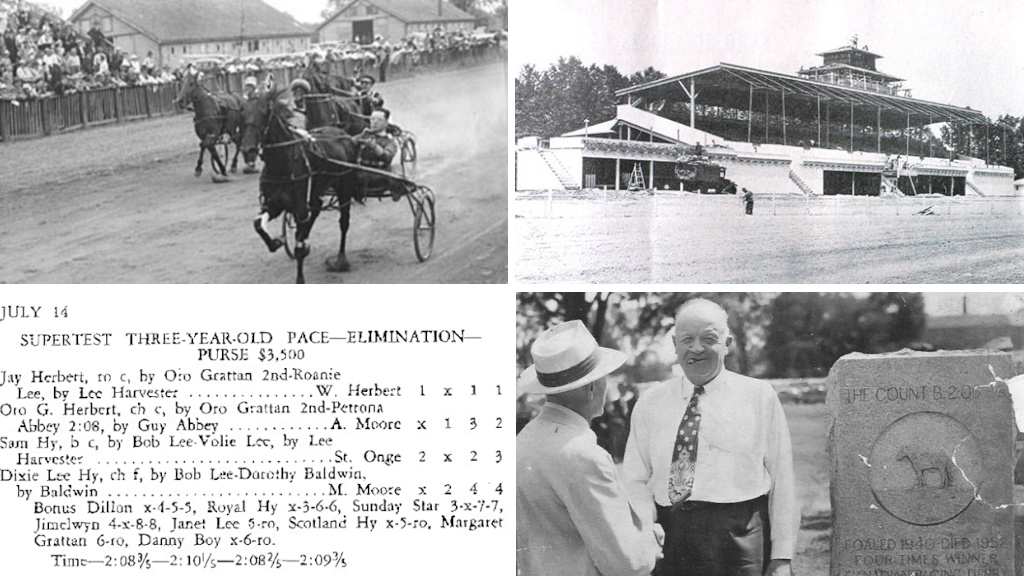
This week’s Rewind is the monthly edition of “Years Ago,” this time devoted to the people, horses and other happenings during the decade of the 1940s.
Harness racing in Canada and elsewhere saw a number of highs and lows during this time period (1940–1949). Wartime restrictions in the earlier years completely stopped racing at certain times and curtailed it at others. From about 1946 on, the sport saw unprecedented growth as the new era began.
Wm. H. Herbert Stable in the 1940s
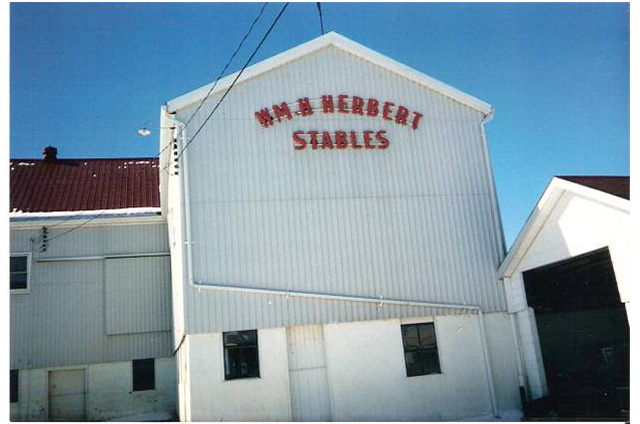
The Herbert Stable barn at Lambeth, Ont.
During the decade of the 1940s, Ontario harness racing relied almost solely on small-town tracks for the bulk of its racing activity. With the exception of Dufferin Park, that raced mainly during the winter months, no other location hosted racing beyond a day or two a year.
During this time, a number of horsepeople went to the U.S., either seasonally or permanently. One notable stable that stayed pretty close to home and managed reasonably well was the Herbert Stable, based in London, Ont. The father-son duo of William and Jack operated a rather unique and successful operation. They bred and raced all of their stable members and even named them all with the family name HERBERT.
By the end of the 1940s, they had sent out quite a few top performers. One of their top homebreds was described in the press as “a $25,000 pacer.” At that time in history, that was quite an accomplishment. The Herbert team of father and son always wore matching black and white driving silks and kept them in immaculate shape. They were also among the first, if not the first, to use white sulkies.
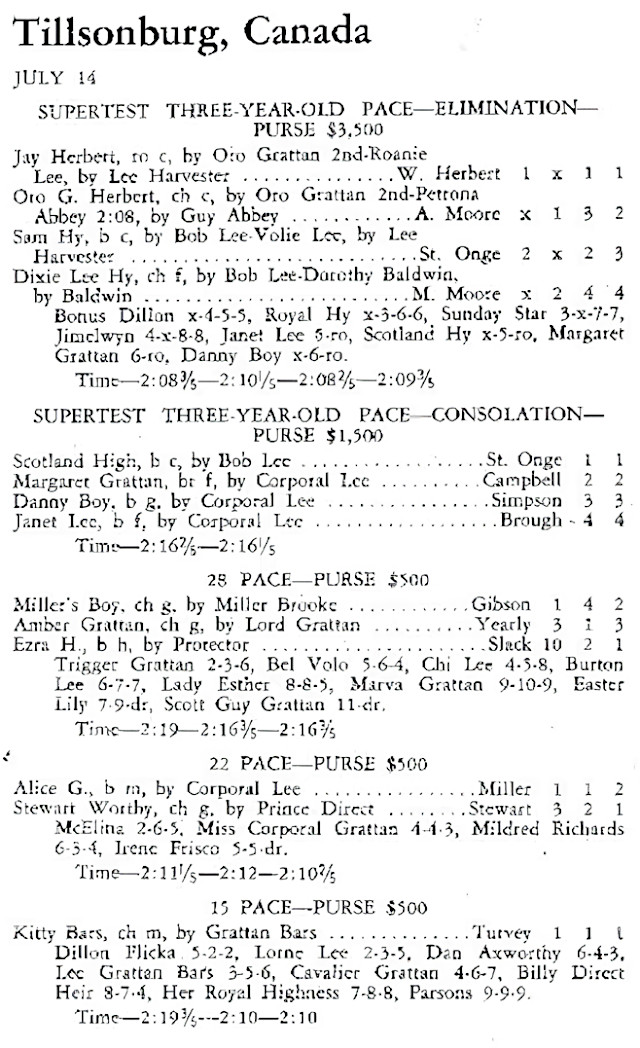
The above summary was from Tillsonburg, Ont., July 9, 1948. The Herbert Stable was well placed in that year’s three-year-old Supertest Stake.
1941 - Saratoga Opens New Track
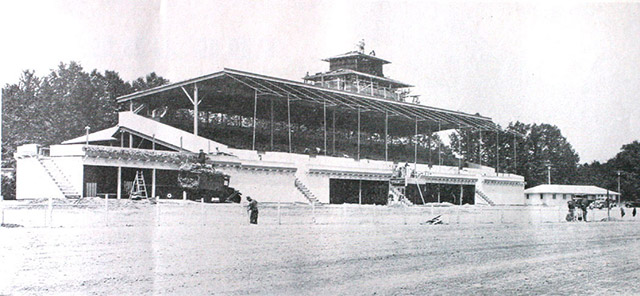
Above is the Saratoga grandstand as it neared completion in 1941.
On the evening of June 26, 1941, Saratoga Raceway in Saratoga, New York, opened its doors to nighttime harness racing. While it was the state’s third track to present racing under the lights, it was the first new racing venue built for this novel form of a very old sport. Earlier tracks — Roosevelt Raceway in Westbury, N.Y., and Batavia Downs in a town of the same name — were already established for other purposes.
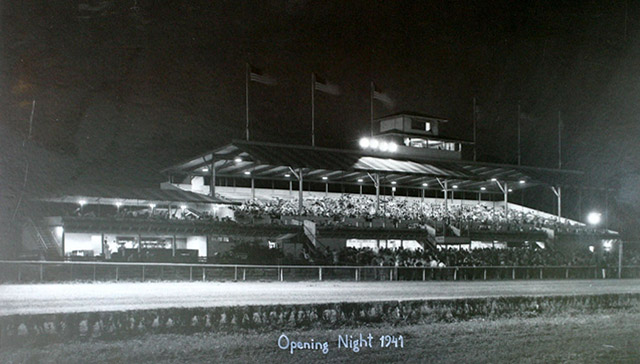
Opening night at Saratoga, New York, as a full grandstand welcomed harness racing under the lights on June 26, 1941.
1945 - Stratford Hosts Annual Race Day
On June 27, 1945, Stratford hotel owner Dave Pinkney organized the town’s only race day of the season. A four-race card, each one with three heats, entertained the large crowd on hand. The purse for each event was $300. A total of 25 entries made up the program. Horses from as far away as Peterborough shipped in for the race day.
All of the fields were evenly matched, as evidenced by the fact that no horse was able to sweep all three heats of any race. Miss Van was a double heat winner in the three-year-old trot for owner and driver Harry Biggar of Fruitland, Ont. In the companion event for pacing colts, Midnight Express from the barn of Frank Taylor of Exeter had the best standing of 2-2-1. This event drew a huge field of 10.
In the final race of the day, Argot Dillon won the first two heats and finished third in the finale. This horse was owned by the partnership of Russell Miller of Dutton and Carl Smith of Harrow (my late father). This pair of newcomers to the sport were in the midst of a successful season with their first venture into ownership. On this day, Marshall Moore of Sarnia was in the sulky for the double win. His arrival that day was somewhat delayed by car trouble, but he managed to arrive before the first post time.
Back then, it was customary for Mr. Pinkney to set aside a room at his downtown Queens Hotel where competing horsemen could stop by following the day of racing to pick up their winnings. I hope the beverage room was open!
I can recall many years ago enjoying hearing about these early days of Ontario small-town harness racing as my father recalled them. My favourite story was when the two new owners went to New Hamburg to race and how they spent the night. They had a room at the local hotel, but it was so hot that they couldn’t sleep. They solved the problem by driving to the track in the middle of the night and sleeping in the car in the infield.
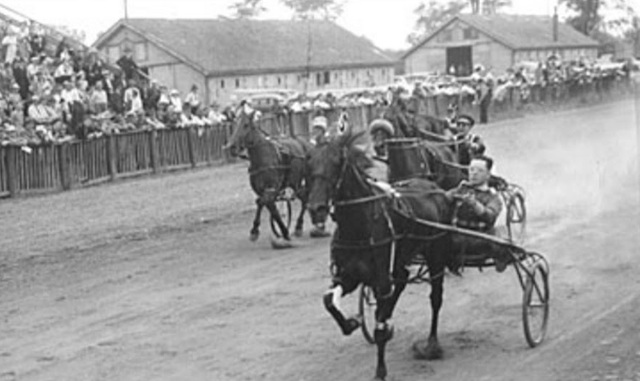
Argot Dillon paces home a winner for “hatless” driver Marshall Moore at Stratford. Perhaps the winning time of 2:15 may have caused the winning driver to lose his silk hat. A view of a few of the old stables can be seen in the background. Other horses and drivers are Sonny Boy (Jack Baker), Judy Patch (Wilbert Hopkins) and Bruce Henley (Ken Thompson).
1948 - The last year that The Count won the Canadian Pacing Derby at New Hamburg, Ont.
"The Count B. – Horse of the Decade"
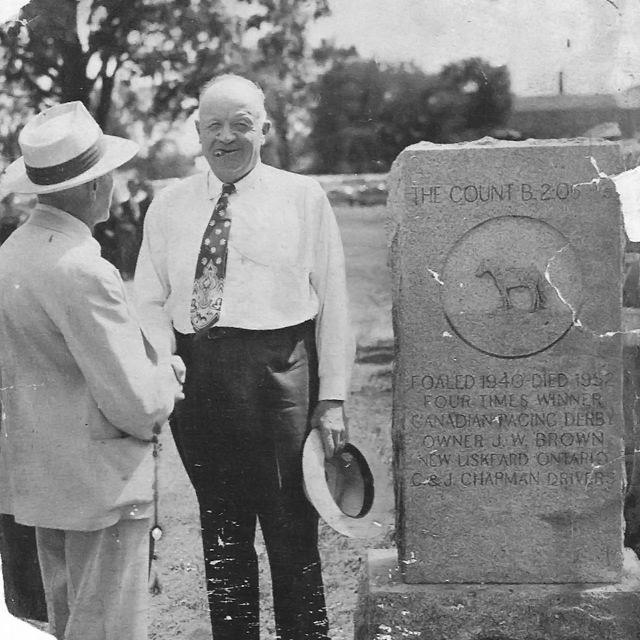
A solemn moment is recorded in this time-worn 1952 photo. A formal presentation of a granite shaft marking the final resting place of The Count was made by New Hamburg race secretary Earl “Katzie” Katzmeier (left) to owner J.W. Brown. The gravesite is in the infield near the finish wire, the scene of many of his memorable victories in New Hamburg’s Fountain Park.
Actually, there was no such title officially, but certainly one special horse dominated the racing scene in Canada from 1943 onward. That horse was The Count B., a four-time winner of the Canadian Pacing Derby, the country’s top race held each year at New Hamburg, Ont.
This horse was owned throughout his racing career by Jim Brown of New Liskeard, Ont., and trained and driven by Cliff “Chappy” Chapman Sr. Mr. Brown was the father of Dr. Glen Brown, a longtime fixture at the Armstrong Farm in Brampton, Ont.
In his lifetime, he won 95 heats, finished second 32 times and was third on 24 occasions. His career earnings amounted to $23,759.15, just to be exact (see below*). In 18 heats of racing on Derby Day at New Hamburg, he recorded a standing of 11 wins and five seconds—an amazing accomplishment spread over six years. Speed was not the order of the day; success was based on stamina and consistency. The Count B. took his lifetime mark of 2:06.3 at Buffalo as an eight-year-old in 1948, with a very young Johnny Chapman in the sulky.
* Note regarding lifetime earnings — Based on values from 1951 when The Count retired, that figure would be equal to approximately $297,000 in today’s values.
Quote for the Week: “I would like to see more young horsemen and horsewomen study the history of our sport a little more closely. To understand where we are today, thanks to the effort of the people involved in our Standardbred sport in years past.” — Joe O’Brien
Who Is It #1?
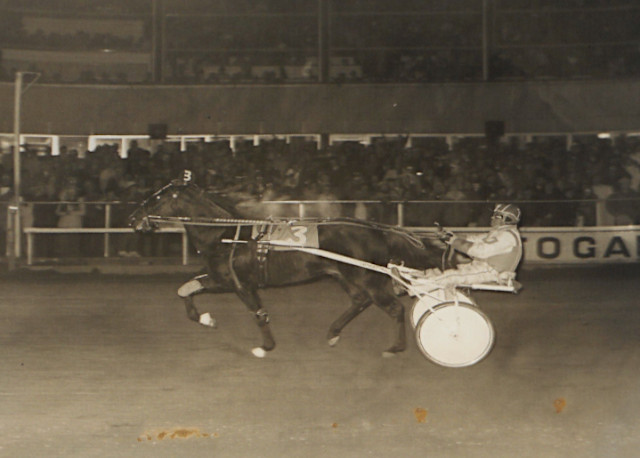
Can you identify this young driver who at one time did a lot of driving at the Saratoga track? BTW, this was quite a bit after 1941.
Who Is It #2?
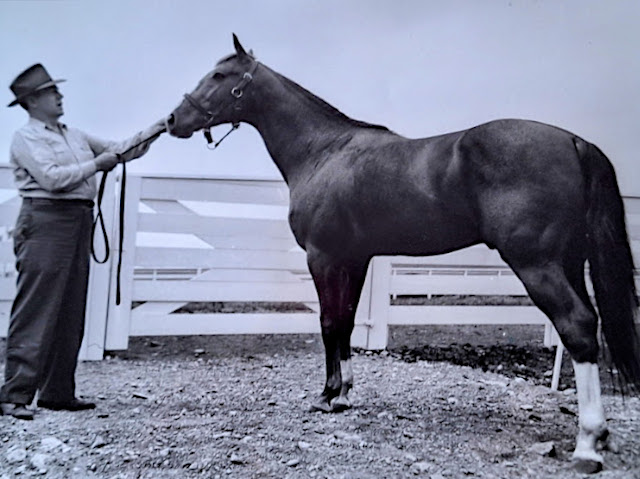
Who is this esteemed gentleman with his prized pupil? Let us know who he is.
Who Else Is It?
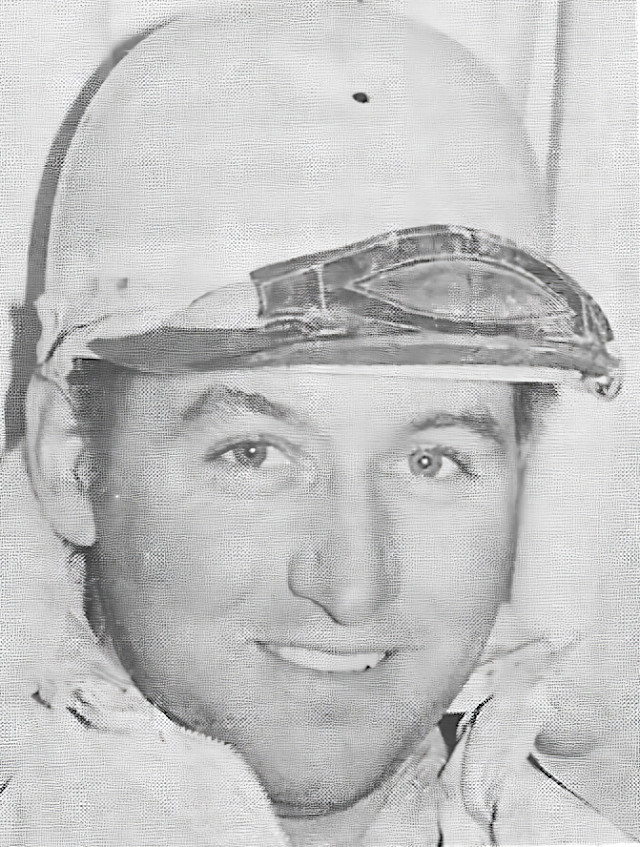
Can you identify this young lad? He wasn’t racing in the 1940s, but he was born then.
(The correct answers will be posted here by Robert as a comment in a few days.)
This week's picture answers
Our experts got all three and they are summarized below:
Who is it # 1? was Bill "Magic" O'Donnell at Saratoga
Who is it # 2? was Wm. H. "Bill " Herbert with his fine colt Oro G. Herbert
Who else? was Eric Langille
Thanks to our experts.
who it it 1
Bill Odonnell
Magically foot out of the…
Magically foot out of the stirrup , Bill Herbert, Eric Langille.
Who is it Angus Allen Who…
Who is it Angus Allen Who Else is It Eric Langille