
Bongiorno: The name everyone knows; the man very few understand


When a young catch-driver starts having success in our business, some people probably feel envious. Top drivers make good money, and there are only so many of those jobs available - right? Sometimes there’s a lot more going on behind the scenes however, such as in the case of Joe Bongiorno - a young man carrying the pressure of having a surname that wasn’t always good to him. Joe has been through a lot over the past decade or more - admittedly some of it self-inflicted - but since it all came to a head, less than two years ago, and he sought out the help he needed, things are looking up. By John Rallis.
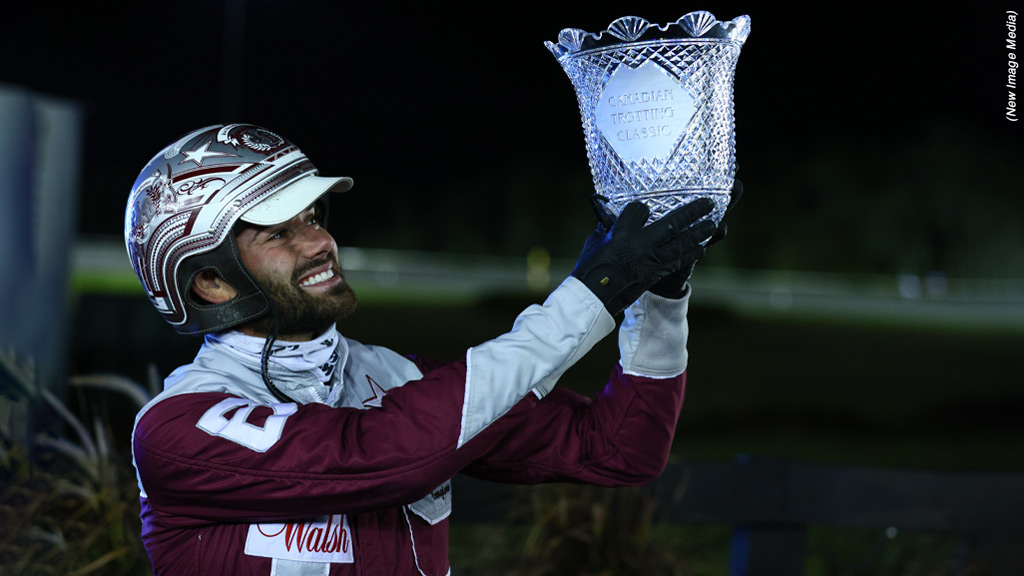
Surnames carry weight. They hold history, expectation, pride, and sometimes pressure. A name can shape how the world sees you before you ever speak, yet in the end, its true meaning is always defined by the individual who carries it. In every sport there’s polarizing figures whose name alone receives attention, and in harness racing, one of those names is Bongiorno.
For years, Joe Bongiorno felt both the burden and the responsibility that came with his last name. After navigating many of his own personal hurdles however, he’s found a different perspective: not a search for validation, not a need to prove anything to anyone, but an appreciation for the opportunity to just keep going.
Now, the name isn’t something he’s trying to live up to or escape from. It’s simply part of who he is; another chapter in a story still being written, carried forward with a renewed sense of purpose and a major appreciation for a new lease on life.
“When people hear the last name, they think they know the story already,” says Joe. “The Bongiorno name is very polarizing. My mom puts it as a lightning bolt, but I [always used to] put it as having a bullseye on my back.”
Long before he learned to embrace the weight that came with his last name, Joe was simply a kid finding his footing in both life and this sport. In those early days - before expectations, opinions, and perceptions followed him - things felt simpler. In many ways, they were the easiest days he would know.
“Life in my younger years was great, and very memorable,” shared Joe. “I wouldn’t say I lived an ultra-luxurious life, but family vacations took place every year, I lived in a really nice house, and I had support from my parents and those close to me as I started trying to break into an industry I fell in love with. There’s nothing more I really could’ve asked for.”
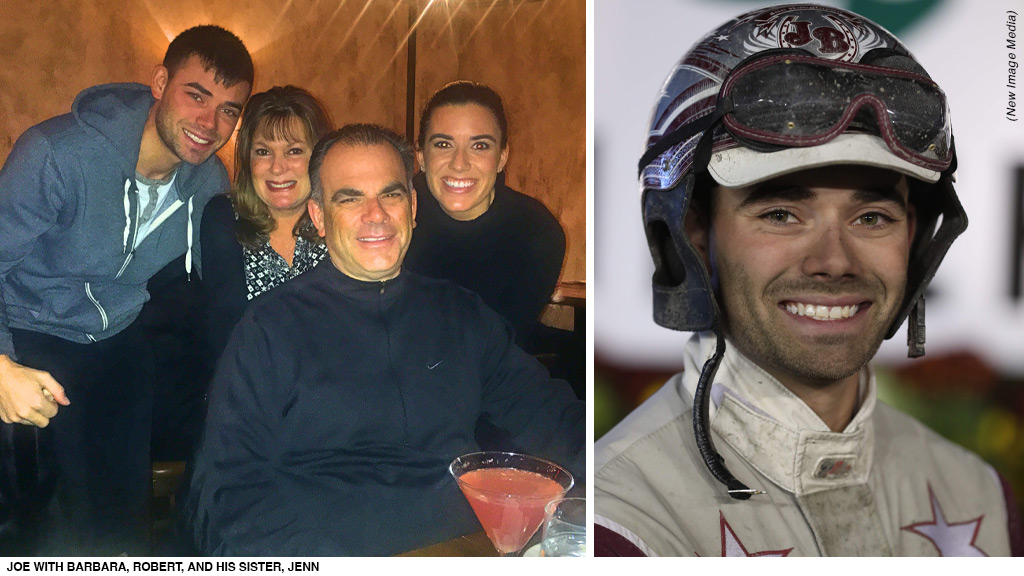
Harness racing quickly became a passion for Joe. At just 13-years-old, he realized he wanted to follow in his family’s footsteps and immerse himself in the sport that had given them a career. His parents, Barbara and Robert Bongiorno, were instrumental in fostering that early love for racing, along with close friends such as George ‘Buzzy’ Sholty and Mark Beckwith, who both helped teach the teenager the ropes from an early age.
“Jogging your first horse is a feeling like no other,” said Joe. “That rush, and the idea that it could one day be my livelihood, was something I couldn’t shake.”
Fast forward a few years, and at 17, that dream didn’t just inch closer for the Colts Neck (New Jersey) High School junior, it became a reality.
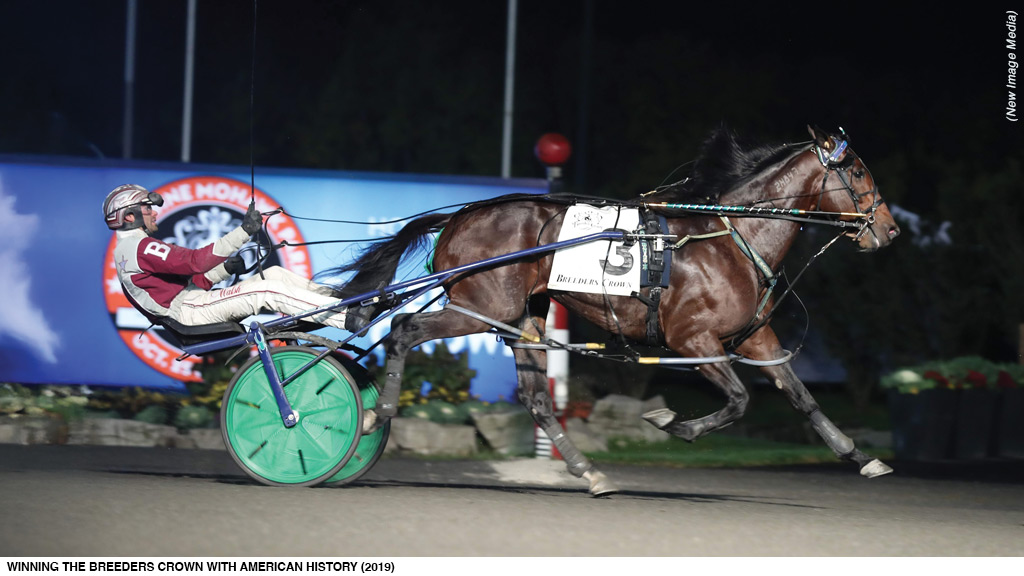
“In my first year of competitive driving [2010], I was named National Amateur Driver of the Year,” Joe recalled proudly. “It might’ve only been 14 drives, but I made the most of it [winning six of them]. It was a great honour for me, especially since driving horses is what I always wanted to do. Right from the get-go, I felt like I could make an immediate impact.”
Bongiorno was born into the sport. His mother, Barbara, is the daughter of Harold ‘Sonny’ Dancer Jr., making Joe the great-nephew of legendary Hall of Fame trainer/driver Stanley Dancer. For someone with that kind of lineage, you could say the talent was already written in his pedigree.
Joe’s early success in limited opportunities soon led to a much heavier workload, jumping from 259 drives in 2011 to 1,050 in 2012. The pace never let up, and by 2016 he drove in a staggering 2,754 races.
It wasn’t just the number of drives either - it was where he was driving. Just a couple of years into his career, Bongiorno was already competing where most drivers dream of being - at the mecca of harness racing, The Meadowlands.
“It was unbelievable,” recalled Joe. “I remember being at the old Meadowlands… you’d have to take a shuttle to get to the paddock, and being in a van with guys like Tim Tetrick, Brian Sears, Cat Manzi, Ron Pierce, Mike Lachance and John Campbell was just surreal.
“To have gotten a chance to drive with those legends was incredible… Heck, even being able to win one or two races… against drivers of that caliber was a huge feat,” he added.
In 2015, Bongiorno was given an opportunity to bolster his résumé at the flagship racetrack, and it came from arguably the sport’s most powerful stable - that of Ron Burke. It was a moment he still relishes to this day.
“I remember getting a call from Ronnie to sit behind a trotting colt of his by the name of Make Or Miss. He was a colt that really struggled with his gait as a rookie and went through a stretch where he made several breaks. Ronnie asked me to qualify him at The Meadowlands ahead of the Valley Victory eliminations.
“I remember him saying, ‘I just need you to keep him trotting,’ to which I responded, ‘This ain’t going to be no easy task,’” he laughed.
Bongiorno guided the trotter safely around the track in his qualifying prep, tripping the timer in 1:56.2. Despite the colt’s quirks, the young reinsman could sense something more beneath the surface.
“He was steppy, but I could tell there was a lot of speed,” recalled Joe. “He was rough on the turns, but man, could he flash some speed in the straightaway. I was optimistic this was a horse that could definitely make some noise if he minded his manners.”
Burke had initially listed Hall of Famer Yannick Gingras to drive the son of Donato Hanover-Athena Miss in the Valley Victory elimination eight days later, but Gingras booked off to drive another horse. Bongiorno, then just 21-years-old, got the call instead - a moment that had the makings of a potential breakthrough.
“It was surreal, racing him in the elimination. I was so pumped to get the opportunity, and I just knew all he needed to do was get around those turns and he’d be able to flash enough late trot to get into the final if he stayed at it.”
Stay at it he did. Make Or Miss qualified for the final after a hard-charging second place finish in his elimination at odds of 25/1.
“He was much better gaited in the elimination, but I’d say he still wasn’t where he needed to be if we wanted to be truly competitive in the final. I remember making a couple of suggestions to Ronnie, and at that point - with how the colt’s season had gone - he was receptive to trying anything.”
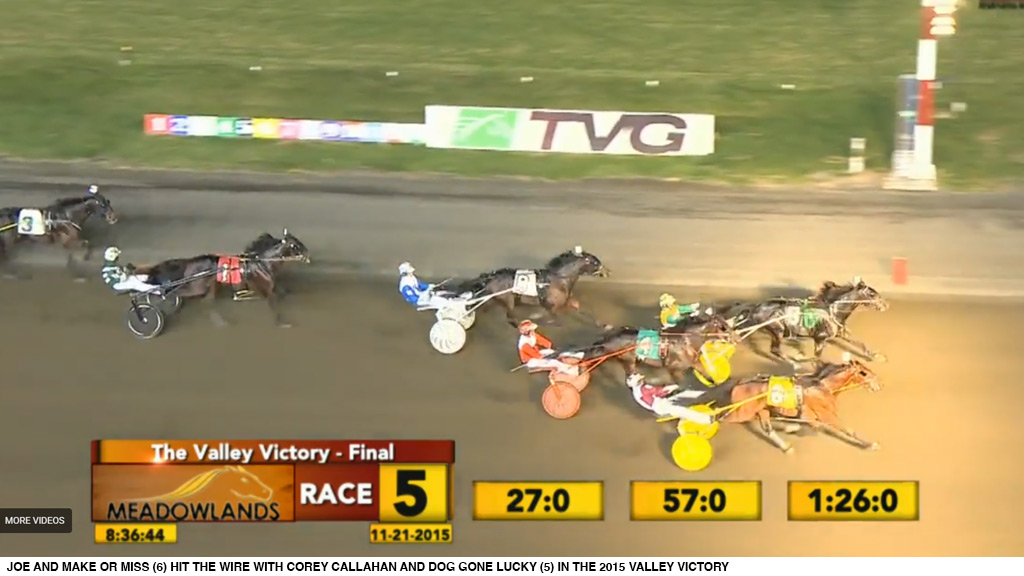
Sent off at 7/1 from PP#6 in the $489,400 Valley Victory final, Bongiorno and Make Or Miss delivered an electrifying finish, after sitting eighth at the quarter pole, 12 ¼ lengths behind the leader.
“I just remember swinging him wide on the final turn, and he trotted the stretch as fast as a horse could trot. I hit the line with Corey Callahan, who was driving Dog Gone Lucky for Chuck Sylvester, the race favourite. It took a long time for them to determine the winner.”
“I remember circling the track, waiting to see if I got there or not. I was as anxious as one could be,” he added with a laugh.
After a lengthy photo review, the judges declared a dead heat between the two freshman trotters - giving the young Bongiorno a share of the prestigious Valley Victory.
It was a moment he’ll never forget.
“Everything about that race is something I’ll cherish for a long time. To do it for Ronnie, no less, someone who has been instrumental in my career and gave me that opportunity in that moment… It was special.
“I was young, but I truly believed I could do this at a high level, on the biggest of stages, and that win in the Valley Victory really solidified that thought for me. I was a young man with a bright future ahead of me. I didn’t think anything could go wrong.”
That sentiment held true for Bongiorno, who more than doubled his workload in 2016, and finished the year with 399 trips to the winner’s circle and over $3.8 million in purses. The following year, in 2017, he set a career high in earnings for the second consecutive season, when he eclipsed the $4 million mark for the first time.
It seemed as though nothing - personally or professionally - could derail not only the trajectory of his career, but his own sense of well-being.
Or so he thought.
“I was coming off the greatest season of my career in 2017, and I was just excited to continue growing and building on that success. I was grinding, but I was extremely happy. I was able to showcase my talents and enjoy the fruits of my labour with my family. But some of that joy came to a halt.
“In 2018, my dad filed for bankruptcy, and unfortunately his case went public. It was just a really nerve-racking time for our family.
“As I mentioned, my sister Jenn and I had a great childhood. We grew up having whatever we needed - everything was fine in that regard. To go from that, to suddenly seeing your dad basically broke… It was a lot to take in.”
It also wasn’t the first time Joe’s father, Robert Bongiorno, had been seen in a negative spotlight. The longtime horseman had previously served a 2 1⁄2 year training suspension and had long been surrounded by controversy - something Joe increasingly had to navigate as his own career began to rise.
“It was a lot to deal with,” admitted Joe. “My dad didn’t have the greatest public image in this industry, and as a result, my sister and I - once we started working and being involved in harness racing - had to deal with the brunt of it.
“People already had preconceived feelings about my dad from his years training horses. When the bankruptcy case became public, I had to deal with a lot of that backlash. These were things that had nothing to do with me, but I was still affected by it.”
One particular moment still stands out more vividly than the rest.
“I remember I was at Hoosier Park for the Breeders Crown eliminations in 2017. I was walking through the grandstand when this guy grabbed me by the collar and said, ‘Get your dad to pay me, or I’m coming for you.’
“It was a really big shock for me because it had nothing to do with me, but all of a sudden it was something I had to deal with.”
The situation escalated just a week later.
“When I came back to Hoosier for the finals, my mom flew in with me. She knew about what happened the week before, and so did security. Everything was fine throughout the card though, and at one point I stopped by the bar to see a couple of friends.
“A few moments later, I was in a full-blown chokehold. The same individual had grabbed me from behind and lifted me off my feet. I was turning blue. Thankfully a couple of my friends were able to get him off me and de-escalate the situation.”
For Bongiorno, the incident marked the beginning of what became a prolonged stretch of hostility and negativity surrounding him. Some were self-inflicted, he admits, but others were unwarranted.
What should have been the most promising years of his young career were suddenly accompanied by distractions and pressures far beyond the racetrack. Balancing the continued rise of his career with the off-track turmoil that followed became an increasingly heavy burden.
After a while, it stopped feeling like criticism.
It became personal.
“I’ve always kind of walked around with a little bit of a chip on my shoulder, as a sense of protection for myself,” Joe admitted. “I grew up around a lot of yelling and arguing, and sadly, I just thought that kind of animosity and resentment, at times, was the norm.
“Look, I’ll be the first to admit that my temper has gotten the best of me. There have been a lot of times where it’s tarnished relationships I’ve had, and some of those are probably too far beyond repair.
“I’m not saying all the behaviour I’ve displayed has been justified whatsoever, but when you’ve had to deal with the constant hate that my sister and I have had to deal with from some people, there’s no blueprint for how to handle it.”
Despite some memorable moments in the early stages of his career - in an industry he was deeply passionate about - Bongiorno says he began to get a taste of what he considered unfair treatment as early as 2014.
“I was doing a paddock interview, just like every participant at The Meadowlands Racetrack does when they’re asked. I was asked about my chances that night with Code Word and Shoobees Place - two horses that were preparing for starts in the Levy Pacing Series [now known as the Borgata] the following week. I said that on this night both horses would probably be raced a bit conservatively. Shortly after that, I got a call from the judges saying that I had been pulled off both horses that night. It was bullshit.”
Joe says the situation stuck with him.
“The amount of times I hear drivers and trainers say similar things in [paddock] interviews [especially now] and it’s fine for them… I don’t know, I felt like it was a bit of a double standard. But because it was me, and I was young, I almost felt like I was a target.”
And in his mind, the target wasn’t only about his attitude. It was also about the name he carried.
For Bongiorno, moments like that felt like the beginning of a narrative he would continue to battle for years. From that point on, even routine situations often felt like attacks - reminders that his reputation, fair or not, was constantly under scrutiny.
Even when he was achieving something extraordinary on the racetrack, there always seemed to be another moment waiting to pull him back down to earth.
“One of my biggest career highlights was winning the Little Brown Jug, in 2020, with Captain Barbossa for Tony Alagna. Considering so many great drivers have never won that race, the fact that I was able to accomplish that was incredible to me, and it’s something I still think about to this day.
“That was a special year, not only because of that win, but because I had a career-high [at that time] .291 UDRS and made close to $4.5 million in purses. I had an amazing year, and I thought I was a lock to win the Rising Star Award.”
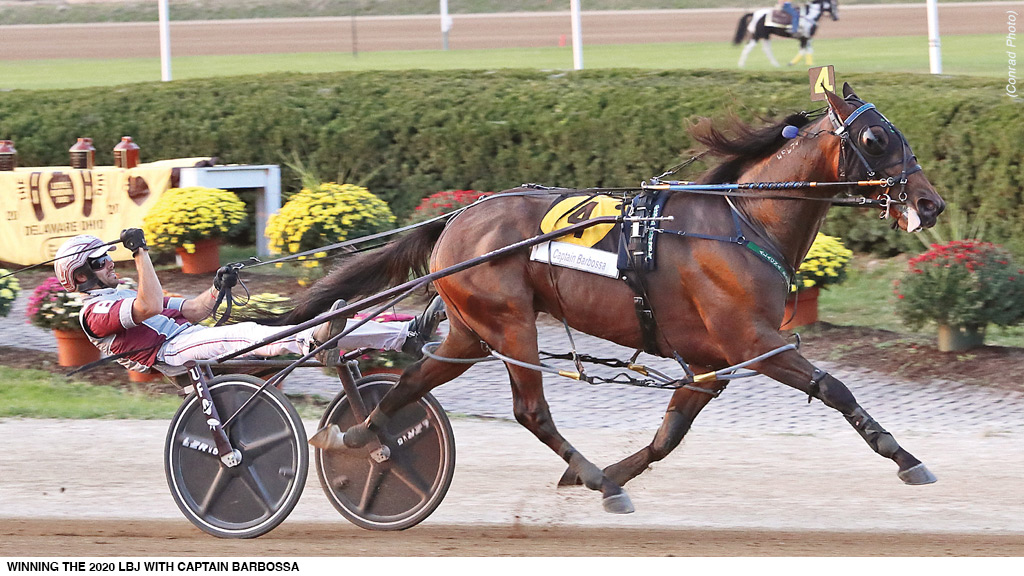
Bongiorno’s numbers certainly warranted the honour, but because the season took place during the height of the COVID-19 pandemic, the Rising Star Award was one of a handful of honours omitted that year - something Bongiorno still views as a slight.
“I do believe they took that award away that year because I was going to win it,” Joe says bluntly. “I mean, the year I’m supposed to take home that honour, and it’s one of the awards that gets scrapped?”
Adding to the negative cloud that seemed to follow Bongiorno, the years that followed were hardly easier.
In 2021, he was suspended 20 days and fined $5,000 after being involved in, and labelled the cause of a three-horse spill. In 2022, he went through a divorce with his now ex-wife, and in 2023, Bongiorno and his fiancé, Nicole DiCostanzo, were suspended and denied entries pending an investigation that stemmed from a race - deemed to be ‘suspicious’ - that they were both involved in at The Meadowlands. The two were ultimately cleared of any wrongdoing.
Year-after-year, it seemed as though adversity followed him no matter what.
For Bongiorno, racing was no longer a refuge - it had become the finish line.
“Only so many things can happen before a human breaks, and at that point, I was broken,” admitted Joe. “There’s only so many negative things you can deal with - or read about - before it becomes too much. All it does is build stress and resentment.”
And resentment was something he carried with him daily, particularly when it came to the weight of the circumstances surrounding his family. Given the magnitude of the controversy tied to his father over the years, it inevitably shaped how he viewed things at home as well - even if it was still his dad.
“Listen, we’ve had a lot of issues internally [as a family],” Joe said candidly. “There were times where my sister wouldn’t even speak to my dad, and there was, without a doubt, a lot of resentment towards him.”
Despite often saying that he and his sister grew up with everything they needed, the reality behind the scenes was far more complicated.
“While I grew up having everything I needed, I’d say there were plenty of kids who were more fortunate than my sister and I were - just in a different way,” he explained. “Look, when things went bad in my family, they went bad.”
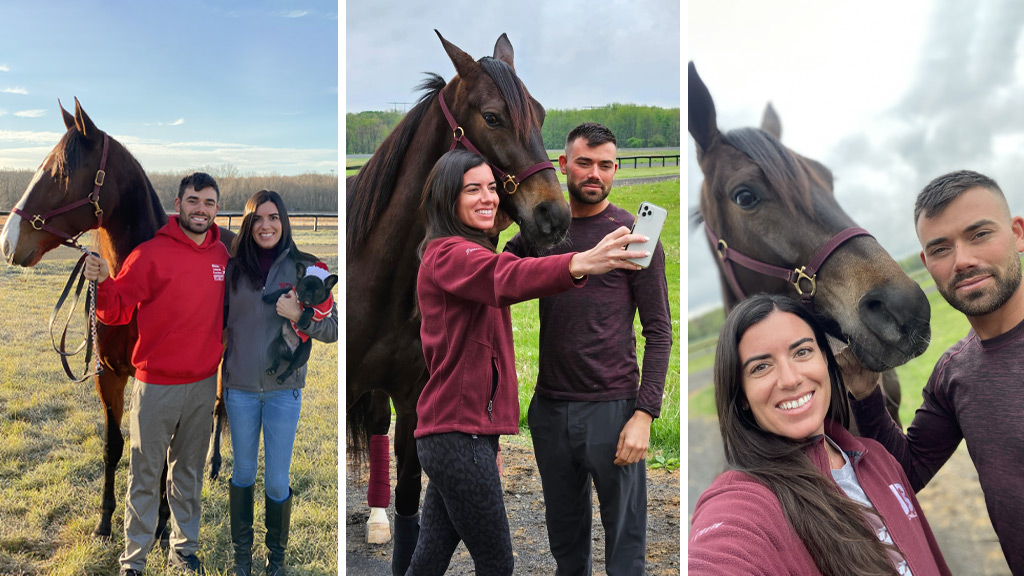
And when things did go bad, the emotional toll ran far deeper than most people ever saw. In truth, the only person who fully understood that weight was his sister Jenn.
“We were so, so close growing up, and we stuck together through most of those really tough moments,” Joe shared. “When she worked at The Meadowlands, there was a lot of scrutiny she had to deal with, and a lot of derogatory, disgusting, comments directed at her.
“My sister is one of the smartest people I know when it comes to running a business… She’s very business savvy, and she displayed that during her time training horses. She is extremely talented, and she knows how to surround herself with intelligent people. That’s why she had success. So when she was pushed out of [racing at] The Meadowlands and constantly attacked over her role training horses, that stuff bothered me.”
Though the siblings could relate to the constant wave of criticism that seemed to follow them wherever they went, they also experienced their own brief split.
“Just like anything you do with family, sometimes things get a little tough, and that’s what eventually happened with the two of us,” Joe admitted. “I was working for her, and we just weren’t meshing. It definitely impacted our relationship for a period of time. Soon thereafter, she decided to step away, and I took over.”
But the timing of that added responsibility couldn’t have been worse for Joe. He wasn’t ready to take on the demands of running a big stable while simultaneously trying to repair something he couldn’t fix on his own - his mental well-being. Joe didn’t need responsibility. He needed peace.
“Between all the stress, all the anger, and the burden I had to take on, I wasn’t ready to inherit a big stable. My sister had time to build her operation, starting with 10 horses, and eventually growing to 70.
“Me, on the other hand… I just wasn’t ready for it at that point… It was kind of like having a noose around my neck.”
Despite his personal struggles, Joe’s first two seasons as a trainer produced remarkable results on paper. In 2024 and 2025, he bankrolled $3.2 million and $4.6 million in earnings, posting an average UTRS of .332 between the two seasons. But statistics alone could never reflect the weight he carried internally.
“I was paralyzed with anxiety, and I had reached an all-time low,” he shared, voice heavy with emotion. “I say from the bottom of my heart, what I went through over the past year or so, I wouldn’t wish it on my worst enemy.”
Racing - the very thing that had given him joy and purpose for so many years - had become a source of anguish. The excitement that once surged through him behind the starting gate was gone.
And yet, life was still moving forward. In the midst of this emotional turbulence, Joe and his fiancé were preparing for what should have been one of the happiest milestones of their lives: welcoming a child. But even that moment, meant to be filled with joy, was clouded by the relentless stress he carried - a new kind of responsibility that threatened to overwhelm him in ways even the racetrack never had.
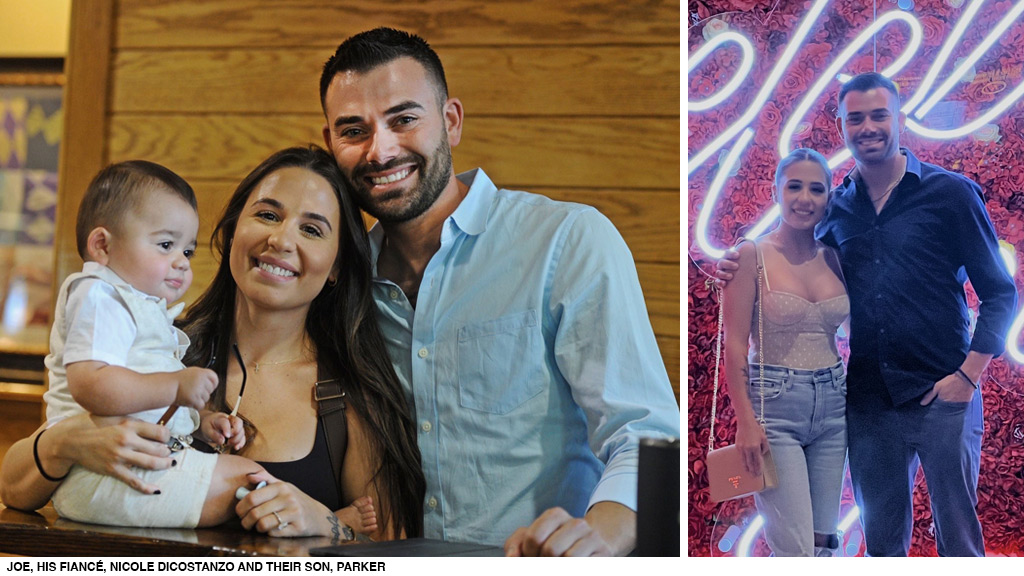
“My son Parker was born in September of 2024, and while that was supposed to be the happiest moment of my life, it crippled me. It was more pressure for me… having to drive, train, and now be there for my son in what was a completely new experience. Everything just happened all at once, and the birth of my son was the final point where I just burst.”
The overwhelming responsibility of becoming a father only intensified the anxiety he was already battling.
“I was so overwhelmed and nervous being a father. I remember lying awake at night anytime I heard Parker making sounds - or even if he wasn’t making any. I kept thinking, ‘Is he breathing? Why is he coughing?’
“He would throw-up and I’d lose it. My stress and paranoia were at an all-time high. I couldn’t enjoy life’s greatest gift the way I wanted to.”
Toward the end of 2024, Joe found himself searching for any form of escape, especially when it came to driving horses. But those closest to him reminded him that with a family now came greater responsibility. As the man of the household, he felt the weight of providing and holding everything together.
Once again, the pressure mounted. And once again, he erupted.
“I was racing at Yonkers Raceway in November [2024] and I didn’t have a great night. I was so frustrated that I walked up to a locker and punched it as hard as I could, which resulted in me breaking my hand.
“I had to be sidelined as a result, and I couldn’t have been more relieved at that moment,” he admitted. “I was looking for an excuse not to drive, and I found it.”
That escape, however, wasn’t going to solve the root of Joe’s problems. And it was only temporary.
As the days and weeks passed, his hand slowly healed - but his mind and spirit were still battling something far deeper.
“Early in 2025, things got really bad. There were days I couldn’t even get out of bed and couldn’t go to the barn. Heck, I barely even drove that year.
“I wouldn’t even leave the room. I had a young kid at home that I wasn’t there for because I was just… useless.”
The isolation became suffocating.
“I would just lay in a dark room. That’s all I did. If Nicole or her family tried to help me, I’d start sobbing and tell them to please leave me alone. I was trying to push everyone away. I realized that’s exactly what I was doing.”
His family desperately tried to help.
“My parents would try to get me out of bed and be stern with me, but the last thing you want to hear when you’re in that place is someone telling you to just get up,” he explained. “I remember screaming at everyone to get away from me. ‘I just have to figure out a way to kill myself. I don’t want to be here anymore.’”
For the people who loved him most, hearing those words was devastating.
“They got to a point where they didn’t know what else to do. They just wanted to get me help.”
That breaking point ultimately became the moment everything began to change. With the encouragement of those closest to him, Joe sought professional help and began intensive therapy. It started a demanding journey - countless sessions, difficult conversations, and a challenging cycle of medications as doctors worked to find the right balance for him. Progress came slowly, but for the first time in a long time, there was a sense that things could eventually get better.
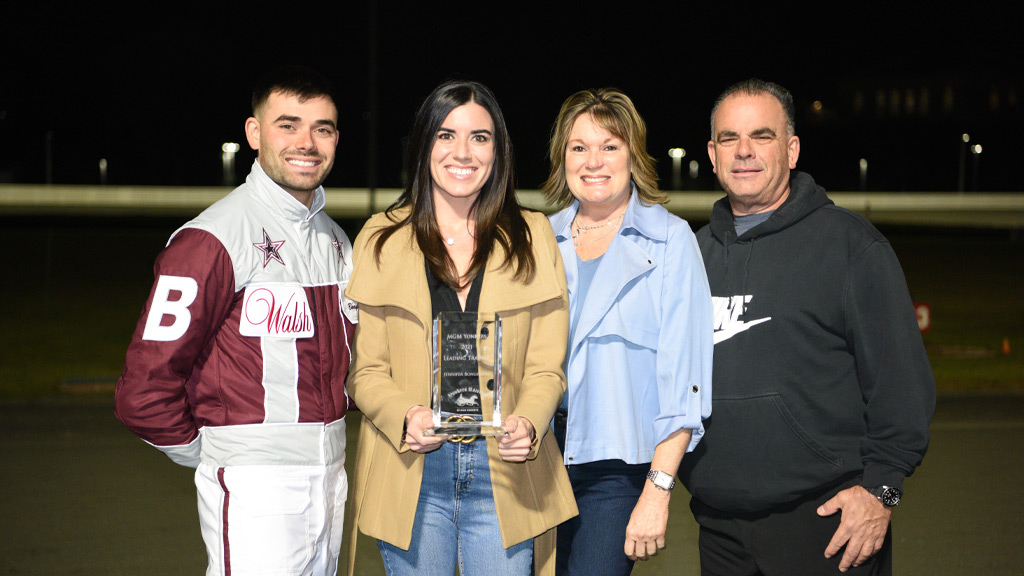
With time, Joe started to feel pieces of himself returning. The overwhelming anxiety that once paralyzed him began to soften. The constant noise in his head grew quieter. Therapy gave him tools to process the anger and resentment he had carried for so long, while the right combination of medication helped steady a mind that had been running at full speed for years.
Most importantly, he began reconnecting with the people who never stopped fighting for him.
“I’m just at a great place right now,” Joe shared with a smile. “I’ve got a beautiful fiancé, and I’ve got an amazing son who I’m excited to raise.
“Look, we’ve had our fair share of struggles as a family, but we’re still family - and I love them, and vice versa.”
Amid those battles, few people are prouder to see Joe emerge on the other side than his beloved sister, Jenn. Even during the period when the two weren’t speaking, the bond between brother and sister never truly disappeared. For Jenn, the admiration she carries for her younger sibling has only grown stronger with time.
“Joe should be extremely proud of everything he’s accomplished,” Jenn said. “He’s got a fiery personality that’s gotten him into some disputes, but he also shows that same level of passion and care to the people he loves. You see it every day in the way he is as a father.”
For Jenn, Joe’s proudest achievement isn’t something that happened on a racetrack.
“I think despite everything he’s accomplished racing horses, what makes me most proud is his willingness to openly talk about the mental struggles he’s gone through and the challenges he’s faced,” she explained. “Look, how many people today are dealing with mental health issues? I think we’ve all experienced it in some capacity – some more than others, of course.
“It’s nothing to be ashamed of. It’s important to grow, to mature, and to be able to talk about those struggles… And I know none of what Joe went through was easy.”
As for the family name, Jenn carries it with pride, regardless of the opinions that sometimes follow it.
“To be honest, I love my last name,” she said with a laugh. “Even if I got married, it would probably be hyphenated.
“Our name in this business might be talked about in a negative light [at times], and that’s just the reality of it. But it’s still ours.”
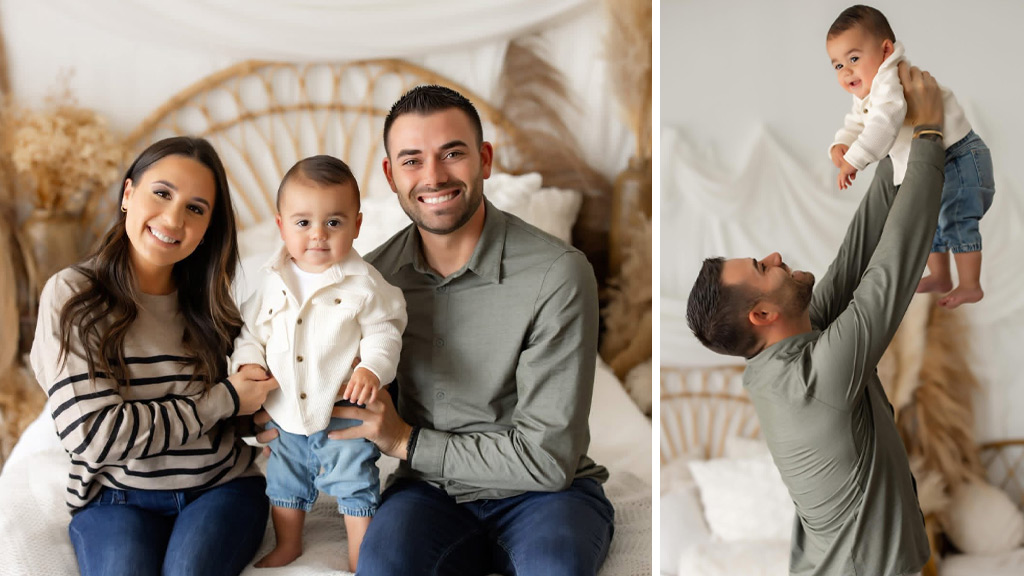
Today, Joe Bongiorno carries something far greater than the weight of a last name - he carries perspective. The struggles that once defined his darkest days have given way to a renewed appreciation for life, family, and the joy of simply moving forward. With his fiancé by his side and his son growing up before his eyes, Joe has found something he searched for a long time: peace.
“For the first time in a long time, I feel like I’m truly living, and not just surviving.”
This feature originally appeared in the April issue of TROT Magazine. Subscribe to TROT today by clicking the banner below.