
O'Donnell On Earning One Of Harness Racing's Top Honours


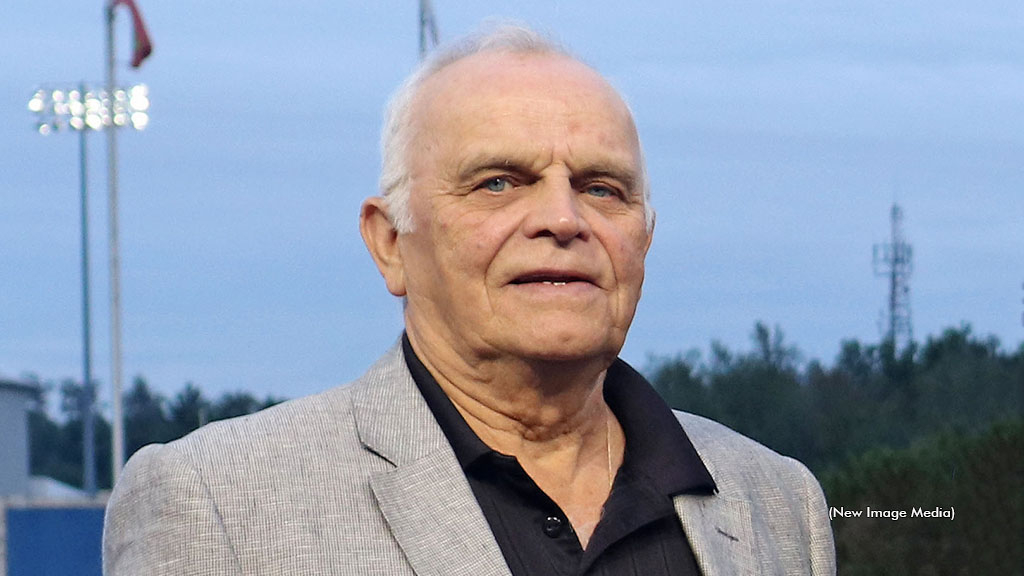
There are multiple reasons Ontario’s harness racing industry should celebrate the fact Bill O’Donnell permanently deferred his spot in electricians’ school as a young man – not the least of which is the fact he is still alive.
“Knowing myself, I would have been dead long ago,” O’Donnell said, laughing. “I would have fried myself with electricity.”
Instead, O’Donnell, who will turn 78 in May, took a permanent detour into the harness racing industry to the sport’s benefit.
He was instrumental in ushering in the catch-driver era, became one of the greatest drivers in the sport’s history, was the first person to surpass $10 million in purse earnings in a single year (1985) and is now enshrined in multiple Halls of Fame, including the Canadian Horse Racing Hall of Fame, Canada’s Sports Hall of Fame, the U.S. Harness Racing Hall of Fame and the Nova Scotia Sports Hall of Fame in his home province.
But it’s O’Donnell’s post-participant work as the co-founder and only president of the Central Ontario Standardbred Association (COSA), as much as anything, that has earned him his latest honour: the United States Harness Writers Association’s (USHWA) Stan Bergstein-Proximity Award to be presented Sunday (Feb. 22) at the Dan Patch Awards in Orlando, FL. The award is USHWA’s highest honour solely voted on by its membership.
COSA, which O’Donnell helped found in 2009, represents the harness horsepeople at all 12 of Ontario’s Standardbred racetracks. During O’Donnell’s 17-year tenure, there has been labour peace with the Woodbine Entertainment Group (WEG) that operates racing in the province.
“I really admire [O’Donnell] for everything he's done for the horsepeople in Ontario,” said John Campbell, president and CEO of the Hambletonian Society and O’Donnell’s long-time friend and former driving rival. “It’s a thankless job.
“[Maintaining labour peace is] good business on both sides. Harness racing is not dealing from strength as an industry at this time. So, I think any inner turmoil we have is detrimental to what we're trying to do moving forward – putting the best product out that we can and presenting what we're putting out there in the best possible light. The worst thing we can do is have inner turmoil at this time in any jurisdiction.
“Not that Bill won’t stand up for what he thinks is right. But, rather than confront people, he'd rather work and try and get it worked out so it benefits both sides.”
O’Donnell, who is loath to speak about his accomplishments, will allow that he’s proud that COSA has provided important benefits to its members and has been able to sign a number of long-term contracts with WEG.
“We've had two or three five-year ones, I think, and then we got three years this last time,” O’Donnell said. “[The industry is] getting tougher for damn sure, so just to have a relationship with [WEG is important]. There's no sense in fighting with them. You can't win. Besides, they’re not that unreasonable to deal with in the long run.”
Former WEG vice president of racing Jamie Martin used to sit across the negotiating table from O’Donnell and COSA.
“Bill deserves tremendous credit for taking the lead role in organizing COSA at a time when horsepeople did not have representation at WEG tracks,” Martin said. “I don't think anyone else had the respect of leading owners and trainers to carry it out, and the desire to take on the effort.”
Long-time Standardbred owner Bill Manes has been a COSA director for about 12 years. He said O’Donnell, “wears many hats, and he's very knowledgeable about the industry. I think he takes a lot of unjustified complaints from people that don't maybe know the industry [as well]. He's a good leader on the board, he's very approachable and you can call him any time… He’s a good guy.”
Manes said O’Donnell also sits on numerous industry boards, including the board of Ontario Racing, where he represents Standardbred horsepeople. O’Donnell also sits on Ontario Racing’s executive committee and is on the Standardbred Horse Improvement Program (HIP) administration committee.
“He is probably on half a dozen boards, at least,” Manes said. “Anything to do with the racing and he's on it.”
But that’s all more recent history. More than 15 years after his regular driving career effectively ended, O’Donnell is still revered as one of the greatest to ever sit in a sulky. He is also regarded as the man that changed the game.
Before O’Donnell and Campbell and others dominated the sport with their ability to make horses go fast, those horses were predominantly driven by their trainers. In 1984, legendary horseman Billy Haughton took himself out of Nihilator’s sulky and handed the reins to O’Donnell for the $2.1 million Woodrow Wilson final at The Meadowlands. O’Donnell promptly drove Nihilator to victory. Given the stature of Haughton, Nihilator and the Woodrow Wilson, at that time, it is regarded as the ceremonial beginning of an era of driving specialists that still exists today.
But O’Donnell, one of the sport’s master storytellers, said he believes the catch-driver era actually began a year earlier when he filled in for Haughton and drove Signed N Sealed to victory in the Kentucky Pacing Derby at Louisville Downs.
“Afterward, [Haughton] was washing his face in the washroom when I came back from the winner's circle,” O’Donnell said. “Billy Popfinger was in there, too, and they didn't get along very well. Popfinger said to Haughton, 'You're going to ruin this business bringing these catch-drivers around to drive our horses on the Grand Circuit.' Haughton looked at him and said, ‘Whose business? I just got five per cent [commission] and I didn't have to do anything.'"
O’Donnell said he owes his career to having the good fortune of being first at a few important junctures – the catch-driver era, the $10 million season, etc.
“It's not something no one else has done, but it's being the first,” he said. “There's not going to be two firsts.”
O’Donnell said winning an award named for the late legend Stan Bergstein is incredibly meaningful. Bergstein had many prominent roles in harness racing – TV broadcaster, race caller, publicist, race secretary, journalist, founder of both the Harness Tracks of America and the World Driving Championships and many more.
“The first I knew of Stan Bergstein was watching him, and he was really promoting me on his TV show [in New York City], which helped a lot,” O’Donnell said. “Then, I got to meet him and know him, and he was such a genuine guy. He absolutely loved the business, and he was good at it. How he thought about the industry was on a different level.”
As for his speech in Orlando, O’Donnell said it’s going to be short.
“When I first saw the Dan Patch nominees, I said, ‘Why the hell would I be on that list?’
“I'm dumbfounded, really. But any time your name's affiliated with Stan Bergstein, that's quite an honour.”
(OSS)
Congrats to Bill !
I am so pleased to see this great horseman receive this very prestigious and much deserved award . Bill is a frequent Rewind " helper " when I am looking to identify an old photo or trying to figure out just about anything . Now that I know about his "electrical " knowledge I will start to ask an even wider range of questions . All the best to you !
Rewind
Everyone affiliated with harness horse racing is cognizant that Billy 0’Donnell is one of the truly great drivers of all time but some may not be aware that quite possibly his administrative skills supersede his skills on the track . As President of COSA he has brought stability , diplomacy and currency between the horse people and racetrack management. This is very important in the environment that horse racing finds itself in present day . We need honest dialogue tempered with intelligence and common sense to guarantee a viable future and Billy ‘ O ‘ does that in spades ! Congratulations Billy for being recognized with this prestigious award . Bravo !!!!
Very deserving
Very deserving